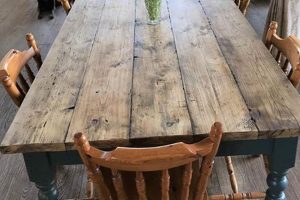
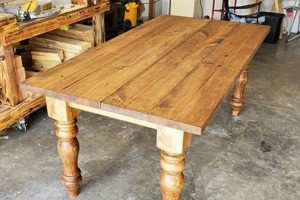
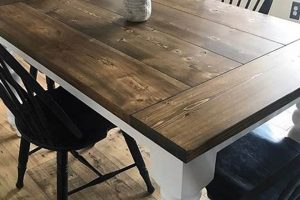
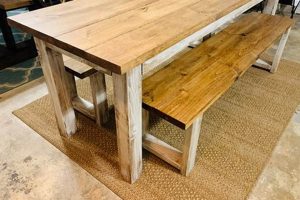
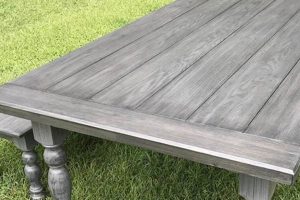
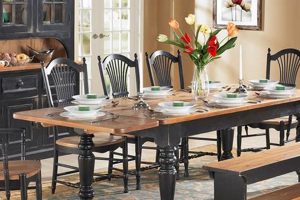
A do-it-yourself project focused on constructing a specific type of furniture, characterized by a rustic aesthetic and design elements commonly found in rural or agricultural settings, is exemplified by such a table. These tables often feature robust construction, simple lines, and the use of reclaimed or distressed materials. As an example, a homeowner might choose to build this type of table using repurposed barn wood and sturdy legs, resulting in a unique and personalized piece for their dining area.
The rising popularity of handcrafted furniture reflects a growing desire for unique and personalized home decor. Constructing such a table allows individuals to tailor the piece to their exact dimensions and style preferences. Furthermore, engaging in such a project can be more economical than purchasing pre-made furniture of comparable quality. Historically, this style of furniture evokes a sense of tradition and harkens back to simpler times, adding warmth and character to a living space.
The subsequent discussion will delve into the various aspects of creating such a piece of furniture, encompassing material selection, design considerations, step-by-step construction techniques, and finishing options to achieve the desired aesthetic. Emphasis will be placed on providing clear instructions and practical tips to empower individuals to successfully complete their own projects.
Guidance for Constructing a Rustic Table
The following constitutes informed guidance to optimize the creation of a rustic, self-assembled dining or work surface. Adherence to these principles facilitates a durable and aesthetically pleasing outcome.
Tip 1: Lumber Selection: Prioritize the use of kiln-dried hardwood. Softwoods, while more economical, are prone to denting and scratching. Oak, maple, or reclaimed wood offers both durability and aesthetic authenticity.
Tip 2: Design Planning: Develop a detailed blueprint incorporating precise measurements and joinery specifications. Account for leg placement, apron dimensions, and tabletop thickness. Visual representation minimizes errors during construction.
Tip 3: Precise Cutting: Employ a miter saw or circular saw with a guide to ensure accurate and consistent cuts. Precise cuts are paramount for seamless joinery and a structurally sound framework.
Tip 4: Robust Joinery: Implement mortise and tenon joints, or pocket-hole screws reinforced with wood glue, for maximum structural integrity. Weak joints compromise the longevity of the piece.
Tip 5: Surface Preparation: Thoroughly sand all surfaces, starting with coarse-grit sandpaper and progressing to finer grits. A smooth surface enhances the application of finishes and reduces the likelihood of splinters.
Tip 6: Strategic Distressing: Employ techniques such as chain distressing, intentional denting, or wire brushing to impart a weathered aesthetic. Control the level of distressing to achieve a balanced and authentic appearance.
Tip 7: Durable Finish: Apply multiple coats of a durable sealant, such as polyurethane or varnish, to protect the wood from moisture and wear. Consider a matte finish to maintain the rustic aesthetic.
Tip 8: Hardware Selection: Choose hardware that complements the rustic design. Black iron or antique brass pulls and fasteners can enhance the overall aesthetic.
Effective implementation of these techniques allows for the creation of a robust and aesthetically pleasing centerpiece, reflecting both personal craftsmanship and rustic charm.
The subsequent sections will further elaborate on specific construction methods and finishing techniques, providing a comprehensive guide for achieving a successful outcome.
1. Material Selection

The choice of materials exerts a profound influence on the final outcome of a self-constructed, rustic-inspired table. The selected lumber directly affects the table’s structural integrity, longevity, and aesthetic characteristics. Hardwoods, such as oak, maple, and reclaimed lumber, are frequently employed due to their inherent strength and resistance to wear and tear, qualities highly desirable in furniture intended for daily use. Conversely, softwoods, while often more economical, are prone to denting, scratching, and moisture absorption, potentially compromising the table’s long-term durability. For instance, a table constructed from reclaimed barn wood offers a unique, weathered appearance and inherent stability, while a table built from pine may require additional reinforcement and protective coatings to withstand similar use.
Beyond durability, material selection influences the table’s visual appeal and historical authenticity. The grain pattern, color variations, and presence of knots or imperfections in the wood contribute to the rustic aesthetic. Employing reclaimed lumber, characterized by its history and distinctive markings, introduces a sense of character and heritage that is difficult to replicate with new materials. Furthermore, the selection of fasteners, such as black iron screws or antique brass bolts, and the application of stains and finishes that enhance the natural wood grain, further contribute to the desired visual effect. For example, a table constructed with rough-sawn oak and finished with a matte polyurethane sealant will exhibit a markedly different aesthetic than a table made of sanded pine with a glossy varnish.
In summary, material selection is a critical determinant of the success of constructing a rustic-style table. The choice of lumber impacts not only the table’s structural soundness and longevity but also its aesthetic appeal and historical character. A thoughtful consideration of material properties, aesthetic qualities, and cost implications is essential to achieve a final product that is both functional and visually compelling, aligning with the design principles of the rustic aesthetic. Furthermore, awareness of responsible sourcing and sustainable practices in material selection is increasingly relevant in contemporary construction projects.
2. Joint Strength

The structural integrity of a self-constructed, rustic dining table is fundamentally dependent on the strength of its joints. These connections bear the weight of the tabletop, legs, and any objects placed upon the surface. Inadequate joint strength compromises the table’s stability, potentially leading to premature failure and posing a safety risk.
- Mortise and Tenon Joints
These joints, consisting of a projecting tenon inserted into a mortise (hole), offer exceptional strength and resistance to shear forces. Commonly employed in traditional woodworking, mortise and tenon joints provide a robust connection between the table legs and apron. Their effectiveness stems from the increased surface area for adhesive bonding and the mechanical interlocking of the wood fibers. For example, a well-executed mortise and tenon joint can withstand significant lateral forces, preventing the table legs from wobbling or detaching under load. The complexity of their creation requires precision and skill.
- Pocket-Hole Screws and Glue
This method involves drilling angled holes into one workpiece and then securing it to another with screws. When combined with wood glue, this technique provides a strong and relatively easy-to-implement joint. Pocket-hole screws offer a viable alternative to more complex joinery techniques, particularly for individuals with limited woodworking experience. For instance, pocket-hole screws can be used to attach the tabletop to the apron, providing a secure and stable connection. However, it is essential to use high-quality screws and ensure proper alignment to maximize joint strength. While easier than mortise and tenon joints, pocket-hole joints might not possess the same long-term resilience under extreme stress.
- Dowel Joints
Dowel joints utilize cylindrical wooden pins inserted into precisely drilled holes to align and reinforce the connection between two pieces of wood. When combined with adhesive, dowels increase the surface area for bonding, resulting in a stronger joint compared to simple butt joints. For example, dowel joints can be used to join multiple boards together to create a wider tabletop, ensuring that the boards remain aligned and preventing warping. The strength of a dowel joint depends on the accuracy of the drilling and the quality of the dowels and adhesive used. Proper clamping during glue-up is critical for optimal results.
- Metal Fasteners and Brackets
Metal fasteners, such as screws, bolts, and brackets, can be used to reinforce wood joints, particularly in areas subject to high stress or where traditional joinery techniques are impractical. Metal brackets provide additional support at corners and other critical connection points, distributing the load and preventing joint failure. For instance, L-shaped brackets can be used to reinforce the connection between the table legs and the apron, preventing racking and ensuring stability. While metal fasteners offer convenience and increased strength, it is important to select fasteners that are appropriate for the type of wood being used and to avoid over-tightening, which can damage the wood fibers.
The selection of appropriate jointing methods directly impacts the longevity and usability of this kind of table. While visual aesthetics play a role in a rustic design, compromising joint strength for appearance can lead to functional issues and a shortened lifespan. The implementation of sound joinery practices is paramount in creating a piece of furniture that can withstand regular use and retain its structural integrity over time.
3. Surface Treatment

Surface treatment is an integral element in the creation of a table within the do-it-yourself (DIY) farm style aesthetic. The chosen treatment directly influences the visual character, tactile qualities, and long-term durability of the finished piece. Without proper surface preparation and finishing, the inherent beauty of the wood may be obscured, and the wood itself may be vulnerable to environmental factors, such as moisture and abrasion. For example, a raw, untreated wood surface is susceptible to staining and damage from spills, while a properly sealed and finished surface offers protection and enhances the natural grain of the wood. Therefore, the selection and application of appropriate surface treatments are essential for achieving the desired rustic appearance and ensuring the table’s functionality and longevity.
Several techniques contribute to the surface treatment of a rustic table, each imparting distinct characteristics. Sanding, both by hand and with power tools, is a fundamental step in preparing the wood for finishing, creating a smooth and even surface. Distressing techniques, such as intentional denting, chain distressing, or wire brushing, are often employed to create a weathered and aged appearance, emulating the look of well-used antique furniture. The application of stains can alter the color of the wood, enhancing the grain and adding depth. Finally, the application of protective finishes, such as polyurethane, varnish, or wax, seals the wood, providing resistance to moisture, scratches, and other forms of wear. A table treated with a dark stain and distressed edges, sealed with a matte polyurethane finish, will exhibit a markedly different character than one left natural and finished with only a light coat of wax. Each choice contributes to the overall aesthetic and functional performance of the table.
In conclusion, the surface treatment plays a critical role in transforming raw materials into a finished table with a rustic character and practical durability. Skillful application of sanding, distressing, staining, and protective finishes results in a piece of furniture that aligns with the farm style aesthetic and withstands the rigors of everyday use. Understanding the nuances of various surface treatment techniques empowers the builder to achieve a personalized and long-lasting creation. Challenges may arise in balancing the desired aesthetic with the need for adequate protection, requiring careful consideration of product selection and application methods.
4. Dimensional Accuracy

Dimensional accuracy is a cornerstone in the successful construction of a farm style table. Imprecise measurements and inaccurate cuts directly impact the table’s structural integrity and aesthetic appeal. Discrepancies in dimensions can lead to uneven surfaces, wobbly legs, and misaligned joinery, detracting from both the functionality and the rustic charm characteristic of this furniture style. For instance, if the legs are not cut to precisely the same length, the tabletop will not be level, rendering the table unstable and unsuitable for its intended purpose. Similarly, variations in the dimensions of the apron, the frame that supports the tabletop, can compromise the table’s overall strength and appearance.
The impact of dimensional accuracy extends beyond structural stability to influence the overall visual harmony of the piece. Farm style tables are often characterized by simple, clean lines and a robust, unpretentious design. Deviation from precise dimensions can disrupt these clean lines, resulting in a visually unbalanced and amateurish appearance. For example, if the tabletop is not perfectly rectangular or square, the table will appear asymmetrical, diminishing its aesthetic appeal. Similarly, inconsistencies in the spacing between the apron and the tabletop, or between the legs, can create a jarring visual effect. Meticulous attention to dimensional accuracy, therefore, is crucial for achieving the desired aesthetic outcome and maintaining the integrity of the farm style design.
In summary, dimensional accuracy is not merely a technical detail but a fundamental requirement for a well-crafted farm style table. Its influence spans structural stability, functional performance, and aesthetic appeal. While the rustic aesthetic often embraces imperfections and a handcrafted look, these imperfections should be intentional and controlled, not the result of carelessness or a lack of precision. Accurate measurements, precise cuts, and careful assembly are essential for ensuring that the finished table is both functional and visually pleasing, embodying the qualities of durability, simplicity, and timeless appeal associated with the farm style tradition.
5. Design Simplicity
Design simplicity constitutes a core element in the construction and aesthetic of a do-it-yourself farm style table. The inherent appeal of this furniture form lies in its unpretentious character and functional robustness, both of which are directly attributable to its simplified design. Elaborate ornamentation and complex joinery are eschewed in favor of clean lines, straightforward construction methods, and a focus on the inherent qualities of the materials employed. This focus simplifies the construction process, rendering the project accessible to a wider range of skill levels and minimizing the potential for errors. As a consequence, the resulting table embodies a sense of handcrafted authenticity and timeless appeal, characteristics highly valued within the farm style aesthetic. For instance, a table constructed with a simple plank tabletop and sturdy, square legs, connected by a basic apron, exemplifies this design philosophy.
The emphasis on design simplicity also translates into practical benefits in terms of material efficiency and cost-effectiveness. By minimizing intricate details and decorative flourishes, the design reduces the need for specialized tools and techniques, allowing for the utilization of readily available and often more affordable materials. This aspect is particularly relevant to DIY projects, where budgetary constraints and resourcefulness are often primary considerations. A streamlined design also contributes to ease of maintenance and repair, facilitating the replacement of individual components without necessitating a complete overhaul. An example would be a simple leg replacement in the future without the need to disassemble intricate joinery.
In conclusion, design simplicity is not merely an aesthetic preference in farm style table construction, but a fundamental principle that governs both the construction process and the final product. It promotes accessibility, affordability, and durability, while simultaneously enhancing the rustic charm and timeless appeal that define this furniture style. Recognizing and embracing this design philosophy is crucial for achieving a successful and satisfying DIY project, resulting in a functional and aesthetically pleasing addition to the home. The challenge lies in maintaining the integrity of the simple design, resisting the temptation to over-complicate the project with unnecessary embellishments.
6. Protective Finish
The application of a protective finish represents a critical stage in the construction of a do-it-yourself (DIY) farm style table, directly influencing its durability, longevity, and resistance to environmental factors. Without an adequate protective layer, the underlying wood is vulnerable to moisture absorption, staining, scratches, and the detrimental effects of ultraviolet (UV) radiation. This vulnerability can compromise the structural integrity of the table and detract from its aesthetic appeal over time. For example, an untreated wooden tabletop is susceptible to water rings from condensation, permanent stains from spills, and fading from prolonged exposure to sunlight. Therefore, the selection and proper application of a protective finish is essential to safeguard the table from these potential hazards and to preserve its beauty for extended use.
The choice of protective finish for a farm style table depends on several factors, including the type of wood used, the desired aesthetic outcome, and the level of protection required. Polyurethane coatings offer exceptional durability and resistance to water and abrasion, making them well-suited for high-traffic areas. Varnish provides a similar level of protection but typically results in a glossier finish. Oil-based finishes, such as tung oil or linseed oil, penetrate the wood fibers, enhancing the natural grain and providing a more subdued sheen. Wax finishes offer a lower level of protection but create a soft, tactile surface. The application process varies depending on the type of finish selected, but generally involves multiple coats, each applied thinly and allowed to dry thoroughly before the next application. Sanding between coats helps to create a smooth and even surface. For instance, a farm style table intended for outdoor use would benefit from a polyurethane coating with UV inhibitors to protect it from the elements, while a table intended for indoor use might be finished with a natural oil to enhance its warmth and character.
In conclusion, the protective finish is not merely a cosmetic addition to a DIY farm style table, but an essential component that safeguards its structural integrity, enhances its aesthetic appeal, and extends its lifespan. The selection of an appropriate finish, coupled with careful application techniques, is crucial for achieving a durable and visually pleasing result. Challenges may arise in selecting the right product for the specific application and in achieving a smooth and even finish, requiring careful attention to detail and adherence to manufacturer instructions. The protective finish ensures the table remains a functional and attractive centerpiece in the home for years to come.
Frequently Asked Questions
This section addresses common inquiries and misconceptions regarding the construction of a self-made, rustic dining or work surface. The information provided aims to clarify aspects of design, material selection, and construction methodology.
Question 1: What is the expected lifespan of such a table, given proper construction and maintenance?
A well-constructed table, utilizing hardwoods and robust joinery techniques, can potentially last for several decades. Regular maintenance, including cleaning and reapplication of protective finishes as needed, is crucial for maximizing its lifespan. However, factors such as wood species, environmental conditions, and usage intensity will influence its longevity.
Question 2: Are specialized tools required for building this type of table?
While specialized woodworking tools can facilitate the construction process, a basic set of tools is often sufficient. A circular saw or miter saw, drill, sander, and measuring devices are generally essential. However, access to tools such as a jointer or planer can significantly improve the quality of the finished product. The complexity of the design will dictate the specific tool requirements.
Question 3: What are the primary safety considerations during the construction process?
Eye protection, hearing protection, and respiratory protection are essential when operating power tools and working with wood finishes. Adherence to safe practices when using power tools is paramount to prevent injury. A well-ventilated workspace is also crucial when applying finishes to minimize exposure to harmful fumes. Secure clamping of workpieces during cutting and assembly is necessary to prevent movement and potential accidents.
Question 4: How can one effectively replicate the aged or distressed aesthetic commonly associated with farm style furniture?
Distressing techniques involve intentionally creating imperfections on the wood surface to simulate the effects of age and wear. This can be achieved through the use of chains, hammers, wire brushes, or other tools to create dents, scratches, and worn edges. Strategic application of these techniques, coupled with the use of stains and glazes, can effectively replicate the desired aged appearance.
Question 5: What is the most cost-effective wood species for constructing such a table?
Softwoods, such as pine, are generally more economical than hardwoods. However, their lower density and susceptibility to damage necessitate careful consideration of their suitability for a high-use surface. Reclaimed lumber can also be a cost-effective option, but its availability and condition may vary. Balancing cost considerations with durability requirements is essential when selecting wood species.
Question 6: How does one ensure the tabletop remains flat and prevents warping over time?
Proper wood selection and drying are critical for minimizing the risk of warping. Kiln-dried lumber is less prone to warping than air-dried lumber. Securely attaching the tabletop to a robust apron frame provides additional support and helps to maintain flatness. Furthermore, applying a consistent finish to all surfaces of the wood helps to equalize moisture absorption and reduce the likelihood of warping.
Key takeaways include the importance of proper material selection, construction techniques, and safety practices for creating a durable and aesthetically pleasing piece of furniture. Careful planning and attention to detail are essential for achieving a successful outcome.
The following section will explore design variations and customization options for building this kind of table, allowing for personalization and creative expression.
DIY Farm Style Table
This exposition has systematically investigated the construction of the DIY farm style table, emphasizing the crucial roles of material selection, joint integrity, surface treatment, dimensional precision, design simplicity, and protective finishing. Adherence to these principles constitutes the foundation for a structurally sound and aesthetically congruent final product. The FAQ section addressed common challenges and concerns, offering practical guidance for prospective builders.
The enduring appeal of the DIY farm style table lies in its blend of functionality, rustic charm, and personalization potential. The successful execution of such a project hinges not only on technical skill but also on a clear understanding of design principles and a commitment to quality craftsmanship. Continued exploration of innovative construction techniques and sustainable material sourcing will further enhance the appeal and longevity of this classic furniture form.