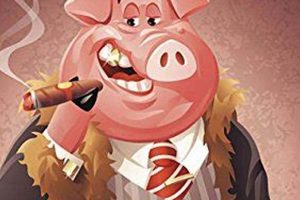
The backdrop against which George Orwell’s allegorical novella unfolds is a crucial element in understanding the narrative’s themes. The story’s location, a farm initially called Manor Farm, represents a microcosm of totalitarian societies. Its transition to Animal Farm mirrors historical revolutions, reflecting the hopes and subsequent disappointments of societal reform.
The significance of the environment lies in its representation of power dynamics and social hierarchies. The farm’s resources, control over labor, and distribution of food are central to understanding the animals’ struggle for equality and the eventual corruption that arises. The changing landscape and structures on the property serve as physical manifestations of the evolving political climate and the pigs’ increasing dominance.
The geographic location, though not explicitly defined in the text, implicitly draws parallels to Soviet Russia. Examining the socio-political conditions portrayed within this fictional locale allows for deeper insight into the critique of authoritarianism, propaganda, and the suppression of individual liberties explored throughout the literary work.
Analyzing the Fictional Locale
Understanding the environment of the narrative is paramount for a comprehensive analysis. Consider the following guidelines to gain deeper insights into its significance:
Tip 1: Examine the Farm’s Initial State: Identify the pre-revolution conditions. Note the hierarchy established by Mr. Jones and the animals’ dissatisfaction with their living conditions. This provides a baseline for measuring subsequent changes.
Tip 2: Trace the Transformation of Manor Farm: Observe the physical and symbolic alterations that occur following the rebellion. The renaming to Animal Farm and the implementation of animalistic principles represent a fundamental shift in societal structure.
Tip 3: Analyze the Farm Buildings and Structures: Pay attention to the use of specific locations, such as the barn (for meetings and commandments), the farmhouse (the pigs’ eventual residence), and the windmill (representing collective labor and progress). These spaces reflect evolving power dynamics.
Tip 4: Consider the Surrounding Landscape: The farm’s relative isolation from the human world underscores its self-contained nature, mirroring the closed-off nature of totalitarian regimes. Interactions with neighboring farms (Pilkington and Frederick’s) represent external relations and potential conflicts.
Tip 5: Interpret the Symbolism of Resources: Food, tools, and other resources become symbols of control and inequality. The pigs’ management and eventual hoarding of these necessities highlight their abuse of power.
Tip 6: Explore the Impact on Characters: Analyze how the inhabitants are affected by the ever-changing conditions. Characters like Boxer and Clover embody the working class whose dedication is exploited. The animals’ experiences illustrate the consequences of ideological manipulation.
Tip 7: Connect to Historical Context: Link the setting’s attributes to elements of Soviet Russia, such as collectivized agriculture, propaganda campaigns, and the suppression of dissent. Identifying parallels enriches the understanding of Orwell’s allegorical critique.
These considerations facilitate a nuanced understanding of the fictional environment, its role in conveying the narrative’s themes, and its relevance to real-world political and social structures.
Applying these analytical techniques contributes to a comprehensive understanding of the narrative’s underlying message regarding power, control, and societal corruption.
1. Agricultural landscape

The agricultural landscape forms the foundation of the fictional world. The animals’ labor, the production of food, and the management of resources are inextricably linked to the farm’s physical environment. This agrarian setting serves as the primary source of wealth and sustenance, making it the focal point of power struggles. The initial rebellion is spurred by the animals’ desire to control the means of production, namely the farm and its bounty. The success or failure of the animal-led society is, therefore, directly tied to their ability to effectively manage and utilize this resource.
Following the pigs’ rise to power, the agricultural landscape becomes a tool for control. The manipulation of food distribution, the forced labor in the fields, and the eventual sale of produce for the pigs’ personal gain highlight the corruption of the revolution’s ideals. The windmill project, emblematic of technological advancement and collective effort, is similarly integrated into the agricultural context. Its purpose, initially envisioned as a means to improve farm productivity, is ultimately subverted to serve the pigs’ interests. The constant emphasis on agricultural output reinforces the animals’ reliance on the farm and, consequently, their vulnerability to the pigs’ authority.
The agricultural setting underscores the themes of exploitation and inequality. The animals’ unwavering commitment to tilling the land contrasts sharply with the pigs’ increasing detachment from manual labor. This disparity serves as a critique of class stratification and the manipulation of the working class. The ultimate transformation of the farm back into a traditional agricultural enterprise, albeit under the pigs’ rule, signifies the failure of the revolution and the cyclical nature of power dynamics. Understanding the agricultural landscape’s role is crucial for interpreting the narrative’s broader commentary on socio-political structures.
2. Isolated location

The isolated setting within the narrative significantly amplifies the allegorical nature of the work. The farm’s relative remoteness from external human influence creates a self-contained environment where the animals are entirely dependent on their own governance. This isolation fosters a microcosm that mirrors real-world societies, allowing Orwell to explore themes of power, control, and revolution without the distractions of external factors. The lack of outside intervention underscores the internal dynamics that lead to the animals’ subjugation, emphasizing the importance of internal vigilance against corruption.
The separation from neighboring farms and human society exacerbates the animals’ vulnerability to manipulation. Without external information or alternative perspectives, they become increasingly reliant on the pigs’ narratives and propaganda. The limited interaction with the outside world also hinders the potential for alliances or assistance, reinforcing the pigs’ control. The farm’s insularity is a deliberate choice by Orwell, enhancing the story’s capacity to function as a cautionary tale applicable to diverse political contexts. The absence of external checks and balances accentuates the animals’ susceptibility to internal oppression, drawing parallels to totalitarian regimes that thrive on information control and isolation from dissent.
The isolated locale underscores the dangers of unchecked power and the importance of critical thinking. The animals’ eventual inability to discern truth from falsehood, coupled with their physical confinement, illustrates the devastating consequences of intellectual and physical isolation. The setting serves as a crucial element in understanding the narrative’s critique of political systems and the importance of external awareness and independent thought. By confining the action to a secluded farm, Orwell effectively highlights the universal themes of power dynamics and the potential for oppression within any closed society, regardless of its size or scale.
3. Symbolic structures

Within the broader environment, erected constructs and specific locales take on symbolic weight, reflecting the evolving socio-political landscape and the power dynamics at play on the farm. These serve not merely as physical locations but as embodiments of the animals’ aspirations, struggles, and the ultimate corruption of their ideals.
- The Barn
Initially serving as a communal space for meetings and the inscription of the Seven Commandments, the barn represents the ideals of equality and collective governance. As the pigs consolidate power, the barn transforms into a site of propaganda and manipulation. The alteration of the Commandments illustrates the pigs’ revision of history to suit their self-serving agenda, effectively undermining the foundational principles of the revolution. The barn’s evolution reflects the decay of utopian aspirations into a tool of oppression.
- The Windmill
The windmill symbolizes progress, technological advancement, and the potential for a better future for the animals. Its construction demands immense labor and sacrifice, embodying the collective effort and deferred gratification inherent in revolutionary movements. The windmill’s destruction and reconstruction, repeatedly attributed to Snowball, become a vehicle for propaganda and the consolidation of Napoleon’s authority. The eventual use of the windmill for milling grain, sold for the pigs’ profit, signifies the betrayal of the revolution’s goals and the prioritization of personal gain over collective well-being.
- The Farmhouse
Originally forbidden to the animals, the farmhouse represents the opulence and privilege of the human owners. The pigs’ eventual occupation of the farmhouse marks their complete usurpation of power and their adoption of human-like behaviors and lifestyles. Living in the farmhouse separates the pigs from the other animals and symbolizes the emergence of a new ruling class that enjoys the benefits of exploitation. The farmhouse, therefore, becomes a symbol of social stratification and the corruption of revolutionary ideals.
- Animal Farm Flag
The green tablecloth with a white hoof and horn, which is the Animal Farm flag, represents the animals’ solidarity. In this flag, the color green signifies the green fields of England, while the hoof and horn symbolize the Republic of the Animals which the animals achieved during their animalism revolution. The flag illustrates the principles of animalism.
The symbolic weight of these contributes to the narrative’s allegorical power. The transformation of these locations from symbols of hope and equality into emblems of oppression underscores the cyclical nature of power and the ease with which revolutionary ideals can be subverted. These elements reinforce the narrative’s critique of totalitarian regimes and the importance of vigilance against the abuse of power.
4. Changing ownership

The recurring theme of changing ownership profoundly impacts the environment. The shifts in control, from Mr. Jones to the animals and ultimately to the pigs, directly influence the allocation of resources, the implementation of policies, and the overall atmosphere. These transitions manifest physically and symbolically, shaping the environment and reflecting the narrative’s core themes.
- The Initial Rebellion and Seizure of Manor Farm
The first shift in ownership, from the human farmer Mr. Jones to the collective of animals, represents the initial promise of revolution. The seizure of the farm embodies the ideals of equality and self-determination. This change leads to alterations in the landscape, such as the renaming of Manor Farm to Animal Farm and the initial attempts to establish a communal and egalitarian society. However, the seeds of future conflict are sown as the animals struggle to adapt and govern themselves.
- The Rise of the Pigs and Gradual Consolidation of Power
As the pigs, led by Napoleon, strategically gain control, the farm’s environment undergoes a subtle yet significant transformation. The pigs manipulate the other animals, gradually seizing control of resources, decision-making processes, and living spaces. This shift manifests in the pigs’ occupation of the farmhouse, the unequal distribution of food, and the revision of the Seven Commandments. The gradual erosion of the original revolutionary principles directly correlates with the pigs’ tightening grip on the farm.
- The Windmill as a Symbol of Exploitation
The construction and control of the windmill underscore the changing power dynamics and the exploitation of the animals’ labor. Initially intended as a communal project for the benefit of all, the windmill becomes a symbol of the pigs’ control. The other animals endure grueling labor to build it, only to have the fruits of their efforts sold for the pigs’ personal gain. The windmill’s ownership and utilization demonstrate the pigs’ complete subversion of the revolutionary ideals and their transformation into a ruling class.
- The Return to Human-like Control
The culmination of the shifting ownership occurs when the pigs adopt human traits and eventually ally themselves with neighboring farmers. The final scene, where the pigs and humans are indistinguishable, represents the complete failure of the revolution. The farm effectively reverts to its original state of human ownership, with the pigs having replaced Mr. Jones as the exploiters. This cyclical return underscores the narrative’s pessimistic view of revolutionary change and the enduring potential for corruption and oppression.
These phases of changing ownership are essential for understanding the symbolic and allegorical weight of the environment. The alterations to the farm’s physical landscape and social structure reflect the evolution of power dynamics and the ultimate betrayal of the revolution’s initial promise. This highlights the narrative’s central themes of corruption, exploitation, and the cyclical nature of power struggles. The changing ownership also directly affects the animals and shapes their perception of reality.
5. Representational microcosm

The depiction of Manor Farm, renamed Animal Farm, as a representational microcosm is central to understanding the narrative’s allegorical function. The setting is intentionally designed to mirror broader societal structures and historical events, specifically the Russian Revolution and the rise of Stalinism. Every aspect of the farm, from its inhabitants to its infrastructure, serves as a symbolic stand-in for elements of a larger political and social system. This deliberate mirroring allows the narrative to explore universal themes of power, corruption, and social stratification within a contained, easily understandable environment.
The enclosed nature of the farm amplifies the impact of internal events. The animals, representing different social classes and political ideologies, interact within the confines of the farm, mirroring the dynamics of a complete society. The actions of the pigs, their manipulation of language, and their control over resources, all serve as allegorical representations of totalitarian regimes and the methods they employ to maintain power. Understanding the microcosm enables the reader to extrapolate the narrative’s lessons to real-world scenarios. For example, the pigs’ rewriting of history on the barn wall directly mirrors the historical revisionism employed by autocratic governments to legitimize their rule and suppress dissent. Similarly, the exploitation of Boxer’s unwavering loyalty reflects the manipulation of the working class within totalitarian systems. Animal Farm, therefore, serves as a model for analyzing and understanding the dynamics of power and control in various historical and contemporary contexts.
The utilization of the farm as a representational microcosm is crucial to the narrative’s enduring relevance. By distilling complex political processes into a simplified and easily digestible format, the setting effectively communicates the dangers of unchecked power and the erosion of revolutionary ideals. While the specific historical context is vital, the microcosm allows the lessons to transcend that specific time and place. The enduring challenge lies in recognizing these patterns within contemporary societies and resisting the forces that lead to oppression and inequality. The representational microcosm serves as a continuous reminder of the importance of vigilance, critical thinking, and the preservation of individual liberties.
Frequently Asked Questions
This section addresses common inquiries regarding the environment and its role within the narrative.
Question 1: What is the primary significance of the story’s location?
The farm’s location is significant as it functions as a microcosm, representing a broader societal structure susceptible to the same power dynamics and corrupting influences. Its isolation amplifies internal struggles, making it a controlled environment for exploring political themes.
Question 2: How does the environment mirror historical events?
The transformation of the farm directly mirrors the Russian Revolution and the subsequent rise of Stalinism. Events such as the expulsion of Mr. Jones, the establishment of the Seven Commandments, and the pigs’ gradual consolidation of power all have clear parallels to historical events in the Soviet Union.
Question 3: Why is the farm’s agricultural nature so important?
The agricultural setting highlights the economic system and the exploitation of labor. The animals’ reliance on the farm for sustenance makes them vulnerable to control by those who manage its resources, mirroring the power dynamics of a capitalist or communist system.
Question 4: What role do the farm’s buildings and structures play in the story?
Buildings such as the barn and the windmill are symbolic structures that represent the ideals of the revolution and their subsequent corruption. The farmhouse, initially off-limits to the animals, becomes a symbol of the pigs’ growing privilege and separation from the other animals.
Question 5: How does the changing name of the farm reflect the narrative’s themes?
The initial name, Manor Farm, represents the old order of human exploitation. The change to Animal Farm signifies the animals’ revolutionary attempt to create a more equitable society. The eventual tacit return to “Manor Farm” in all but name indicates the failure of the revolution and the re-establishment of oppressive power structures.
Question 6: Does the geographic location of the farm have any symbolic meaning?
While the explicit geographic location is not specified, its implied setting in England provides a satirical commentary on socialist ideals and their potential for corruption, even within a democratic and ostensibly egalitarian society.
The responses highlight the setting as a crucial element in interpreting the allegory’s message about political corruption and the cyclical nature of power.
The next section will explore the characters and their relationship to setting.
Conclusion
The examination of “animal farm book setting” reveals its fundamental role in conveying George Orwell’s allegorical critique. The agricultural landscape, isolated location, symbolic structures, evolving ownership, and representational microcosm collectively function to portray the rise and corruption of a totalitarian regime. These elements, carefully constructed, contribute to a potent warning about the dangers of unchecked authority and the subversion of revolutionary ideals.
Understanding the significance of the environment deepens the appreciation of Orwell’s message. Through the lens of the story’s location, one gains enhanced insight into the enduring relevance of political vigilance and the preservation of individual liberties in the face of potential oppression. Continued analysis of this fabricated world allows for recognition of parallel patterns in reality.