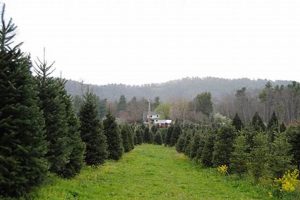
This is a certification program recognizing private forest landowners for their commitment to sustainable forest management. Participants actively manage their woodlands for wood production, wildlife habitat, recreation, and watershed protection. For instance, a family might manage their property by selectively harvesting timber, creating wildlife openings, and implementing erosion control measures, all while adhering to established best management practices.
The initiative is crucial for maintaining healthy and productive forests, contributing to the nation’s timber supply, supporting biodiversity, and ensuring clean water and air. Its historical roots lie in the need to promote responsible forestry practices among private landowners, who collectively own a significant portion of the nation’s forestland, safeguarding their long-term productivity and ecological value for future generations. This also fosters community engagement.
The following sections delve deeper into specific aspects of this crucial program, including its certification process, the role of forest management plans, and the ecological and economic impacts of these sustainable forestry operations.
Management Guidance
The following guidance emphasizes key strategies for successful implementation within this framework, ensuring responsible forest stewardship and optimizing long-term benefits.
Tip 1: Develop a Comprehensive Forest Management Plan: A well-structured plan serves as a roadmap, outlining objectives for the property, including timber production, wildlife habitat enhancement, and recreational opportunities. The plan should address resource management practices, such as timber harvesting techniques, reforestation methods, and erosion control measures.
Tip 2: Implement Sustainable Harvesting Practices: Employ selective cutting or other harvesting methods that minimize environmental impact, preserve soil integrity, and promote natural regeneration. Avoid clear-cutting on steep slopes or in sensitive riparian areas.
Tip 3: Promote Forest Health and Resilience: Monitor the property for signs of insect infestations, diseases, and invasive species. Implement appropriate control measures to mitigate potential damage and maintain a healthy forest ecosystem.
Tip 4: Enhance Wildlife Habitat: Create and maintain diverse habitat types to support a variety of wildlife species. Consider leaving standing dead trees (snags) for nesting birds and mammals, creating brush piles for cover, and planting native shrubs and trees that provide food and shelter.
Tip 5: Protect Water Quality: Implement best management practices (BMPs) to prevent erosion and sedimentation in streams and rivers. Maintain streamside management zones (SMZs) along waterways to filter runoff and provide shade. Maintain proper placement of roads.
Tip 6: Regularly Assess and Update Management Practices: Periodically evaluate the effectiveness of implemented strategies and make adjustments as needed. Monitor forest conditions, track progress towards objectives, and adapt management practices to address changing environmental conditions or market demands.
Tip 7: Maintain Detailed Records: Keep accurate records of all management activities, including timber harvests, planting efforts, pest control measures, and wildlife surveys. These records will be valuable for tracking progress, demonstrating compliance with certification standards, and informing future management decisions.
These actions collectively ensure sustainable management, maximizing timber value, while simultaneously fostering biodiversity, protecting water resources, and maintaining overall forest health.
Consider exploring further information regarding the certification process and available resources for enhanced implementation.
1. Certification Standards

Certification standards serve as the cornerstone of the forest management initiative, defining the requirements and benchmarks that landowners must meet to achieve and maintain certification. The initiative’s credibility and effectiveness depend directly on the rigor and enforcement of these standards. They dictate sustainable forestry practices encompassing harvesting, reforestation, water quality protection, and biodiversity conservation. Failure to adhere to the certification standards results in the revocation of certified status, underscoring the importance of continuous adherence.
For example, specific standards might require landowners to implement best management practices for erosion control during timber harvesting operations, maintain buffer zones along waterways to protect water quality, and promote the regeneration of native tree species following timber removal. Landowners are subject to regular audits and inspections to ensure compliance with these standards. Successful completion of the audits and adherence to standards demonstrates a commitment to sustainable forestry and provides assurance to consumers and stakeholders that wood products originating from certified properties are managed responsibly.
In essence, certification standards provide a framework for responsible forest management, driving improvements in forestry practices and ensuring the long-term health and productivity of private forest lands. Challenges remain in maintaining consistency across diverse forest ecosystems and adapting standards to address emerging threats such as climate change and invasive species. However, the continuing evolution and diligent application of these standards are vital for advancing the initiative’s mission of promoting sustainable forestry and responsible land stewardship.
2. Sustainable Management Plans

Sustainable management plans are integral components of participation within the forestry initiative, serving as roadmaps for responsible forest stewardship. These plans outline landowner objectives and detail specific strategies for achieving long-term ecological and economic sustainability within their woodland properties.
- Resource Assessment and Goal Setting
A plan begins with a thorough assessment of the forest’s current condition, including timber inventory, wildlife habitat assessment, and water resource evaluation. Landowners then define clear, measurable goals, such as timber production targets, desired wildlife populations, and water quality standards. This goal-setting provides a foundation for all subsequent management decisions.
- Silvicultural Prescriptions
The plan details silvicultural prescriptions, which are specific treatments designed to achieve defined goals. These may include thinning operations to improve timber growth and wildlife habitat, prescribed burning to reduce wildfire risk and enhance biodiversity, or reforestation efforts to establish new stands of desirable tree species. The prescriptions are tailored to the specific site conditions and landowner objectives.
- Best Management Practices (BMPs)
The plan integrates best management practices to minimize environmental impact. BMPs address erosion control, water quality protection, and the conservation of sensitive areas. For instance, the plan will specify buffer zones along streams to prevent sedimentation, erosion control measures during timber harvesting, and practices to protect rare or endangered species.
- Monitoring and Evaluation
A sustainable management plan includes a framework for monitoring and evaluating the effectiveness of implemented strategies. This involves tracking progress toward established goals, assessing forest health, and adapting management practices as needed. Regular monitoring ensures that the plan remains relevant and effective over time, supporting adaptive management in response to changing conditions or new information.
These management plans, guided by the forestry initiative’s principles and standards, facilitate responsible timber production, wildlife habitat enhancement, and water resource protection, contributing to the long-term sustainability of privately owned forests. The development and implementation of these plans are essential requirements for certification within the system, ensuring a standardized approach to responsible land stewardship across participating properties. Furthermore, these plan support the health of our forests.
3. Forest Health
The state of a forest’s biological and physical components defines its health, which is critical to sustainable forest management. The forest management system actively promotes and safeguards woodland health through comprehensive strategies and best management practices. Unhealthy forests are susceptible to disturbances like insect infestations, diseases, and wildfires, jeopardizing timber production, wildlife habitat, and water quality.
Practices endorsed under the system, such as thinning and prescribed burning, proactively mitigate forest health risks. Thinning reduces tree density, enhancing the vitality of remaining trees and reducing competition for resources. Prescribed burning removes accumulated forest floor debris, minimizing wildfire hazards and promoting nutrient cycling. Consider, for instance, a landowner in the Pacific Northwest using thinning to improve the growth of Douglas fir stands and reduce the risk of bark beetle infestations. Another may implement prescribed burning to control invasive species and create more suitable habitat for wildlife in the Southeastern United States. Proactive forest health measures are essential to sustainable management.
Ultimately, the integration of forest health management into the sustainable system is key to maintaining productive and resilient woodlands. By implementing these measures, landowners can reduce forest vulnerability to disturbances, ensuring the long-term ecological and economic benefits. Without a focus on the health of the forest, the economic benefits and value of the forest would be lost.
4. Wildlife Habitat

The provision and enhancement of habitat is a central tenet of the tree farm system. Sustainable forest management practices, as implemented under the program’s guidelines, directly influence the quantity and quality of resources available to diverse animal populations. The system recognizes that active forest management, when conducted responsibly, can create and maintain a mosaic of habitat types, benefiting a wide range of species. Failure to consider wildlife habitat during forest management can lead to habitat loss, fragmentation, and declines in wildlife populations. The system aims to balance timber production with the ecological needs of wildlife.
For example, a tree farm owner might implement selective harvesting techniques, retaining mature trees and snags to provide nesting and denning sites for birds and mammals. The landowner could also create small clearings to promote the growth of early successional vegetation, offering forage and cover for deer, rabbits, and other herbivores. Management practices may also incorporate the creation of water sources, such as ponds or wetlands, to enhance habitat for amphibians and waterfowl. Furthermore, landowners may actively manage for the control of invasive species, which often outcompete native vegetation and degrade habitat quality. Properly managed forests support a greater diversity and abundance of wildlife.
In summary, the integrated approach to wildlife management within the system serves as a key component of the sustainable forest system. By implementing practices that enhance habitat diversity and quality, the system helps to ensure the long-term persistence of wildlife populations within working forest landscapes. Addressing challenges associated with habitat fragmentation and climate change will require continued adaptation of management strategies and collaboration among landowners, resource professionals, and conservation organizations. The forestry initiative’s dedication to responsible forest management aims to provide benefits to both landowners and wildlife populations.
5. Water Protection

The integrity of water resources is intrinsically linked to the responsible forest management practices promoted by the tree farm system. Activities within a forest ecosystem, if improperly managed, can significantly impact water quality through soil erosion, sedimentation, and increased nutrient runoff. Consequently, safeguarding water resources is a fundamental principle embedded within the certification criteria of the forestry initiative, emphasizing that active forest management must not compromise the health of adjacent streams, rivers, and groundwater sources. Specifically, certified tree farms are required to implement best management practices (BMPs) designed to minimize nonpoint source pollution associated with forestry operations.
BMPs encompass a range of preventative measures, including the maintenance of streamside management zones (SMZs), which act as buffer strips to filter runoff and stabilize streambanks. Proper road construction and maintenance techniques are also critical to prevent erosion and sedimentation. Moreover, the responsible application of fertilizers and pesticides is carefully regulated to minimize the risk of water contamination. Consider, for instance, a tree farm in the Appalachian region implementing a comprehensive set of BMPs during a timber harvest. This involves installing sediment traps, using water bars on logging roads to divert runoff, and strictly adhering to buffer zone requirements along designated waterways. These efforts significantly reduce the potential for soil erosion and sedimentation, protecting water quality and aquatic habitats.
In conclusion, the integration of water protection measures within the tree farm system reflects a commitment to sustainable forest management that extends beyond timber production. By proactively addressing potential threats to water quality, the program seeks to ensure the long-term health and resilience of both forest ecosystems and the surrounding watersheds. Challenges remain in adapting BMPs to diverse site conditions and evolving scientific knowledge. However, the ongoing emphasis on water protection remains a cornerstone of responsible forest stewardship, promoting the sustainable utilization of forest resources while safeguarding essential water resources for present and future generations.
Frequently Asked Questions
The following addresses common inquiries concerning sustainable forestry certification, providing clarity on its processes, benefits, and impacts.
Question 1: What qualifies a property for enrollment within the American Tree Farm System?
To qualify, a property must be privately owned and actively managed for wood production, wildlife habitat, watershed protection, or recreational purposes. A written forest management plan prepared by a qualified natural resource professional is required, demonstrating sustainable practices.
Question 2: How does certification benefit a landowner?
Certification provides recognition for responsible forest stewardship, enhances access to technical assistance and educational resources, and may increase market opportunities for forest products.
Question 3: What are the key elements of a sustainable forest management plan?
A sustainable management plan must include clear objectives, silvicultural prescriptions, best management practices for water quality protection, wildlife habitat enhancement strategies, and a monitoring plan to track progress.
Question 4: How frequently are certified tree farms inspected?
Certified properties undergo periodic reassessment to ensure ongoing compliance with the standards. The frequency of these reassessments is determined by the certifying body.
Question 5: What is the role of a consulting forester in the certification process?
A consulting forester can assist landowners in developing management plans, implementing sustainable forestry practices, and navigating the certification process. Their expertise is valuable in ensuring compliance with the system’s standards.
Question 6: How does the American Tree Farm System contribute to broader conservation efforts?
The system promotes responsible forest management on private lands, contributing to the sustainable supply of wood products, the conservation of biodiversity, the protection of water resources, and the mitigation of climate change impacts.
Certification through the initiative signifies a commitment to responsible woodland management, promoting both economic and environmental sustainability.
This concludes the Frequently Asked Questions section. Additional information regarding certification standards and available resources can be found on the official website.
Conclusion
This exploration of the American Tree Farm System underscores its pivotal role in promoting sustainable forestry on privately owned woodlands. Adherence to certification standards, the implementation of comprehensive management plans, a focus on forest health, attention to wildlife habitat, and proactive water protection measures are integral components of this initiative. The systematic approach ensures the long-term ecological and economic viability of working forests.
The demonstrated commitment to responsible forest stewardship within this framework necessitates continued vigilance and adaptation to address evolving environmental challenges. The sustained success of this system hinges on the active participation of landowners, the guidance of qualified resource professionals, and the consistent enforcement of rigorous certification standards. Its ongoing relevance is crucial for securing the future health and productivity of America’s forest resources.


![Smiths Christmas Tree Farm: [Your City/Region]'s Best Holiday Tree | The Conscious Farmer | Sustainable Agriculture for a Healthier Planet](https://livingedgefarm.com/wp-content/uploads/2025/08/th-8055-300x200.jpg "Smiths Christmas Tree Farm: [Your City/Region]'s Best Holiday Tree The Conscious Farmer | Sustainable Agriculture for a Healthier Planet")