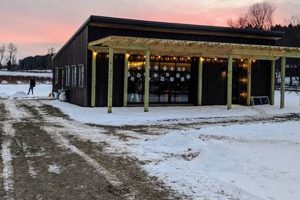
Cultivation of Rubus idaeus, a fruit-bearing plant, is a specialized agricultural endeavor. These operations often involve meticulous planning and management to yield high-quality produce. Such agricultural spaces require careful consideration of soil composition, irrigation systems, and protection from pests and diseases.
The economic impact of these ventures extends beyond the immediate locale, contributing to regional economies through job creation and revenue generation. Furthermore, these agricultural practices can promote sustainable land management, provided that environmentally sound methods are employed. Historically, cultivation of this fruit has evolved from small-scale family operations to larger commercial enterprises, reflecting advancements in agricultural technology and market demand.
The following sections will delve into specific aspects related to the growth cycle, harvesting techniques, and common challenges faced in managing these agricultural businesses. Consideration will also be given to the integration of technology and innovative strategies designed to enhance productivity and sustainability within this agricultural sector.
Cultivation Insights
Optimal fruit production necessitates adherence to best practices in agricultural management. The following outlines several critical considerations for successful Rubus idaeus cultivation.
Tip 1: Soil Assessment: Prior to planting, a comprehensive soil analysis is crucial. The soil’s pH level should ideally range between 6.0 and 6.8. Amendments, such as compost or peat moss, may be necessary to achieve optimal soil structure and nutrient availability.
Tip 2: Variety Selection: Choosing the appropriate cultivar is paramount. Factors such as climate, disease resistance, and market demand should influence selection. Consider both everbearing and summer-bearing varieties to extend the harvest season.
Tip 3: Irrigation Management: Consistent and adequate watering is essential, particularly during fruit development. Drip irrigation systems are recommended to minimize water waste and reduce the risk of fungal diseases.
Tip 4: Pest and Disease Control: Implementing integrated pest management (IPM) strategies is vital for minimizing crop damage. Regular monitoring for common pests, such as aphids and spider mites, and diseases, such as root rot and cane blight, allows for timely intervention.
Tip 5: Pruning Techniques: Proper pruning techniques are essential for maintaining plant health and maximizing fruit yield. Remove spent canes promptly after harvest to encourage new growth and improve air circulation.
Tip 6: Nutrient Optimization: Regular soil testing and appropriate fertilization are critical for maintaining optimal plant health and fruit quality. Nitrogen, phosphorus, and potassium are essential nutrients that should be carefully managed.
Tip 7: Weed Control: Effective weed control is essential. Manual weeding, mulching, or the judicious use of herbicides may be necessary to minimize competition for resources and reduce the risk of pest infestations.
Implementing these strategies can significantly enhance fruit production and overall agricultural sustainability. Diligent application of these principles contributes to long-term success in Rubus idaeus cultivation.
The subsequent sections will explore advanced topics related to post-harvest handling, marketing strategies, and the integration of sustainable practices.
1. Optimal Soil Conditions

The productivity and longevity of a Rubus idaeus cultivation enterprise are inextricably linked to the quality of the soil. Soil serves as the primary medium for root development, nutrient uptake, and water retention. Deficiencies or imbalances in soil composition directly impede plant health, fruit yield, and susceptibility to disease. For instance, poorly drained soil elevates the risk of root rot, a common and potentially devastating affliction. Similarly, inadequate levels of essential nutrients, such as nitrogen, phosphorus, and potassium, result in stunted growth and reduced fruit production. A case in point is demonstrated by operations that neglect soil testing, often experiencing significantly lower yields and higher rates of plant mortality compared to those that prioritize comprehensive soil management. Therefore, understanding and addressing soil-related factors are fundamental to successful crop cultivation.
Achieving suitable soil conditions necessitates a multi-faceted approach, commencing with a detailed soil analysis to determine pH levels, nutrient content, and drainage characteristics. The ideal pH range for Rubus idaeus typically falls between 6.0 and 6.8. Soil amendments, such as compost, well-rotted manure, or peat moss, are commonly employed to improve soil structure, drainage, and nutrient availability. Furthermore, the application of specific fertilizers, tailored to the identified nutrient deficiencies, can optimize plant growth and fruit development. Consider the example of a field initially deficient in organic matter; the incorporation of compost over several seasons not only improves soil structure but also enhances water retention and nutrient availability, resulting in improved plant vigor and increased yields.
In summary, optimal soil conditions are not merely a desirable attribute, but a critical prerequisite for a thriving Rubus idaeus cultivation operation. Neglecting soil management practices inevitably leads to reduced productivity, increased disease susceptibility, and diminished profitability. While challenges such as soil erosion and nutrient depletion require ongoing attention, the implementation of sound soil management strategies, including regular testing, appropriate amendments, and tailored fertilization, provides the foundation for sustainable and successful cultivation. This understanding is paramount for long-term viability and profitability within the broader framework of agricultural management.
2. Strategic Variety Selection

Variety selection represents a pivotal decision in the establishment and management of a Rubus idaeus cultivation operation. This selection dictates potential yield, susceptibility to disease, and suitability to specific regional climates. Prudent variety choices, therefore, are directly linked to long-term profitability and sustainability.
- Climate Adaptation and Hardiness
Different Rubus idaeus varieties exhibit varying degrees of tolerance to temperature extremes, humidity levels, and regional weather patterns. For instance, certain cultivars demonstrate superior cold hardiness, making them suitable for regions with harsh winters, while others thrive in warmer climates with extended growing seasons. Selecting varieties ill-suited to the local climate invariably results in reduced yields, increased susceptibility to environmental stress, and heightened risk of crop failure. Operations in northern climates, for example, often prioritize varieties bred for cold tolerance to mitigate potential winter damage.
- Disease Resistance and Pest Tolerance
Rubus idaeus plants are vulnerable to a range of fungal, bacterial, and viral diseases, as well as insect infestations. However, some varieties possess inherent resistance or tolerance to specific pathogens and pests. Choosing resistant varieties reduces the need for chemical interventions, minimizing environmental impact and production costs. Operations that proactively select disease-resistant cultivars often experience lower disease incidence and reduced reliance on pesticides, contributing to a more sustainable and environmentally responsible approach. The adoption of varieties resistant to root rot, for example, can substantially decrease the incidence of this disease and improve overall plant health.
- Yield Potential and Fruit Quality
Varieties differ significantly in terms of their potential yield, fruit size, flavor profile, and shelf life. High-yielding varieties, coupled with desirable fruit characteristics, command higher market prices and contribute to increased revenue. Selecting varieties with extended shelf life is particularly important for operations targeting distant markets or those without immediate access to processing facilities. Operations prioritizing fruit quality and yield often conduct extensive trials to identify the most promising varieties for their specific market niche. The selection of a high-yielding cultivar with excellent flavor and extended shelf life can translate into a significant competitive advantage.
- Market Demand and Consumer Preferences
Consumer preferences for Rubus idaeus vary geographically and evolve over time. Market demand for specific fruit characteristics, such as size, color, and flavor, influences the selection of appropriate varieties. Cultivating varieties that align with prevailing consumer preferences maximizes marketability and profitability. Operations attentive to market trends often adjust their variety selection to cater to evolving consumer demands. The shift towards varieties with superior sweetness and larger fruit size, for instance, reflects changing consumer preferences and drives cultivar selection decisions.
The confluence of these factorsclimate adaptation, disease resistance, yield potential, and market demandunderscores the importance of strategic variety selection in Rubus idaeus cultivation. A well-informed and deliberate approach to variety selection is essential for optimizing productivity, minimizing risks, and maximizing profitability in this agricultural sector. Neglecting these considerations can lead to suboptimal performance and reduced competitiveness.
3. Integrated Pest Management
Integrated Pest Management (IPM) is a critical component of successful Rubus idaeus cultivation. The principles of IPM seek to minimize economic, health, and environmental risks associated with pest control. In the context of Rubus idaeus, a diverse range of pests, including insects, mites, and diseases, can significantly impact crop yield and quality. A reliance on solely chemical control methods often leads to pest resistance, non-target effects on beneficial organisms, and environmental contamination. IPM, therefore, offers a more sustainable and holistic approach. For example, monitoring pest populations allows growers to determine if intervention is even necessary, preventing unnecessary pesticide applications. Another case is introducing beneficial insects, like ladybugs to control aphids, which can minimize the reliance on chemical insecticides. This approach reduces the potential for environmental damage while maintaining crop health and productivity.
Effective IPM implementation in Rubus idaeus systems involves a combination of strategies. Cultural practices, such as proper pruning and weed control, reduce pest harborage and improve air circulation, diminishing the prevalence of fungal diseases. Biological control methods, including the release of beneficial insects or the application of microbial pesticides, provide targeted pest suppression. Physical controls, like netting or row covers, exclude pests from the crop. Chemical controls, when necessary, are selected and applied judiciously, prioritizing products with minimal environmental impact and targeting specific pests at vulnerable life stages. The practical application of IPM requires ongoing monitoring and evaluation. Regularly scouting fields for pests and diseases allows growers to detect problems early and implement appropriate control measures before significant damage occurs. Detailed record-keeping of pest populations, control methods, and their effectiveness informs future management decisions.
In conclusion, Integrated Pest Management represents a fundamental best practice for sustainable Rubus idaeus cultivation. By integrating multiple control strategies, IPM minimizes reliance on chemical pesticides, reduces environmental impact, and promotes long-term crop health and productivity. Challenges exist in the implementation of IPM, including the need for specialized knowledge, intensive monitoring, and potential costs associated with biological control agents. However, the economic and environmental benefits of IPM far outweigh these challenges, making it an essential element of responsible Rubus idaeus farm management. The adoption of IPM principles is not merely a trend; it represents a necessary shift towards sustainable agricultural practices that protect both the environment and the long-term viability of Rubus idaeus production.
4. Efficient Irrigation Systems
The successful cultivation of Rubus idaeus hinges significantly on the implementation of efficient irrigation systems. These systems directly impact plant health, fruit yield, and overall operational sustainability. Inadequate or poorly managed irrigation can lead to water stress, reduced fruit size, increased susceptibility to disease, and ultimately, economic losses. Conversely, systems that deliver water precisely and efficiently optimize plant growth, conserve water resources, and minimize the risk of waterborne diseases. For example, a farm employing drip irrigation, which delivers water directly to the root zone, experiences significantly reduced water consumption and higher yields compared to a farm using traditional overhead sprinklers, where much of the water is lost to evaporation or runoff.
The selection and implementation of an appropriate irrigation system require careful consideration of several factors, including soil type, climate, plant variety, and water availability. Drip irrigation, micro-sprinklers, and subsurface irrigation are commonly used in Rubus idaeus cultivation, each offering distinct advantages and disadvantages. Drip irrigation excels in water conservation and targeted delivery but may require higher initial investment. Micro-sprinklers provide broader coverage but can increase the risk of foliar diseases. Subsurface irrigation offers efficient water use and reduced weed growth but can be more complex to install and maintain. The choice of system must align with the specific needs and constraints of the operation. Furthermore, monitoring soil moisture levels and plant water status is essential for optimizing irrigation scheduling and preventing water stress. Sensors and automated control systems enable precise water delivery based on real-time conditions, maximizing efficiency and minimizing waste. Farms incorporating these technologies demonstrate superior water management and reduced environmental impact.
In conclusion, efficient irrigation systems are not merely an optional add-on, but an integral component of successful Rubus idaeus cultivation. The implementation of well-designed and properly managed irrigation systems ensures optimal plant health, maximizes fruit yield, and promotes sustainable resource management. Challenges such as initial investment costs and the need for technical expertise can be overcome through careful planning, government incentives, and access to educational resources. The long-term benefits of efficient irrigation, including reduced water consumption, increased profitability, and enhanced environmental stewardship, far outweigh the initial hurdles, making it a critical investment for any Rubus idaeus operation.
5. Harvest Timing Precision
The economic viability of a Rubus idaeus cultivation enterprise is intrinsically linked to the precise timing of fruit harvest. This precision directly influences fruit quality, market value, and shelf life, thereby dictating the revenue potential of the operation. Premature harvest results in fruit that lacks optimal flavor and color development, rendering it less desirable to consumers and processors. Conversely, delayed harvest leads to overripe fruit, prone to spoilage, bruising during handling, and diminished marketability. A case in point is observed in operations that employ rigorous quality control measures, including frequent field inspections, to identify fruit at peak maturity. These operations consistently achieve higher prices and reduced waste compared to those that rely on less precise harvest methods. Therefore, diligent attention to harvest timing is a cornerstone of successful Rubus idaeus management.
The determination of optimal harvest timing requires consideration of several factors, including variety characteristics, weather conditions, and intended market. Different Rubus idaeus varieties mature at varying rates, necessitating individualized harvest schedules. Warm weather accelerates ripening, while cool weather delays it. Fruit destined for fresh market sales typically requires harvesting at a slightly earlier stage of maturity compared to fruit intended for processing, to allow for transport and handling. Harvesting techniques also play a crucial role in maintaining fruit quality. Manual harvesting, while labor-intensive, allows for selective picking of only the ripest fruit, minimizing damage and maximizing market value. Automated harvesting systems, while more efficient, require careful calibration to avoid harvesting unripe or overripe fruit. For instance, the adoption of hand-picking techniques during peak season allows for precise selection of ripe berries, minimizing bruising and maximizing shelf life for fresh market sales.
In summary, harvest timing precision is a critical determinant of economic success in Rubus idaeus cultivation. Proper timing maximizes fruit quality, minimizes waste, and optimizes market value. While challenges such as labor costs and unpredictable weather patterns exist, the implementation of sound harvest management practices, including regular field inspections, variety-specific harvest schedules, and careful harvesting techniques, is essential for long-term viability and profitability within the broader framework of agricultural management. Prioritizing precise harvest timing ensures that the produced crop reaches consumers in optimal condition, enhancing brand reputation and fostering customer loyalty.
Frequently Asked Questions
The following addresses common inquiries concerning the cultivation and management of Rubus idaeus, providing concise and factual responses.
Question 1: What are the primary soil requirements for optimal plant growth?
Optimal growth necessitates well-drained soil with a pH between 6.0 and 6.8. Soil testing is recommended to determine nutrient deficiencies and guide amendment strategies.
Question 2: How frequently should irrigation be applied?
Irrigation frequency depends on soil type, climate, and plant stage. Consistent moisture is essential, particularly during fruit development. Monitoring soil moisture levels is critical for effective irrigation management.
Question 3: What are the most prevalent diseases affecting cultivation?
Common diseases include root rot, cane blight, and fruit rot. Implementing preventative measures, such as proper pruning and fungicide applications, is crucial for disease management.
Question 4: When is the optimal time to harvest the fruit?
Optimal harvest timing depends on variety and intended market. Fruit should be fully colored, easily detached from the plant, and possess desired firmness. Regular field inspections are essential for determining ripeness.
Question 5: What are effective strategies for weed control?
Effective weed control integrates cultural practices, such as mulching, with targeted herbicide applications when necessary. Preventing weed competition is essential for optimal plant growth and yield.
Question 6: How can productivity be maximized in Rubus idaeus cultivation?
Maximizing productivity requires adherence to best practices in soil management, irrigation, pest control, and harvest timing. Continuous monitoring and adaptation are critical for optimizing performance.
Understanding these core principles is essential for effective decision-making and successful management of these operations.
The subsequent sections will explore advanced topics, including post-harvest handling techniques and market diversification strategies.
Conclusion
The multifaceted nature of the topic has been explored, encompassing cultivation techniques, pest management strategies, and the crucial role of harvest timing. Emphasis has been placed on the integration of sustainable practices and the optimization of resource utilization to ensure long-term viability. Effective management necessitates a comprehensive understanding of soil requirements, irrigation systems, and variety selection to maximize yield and maintain fruit quality.
Continued advancements in agricultural technology and research hold the potential to further enhance productivity and sustainability. A commitment to innovation, coupled with adherence to best practices, will be instrumental in shaping the future of the industry. Prudent investment in research and development is essential for adapting to evolving market demands and mitigating the challenges posed by climate change and emerging pests and diseases.