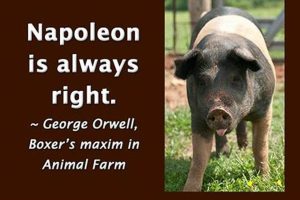
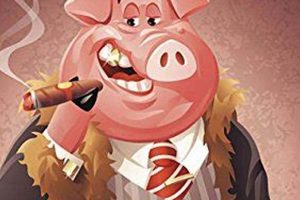
In George Orwell’s Animal Farm, canines symbolize the enforcement arm of the ruling power. They embody brute force, intimidation, and unquestioning loyalty. Raised from pups to serve Napoleon exclusively, they are detached from the other animals and trained to be completely subservient to the pigs’ agenda.
The presence of these creatures highlights the corruption of the revolution’s ideals. Their use as a tool of oppression demonstrates the transformation of a society that initially sought equality into one governed by fear and control. Historically, they evoke the secret police and military forces used by totalitarian regimes to suppress dissent and maintain power.
Their actions contribute significantly to the narrative’s central themes of power, manipulation, and the betrayal of revolutionary principles. They are critical in understanding the dynamics of control on the farm, serving as constant reminders of the consequences of disobedience and the pigs’ absolute authority.
Interpreting Canine Symbolism in Animal Farm
Analyzing the canine characters offers crucial insights into the novel’s exploration of totalitarianism and social control.
Tip 1: Recognize the Dogs as Instruments of Power. Focus on their unwavering obedience to Napoleon. This highlights how authority figures can exploit loyalty for their own ends.
Tip 2: Analyze the Dogs’ Isolation. They are raised apart from the other animals, fostering a disconnect and preventing empathy. This separation facilitates their role as enforcers.
Tip 3: Consider the Dogs’ Use of Violence. Their physical aggression silences dissent and intimidates the other animals. This showcases how fear is used to maintain control in oppressive regimes.
Tip 4: Draw Parallels to Historical Examples. Relate the dogs to the secret police or military forces of totalitarian states. This provides a real-world context for understanding their role in the narrative.
Tip 5: Examine the Contrast with Boxer’s Loyalty. While Boxer displays unwavering loyalty, his is based on faith and hard work. The dogs’ loyalty, however, is fueled by fear and conditioning, demonstrating the corruption of a positive trait.
Tip 6: Understand the Dogs’ Role in Exiling Snowball. This act symbolizes the silencing of opposition and the rewriting of history, further solidifying Napoleon’s power.
Tip 7: Observe the Gradual Increase in the Dogs’ Prominence. As the pigs’ power grows, so does the dogs’ influence, reflecting the escalation of control in totalitarian systems.
By understanding the dogs’ symbolic function, the reader gains a deeper comprehension of the novel’s critique of totalitarianism and the dangers of unchecked power.
This analysis contributes to a more complete understanding of the allegorical nature of Animal Farm and its enduring relevance.
1. Unquestioning loyalty

The canines in Animal Farm serve as a stark representation of the dangers of unquestioning loyalty. This unwavering obedience, cultivated from puppyhood and reinforced through conditioning, transforms them into instruments of oppression. The pigs, recognizing the power of blind allegiance, exploit this trait to maintain control, eliminating dissent and enforcing their agenda without challenge. A real-world parallel exists in various historical and contemporary authoritarian regimes, where security forces are trained to obey orders without moral consideration, resulting in the suppression of human rights and the perpetuation of unjust power structures. Understanding this connection allows for recognition of similar manipulative tactics in other contexts, highlighting the necessity of critical thinking and independent judgment.
The dogs’ unquestioning loyalty manifests in several key events within the narrative. Their violent expulsion of Snowball, a rival to Napoleon, demonstrates the ruthless enforcement of the ruling faction’s will. Similarly, their menacing presence during meetings silences any potential opposition, preventing open discourse and reinforcing the pigs’ propaganda. This dependence on brute force, enabled by unwavering fidelity, reveals the fragile foundation upon which the pigs’ power rests. The practical significance lies in recognizing that true loyalty should not be blind; it must be tempered with ethical considerations and a willingness to question authority when necessary. Such discernment is vital for maintaining a just and equitable society.
In summary, the dogs’ characterization underscores the critical link between unquestioning loyalty and the mechanisms of oppression. By demonstrating the destructive potential of obedience devoid of critical thought, Orwell’s allegory serves as a cautionary tale against the surrender of independent judgment. While loyalty can be a virtue, its uncritical application facilitates the abuse of power and the erosion of individual freedoms. The enduring challenge lies in fostering a society that values reasoned discourse and ethical responsibility alongside allegiance, thus mitigating the risks inherent in unchecked authority.
2. Brute force

The representation of brute force is intrinsic to the dogs’ symbolic role in Animal Farm. These animals embody the raw power used to enforce the pigs’ decrees and suppress any opposition. This manifestation of physical dominance is not merely a characteristic but a functional component of their purpose within the allegory. The dogs’ capacity for violence allows the pigs to maintain control through intimidation and the elimination of dissent. This dynamic exemplifies how authoritarian regimes rely on coercion to establish and maintain power, stifling freedom of expression and critical thought.
Historical parallels abound where brute force, wielded by state-controlled entities, has been instrumental in suppressing populations. The secret police forces of totalitarian states serve as a clear example, employing violence and intimidation to silence dissent and maintain the ruling party’s authority. In Animal Farm, the dogs’ role in exiling Snowball and terrorizing the other animals directly mirrors these real-world scenarios. The practical significance of understanding this connection lies in recognizing the warning signs of escalating authoritarianism and the importance of safeguarding civil liberties against encroachment through physical coercion.
In summary, the dogs’ representation of brute force highlights the dangers of unchecked power and the suppression of individual rights. Their actions underscore the critical role that violence plays in maintaining totalitarian control. Recognizing this dynamic allows for a more nuanced understanding of both the novel’s message and the historical realities it reflects, emphasizing the need for constant vigilance against the erosion of freedom and the abuse of power. The challenge lies in actively resisting the normalization of violence as a tool of governance and promoting alternative, peaceful means of resolving conflict and fostering social justice.
3. Fear and intimidation

Fear and intimidation form a cornerstone of the dogs’ symbolic function within Animal Farm. Their presence and actions cultivate an atmosphere of apprehension, effectively suppressing dissent and reinforcing the pigs’ control. The dogs’ inherent role leverages these emotions to maintain order and obedience, showcasing how authoritarian power structures rely on psychological manipulation as much as physical force.
- Instilling Obedience through Menace
The dogs’ menacing presence serves as a constant reminder of the consequences of disobedience. Examples include their snarling during meetings and their aggressive patrols of the farm. This environment of perpetual threat encourages the other animals to comply with the pigs’ directives, even when those directives contradict the original principles of Animalism. Historically, similar tactics have been employed by oppressive regimes to silence opposition and enforce conformity.
- Silencing Dissent by Force
The dogs actively suppress dissent through violence and intimidation. Their role in exiling Snowball exemplifies this function, showcasing how opposition is physically eliminated. Furthermore, the dogs’ attacks on dissenting animals create a climate of fear that discourages others from speaking out. Parallels can be drawn to the use of secret police and military forces in authoritarian states to quell protests and maintain order through force.
- Enforcing Propaganda and Control
The dogs’ presence reinforces the pigs’ propaganda and control. Their intimidating demeanor ensures that the other animals accept the pigs’ version of events without question. This manipulation of information and suppression of alternative viewpoints is a common tactic used by totalitarian regimes to maintain power. The dogs, therefore, act as enforcers of the pigs’ narrative, solidifying their authority.
- Creating a Climate of Distrust
The dogs foster a climate of distrust among the animals. Their aggressive behavior encourages the animals to suspect one another, discouraging collective action and solidarity. This divide-and-conquer strategy is a hallmark of authoritarian rule, preventing the formation of a unified opposition. The dogs’ actions, therefore, not only suppress dissent but also undermine the potential for resistance.
By instilling fear and wielding intimidation, the canines in Animal Farm function as essential instruments of control, thus illustrating the grim realities of autocratic governance. The narrative underscores how these psychological and physical mechanisms can systematically erode freedom and autonomy, thereby fostering obedience at the expense of moral integrity and independent thought.
4. State control

In George Orwell’s Animal Farm, the canines embody the physical manifestation of state control, illustrating how authority can utilize force and intimidation to maintain dominance. Their role extends beyond mere enforcement; they represent the mechanisms through which the ruling power suppresses dissent, enforces conformity, and perpetuates its own agenda.
- Enforcement of Ideology
The dogs ensure adherence to the ruling ideology, Animalism (later corrupted into a system benefiting only the pigs). They silence dissenting voices and eliminate those deemed threats to the established order. This mirrors real-world examples where state security forces enforce political doctrines, suppressing any deviation from the accepted narrative. In the context of Animal Farm, the dogs’ actions demonstrate how state control extends to the manipulation of thought and belief, ensuring the perpetuation of the ruling party’s power.
- Suppression of Opposition
One primary function is to neutralize opposition, both real and perceived. The dogs’ expulsion of Snowball exemplifies this, removing a political rival and silencing a dissenting voice. This reflects historical instances where states have used secret police and military forces to eliminate political opponents, consolidate power, and suppress challenges to their authority. The narrative emphasizes the danger of unchecked state power, which allows for the elimination of anyone deemed a threat.
- Maintenance of Order Through Fear
The dogs contribute to maintaining order through fear and intimidation. Their presence at meetings and their patrolling of the farm serve as constant reminders of the consequences of disobedience. This dynamic is comparable to totalitarian regimes that utilize surveillance and police presence to deter dissent and maintain control. The narrative thus highlights how state control can create an atmosphere of perpetual fear, stifling freedom of expression and individual autonomy.
- Protection of the Ruling Elite
The dogs act as bodyguards and protectors of the ruling pigs, ensuring their safety and continued dominance. They are loyal only to the pigs, and are willing to use violence to defend their interests. This mirrors real-world scenarios where state security forces protect the ruling elite, often at the expense of the broader population. In Animal Farm, this reinforces the notion that state control is often used to benefit a select few at the expense of the many.
In essence, the canines in Animal Farm serve as a chilling allegory for the mechanisms of state control. Their actions illuminate how authority, when unchecked, can employ violence, intimidation, and the suppression of dissent to maintain power. Their presence underscores the importance of safeguarding individual freedoms and maintaining vigilance against the erosion of democratic principles in the face of unchecked state authority.
5. Suppression of dissent

The actions of the canine characters in Animal Farm are inextricably linked to the suppression of dissent, forming a critical element in understanding their symbolic role. Their use as instruments of control demonstrates how authoritarian regimes silence opposition and maintain power.
- Enforcement of Ideological Conformity
The dogs ensure that all animals adhere to the ruling ideology, initially Animalism and later the pigs’ distorted version. This involves suppressing any alternative viewpoints or critical analysis of the pigs’ actions. Historically, similar practices have been observed in totalitarian states, where state security forces enforce political doctrines and punish deviations from the party line. This reinforces the connection between the dogs and the suppression of intellectual freedom.
- Violent Quelling of Protests and Resistance
When animals express dissatisfaction or challenge the pigs’ authority, the dogs respond with aggression. This includes physical attacks and intimidation tactics that effectively silence dissent and discourage further resistance. Analogous actions are often seen in oppressive regimes where protests are violently dispersed, and activists are persecuted to deter others from speaking out. The dogs, therefore, exemplify the use of brute force to suppress any form of opposition.
- Cultivation of Fear to Inhibit Free Expression
The dogs’ presence and behavior foster an atmosphere of fear, discouraging animals from openly expressing their opinions or criticizing the pigs. This climate of apprehension is deliberately cultivated to ensure compliance and prevent the formation of a united opposition. Authoritarian governments frequently employ surveillance and intimidation to create a similar atmosphere, inhibiting free expression and stifling dissent. The dogs embody this psychological manipulation within the allegorical context of Animal Farm.
- Elimination of Dissenting Voices and Leaders
The dogs’ role in exiling Snowball demonstrates their involvement in the elimination of dissenting voices and potential leaders. This act not only removes a political rival but also sends a clear message to other animals about the consequences of challenging the pigs’ authority. Historically, the removal or assassination of political opponents has been a common tactic employed by authoritarian regimes to consolidate power and suppress dissent. The dogs serve as a potent symbol of this brutal method of silencing opposition.
The various facets of dissent suppression embodied by the canine characters in Animal Farm highlight the critical role that force, intimidation, and manipulation play in maintaining authoritarian control. Their actions serve as a stark warning about the dangers of unchecked power and the importance of safeguarding freedom of expression and the right to dissent.
6. Elite enforcement
Elite enforcement is directly manifested through canine figures in Animal Farm. The dogs, specifically trained and controlled by Napoleon, function as a specialized force dedicated to upholding the pigs’ dominance. Their actions are not impartial peacekeeping but rather the active suppression of any challenge to the ruling class. This dynamic reflects historical instances where select security forces or military units are employed to protect the interests of a ruling elite, often at the expense of the broader population’s welfare. The dogs’ loyalty is solely to Napoleon and the pigs, demonstrating how elite enforcement can prioritize the security of the ruling class over justice or equality, leading to systemic inequalities and the erosion of revolutionary ideals.
Examining historical precedents provides context. The Praetorian Guard in ancient Rome, initially formed to protect the emperor, became a powerful force capable of influencing political outcomes and even assassinating rulers. Similarly, the secret police organizations of totalitarian regimes, such as the KGB in the Soviet Union or the Gestapo in Nazi Germany, were instruments of terror and repression, designed to enforce the ruling party’s ideology and eliminate dissent. The practical significance of recognizing this connection lies in identifying potential abuses of power within any system, whether a fictional animal society or a real-world political structure. Understanding the dynamics of elite enforcement enables the recognition of warning signs, such as the concentration of power within a specific group, the erosion of checks and balances, and the prioritization of the elite’s interests over the common good.
In summary, the dogs, as embodiments of elite enforcement, illuminate the dangers of unchecked power and the corruption of revolutionary principles. Their actions highlight the importance of establishing robust checks and balances to prevent any segment of society, particularly those wielding coercive power, from subverting justice and equality for their own benefit. Recognizing the function of elite enforcement, as symbolized by the dogs, reinforces the need for vigilance in safeguarding democratic values and ensuring accountability within any system of governance.
7. Corruption's tool
The canines in Animal Farm transition from symbols of revolutionary protection to instruments of corruption, demonstrating how easily power can be perverted to serve self-serving agendas. This transformation exemplifies the broader theme of how revolutionary ideals are betrayed, and the dogs become integral to maintaining the pigs’ unjust dominance.
- Enforcement of Unjust Laws and Decrees
The dogs enforce the pigs’ increasingly self-serving laws, regardless of their impact on the other animals. This includes the manipulation of food rations, the exploitation of labor, and the rewriting of history to suit the pigs’ narrative. In historical contexts, similar scenarios are seen in totalitarian regimes where the legal system is used to legitimize oppression and persecute political opponents. In Animal Farm, the dogs ensure that the pigs’ corrupt laws are upheld, thereby perpetuating the animals’ suffering.
- Suppression of Dissent and Criticism of the Ruling Class
The dogs actively silence any criticism of the pigs or their policies. They intimidate and attack those who question the pigs’ authority, preventing the formation of any organized opposition. This mirrors the tactics of authoritarian states that suppress freedom of speech and assembly to maintain control. The dogs’ role in stifling dissent ensures that the pigs’ corruption remains unchallenged, allowing them to consolidate their power.
- Protection of Privileged Elite Through Force
The dogs serve as the personal bodyguards and enforcers for the pigs, ensuring their safety and protecting their privileges. They prevent other animals from accessing resources or challenging the pigs’ superior status. Historically, similar dynamics have been observed in societies where a ruling elite uses force to maintain its dominance and suppress the lower classes. In Animal Farm, the dogs act as a barrier between the pigs and the other animals, perpetuating social inequality.
- Facilitation of Deception and Propaganda
The dogs contribute to the pigs’ deception and propaganda efforts by intimidating animals into accepting false narratives and suppressing dissenting voices. They prevent the spread of information that could expose the pigs’ corruption or undermine their authority. Parallels can be drawn to the use of state-controlled media and propaganda in totalitarian regimes to manipulate public opinion. The dogs, therefore, play a crucial role in maintaining the pigs’ control over information and perpetuating their corrupt regime.
These facets demonstrate how the canine presence in Animal Farm serves as a multi-layered representation of how a force originally intended for collective security can be twisted into an instrument of corruption. This transformation highlights the dangers of unchecked power and the importance of critical thinking in preventing the erosion of revolutionary ideals.
Frequently Asked Questions
This section addresses common inquiries regarding the meaning and significance of canine figures within George Orwell’s allegorical novel, Animal Farm.
Question 1: What is the primary symbolism associated with the canines in Animal Farm?
The canines primarily symbolize the instruments of state control and enforcement. They represent the brute force and intimidation used by totalitarian regimes to suppress dissent and maintain power.
Question 2: How does the dogs’ upbringing contribute to their symbolic role?
The dogs are raised from pups to be fiercely loyal to Napoleon, isolating them from the other animals and conditioning them to obey without question. This highlights the dangers of indoctrination and the manipulation of loyalty.
Question 3: What historical parallels can be drawn to the canines’ actions in Animal Farm?
The canines’ actions are analogous to the behavior of secret police forces and military units in authoritarian states. They enforce the ruling party’s agenda through violence, surveillance, and the suppression of opposition.
Question 4: Why are canines used as the enforcers in Animal Farm?
Using canines highlights the inherent dangers of unchecked power. Their instinctual loyalty is exploited, transforming them into ruthless enforcers. The choice underscores how even seemingly positive traits can be perverted for oppressive purposes.
Question 5: How do the canines contribute to the novel’s themes of corruption and betrayal?
The dogs represent the betrayal of revolutionary ideals. They become tools of the pigs’ corruption, enforcing unjust laws and suppressing any challenge to their authority. Their actions underscore the erosion of equality and justice on the farm.
Question 6: What is the significance of the dogs’ loyalty compared to Boxer’s loyalty?
Boxer’s loyalty stems from a genuine belief in the revolution, while the dogs’ loyalty is rooted in fear and conditioning. This contrast illustrates the difference between genuine commitment and blind obedience, highlighting the dangers of the latter.
Understanding the canines’ symbolic function provides critical insights into the novel’s critique of totalitarianism, manipulation, and the abuse of power. Their actions serve as a cautionary reminder of the importance of critical thinking and safeguarding individual freedoms.
This concludes the FAQ section. Further analysis of the characters and themes within Animal Farm can provide a more complete understanding of its allegorical message.
Canine Symbolism in Animal Farm
The foregoing analysis has explored the multifaceted symbolism embedded within the canine characters of Animal Farm. The dogs function as allegorical representations of state control, elite enforcement, and the suppression of dissent, all instrumental in the pigs’ corruption. Their unwavering loyalty, born of conditioning and fear, highlights the dangers of unchecked power and the betrayal of revolutionary ideals.
The enduring relevance of this allegory resides in its capacity to illuminate the mechanisms of oppression and the fragility of democratic principles. Animal Farm thus serves as a cautionary narrative, prompting critical reflection on the importance of vigilance in safeguarding individual freedoms and preventing the perversion of authority. The dogs remain a stark reminder of the potential for even noble aspirations to be subverted by the insidious forces of corruption and control.