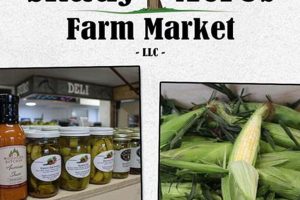
The direct sale of agricultural products from producers to consumers represents a significant shift in food distribution models. This approach bypasses traditional intermediaries such as wholesalers and retailers, enabling farmers to connect directly with their customer base. Examples include farmers’ markets, community-supported agriculture (CSA) programs, and direct sales from farm stands.
This system offers multiple advantages. For farmers, it can lead to increased profits by eliminating markups from intermediaries. Consumers benefit from access to fresher, often locally grown, produce and the opportunity to support local economies. Historically, such direct exchanges were commonplace, but the rise of industrial agriculture led to more complex supply chains. A renewed interest in sustainability and local sourcing has fueled a resurgence of these practices.
Understanding this localized food system is key to several related areas. This includes exploring its role in promoting sustainable agriculture, its impact on food security, and its contribution to community development. The subsequent sections will delve into these aspects, providing a more detailed analysis of the system’s broader implications.
Practical Guidance for Implementing Direct Agricultural Sales
The following guidelines offer practical insights for farmers and consumers interested in engaging in direct agricultural sales. Adherence to these principles can enhance the efficiency and sustainability of this food distribution model.
Tip 1: Prioritize Product Quality and Freshness: Ensure produce is harvested at optimal ripeness and handled with care to maintain quality. Proper storage and transportation methods are crucial to preserve freshness and minimize spoilage.
Tip 2: Establish Transparent Pricing Strategies: Develop a clear and consistent pricing structure that reflects production costs, market conditions, and the value of locally sourced goods. Communicating the rationale behind pricing builds trust with consumers.
Tip 3: Cultivate Strong Customer Relationships: Engage with consumers through effective communication channels, such as newsletters, social media, and on-site interactions. Building rapport fosters loyalty and encourages repeat business.
Tip 4: Explore Value-Added Product Development: Consider expanding offerings beyond raw produce to include processed goods such as jams, sauces, and baked items. This diversifies revenue streams and caters to broader consumer preferences.
Tip 5: Comply with Regulatory Requirements: Adhere to all applicable food safety regulations, labeling requirements, and zoning ordinances. Maintaining compliance ensures consumer protection and avoids legal complications.
Tip 6: Embrace Collaboration and Networking: Engage with other producers, local organizations, and community groups to strengthen the local food system. Collaborative efforts can enhance market access and promote shared learning.
Tip 7: Implement Sustainable Agricultural Practices: Employ environmentally sound farming methods to minimize environmental impact and preserve natural resources. Practices such as crop rotation, integrated pest management, and water conservation contribute to long-term sustainability.
These strategies emphasize the importance of quality, transparency, and sustainability in direct agricultural sales. By implementing these guidelines, stakeholders can enhance the economic viability and social impact of this alternative food distribution model.
The subsequent sections will explore the broader economic and social implications of these practices, providing a comprehensive understanding of their role in shaping the future of food systems.
1. Fresh Produce Availability

Direct agricultural sales channels, such as farmers’ markets and community-supported agriculture (CSA) programs, significantly influence the availability of fresh produce within specific geographic areas. This direct connection between producers and consumers offers distinct advantages over conventional distribution networks.
- Seasonal Offerings and Variety
Direct sales often feature a greater variety of seasonal produce compared to conventional supermarkets. Farmers are more likely to cultivate diverse crops suited to the local climate, resulting in a wider selection of fruits and vegetables available at peak freshness. This contrasts with supermarket offerings, which may prioritize year-round availability through long-distance shipping and storage, potentially compromising quality and nutritional value.
- Reduced Transit Time and Spoilage
The shorter supply chain associated with direct agricultural sales minimizes transit time, leading to fresher produce with extended shelf life. Reduced transportation distances also limit the risk of spoilage and waste, ensuring consumers have access to higher-quality products. In contrast, conventionally sourced produce may undergo extended storage and transportation, resulting in reduced freshness and increased waste at various points in the supply chain.
- Direct Farmer-Consumer Interaction and Education
Direct agricultural sales provide opportunities for consumers to engage directly with farmers, gaining valuable insights into cultivation practices and the seasonality of produce. This interaction fosters a greater appreciation for locally grown food and encourages informed purchasing decisions. Consumers can learn about the origins of their food, ask questions about farming methods, and receive recommendations on preparation and storage techniques, which enhances their overall experience and satisfaction.
- Accessibility in Underserved Communities
Farmers’ markets and other direct sales outlets can improve access to fresh produce in underserved communities with limited access to supermarkets. By establishing markets in these areas, farmers can provide a valuable source of affordable, nutritious food to residents who may otherwise lack access. This can contribute to improved health outcomes and reduce disparities in food security.
The increased availability of fresh produce through direct agricultural sales channels fosters healthier diets and supports local economies. By shortening the supply chain and promoting direct interaction between producers and consumers, this model enhances the quality, variety, and accessibility of fresh fruits and vegetables within communities. This alternative food distribution network presents a viable solution to address challenges related to food security and nutrition in both urban and rural areas.
2. Local economic viability

Direct agricultural sales exert a positive influence on local economic viability by redirecting consumer spending towards local producers. This economic model fosters a multiplier effect, where increased revenue for local farms translates into greater investment within the community. Farmers, with enhanced financial resources, are more likely to support local businesses, procure supplies from regional vendors, and contribute to local tax revenues. This cycle of reinvestment strengthens the economic foundation of rural communities and promotes sustainability.
The diminished dependence on external supply chains, inherent in direct agricultural sales, insulates local economies from broader market fluctuations and supply chain disruptions. This localized system enhances resilience and ensures a more stable food supply, particularly during periods of economic uncertainty. Farmers’ markets, for instance, serve as economic incubators, providing opportunities for small-scale producers to test new products and cultivate direct relationships with consumers. Examples include the proliferation of specialty food businesses originating from farmers’ market vendors, contributing to diversified economic activity within the region. This system is not without its challenges. Infrastructure limitations, such as inadequate processing facilities or transportation networks, can hinder scalability. Furthermore, navigating complex regulatory requirements can present obstacles for small-scale producers.
The strategic development of direct agricultural sales channels is a critical component of fostering local economic viability. By prioritizing local sourcing, consumers actively contribute to the financial well-being of their communities and support the preservation of agricultural landscapes. This alternative economic framework offers a viable pathway towards sustainable rural development and strengthens the resilience of local economies in an increasingly globalized world.
3. Community food access
Community food access, the ability of all residents in a given geographic area to obtain healthy and affordable food, is intrinsically linked to direct agricultural sales. The accessibility and availability of nutritious food options are paramount to public health and community well-being.
- Farmers’ Markets in Food Deserts
The establishment of farmers’ markets in food deserts, areas with limited access to supermarkets or other sources of fresh produce, can significantly improve community food access. These markets provide a localized venue for residents to purchase fresh fruits, vegetables, and other healthy food items, addressing disparities in food availability. For example, mobile markets operating in underserved neighborhoods can bring fresh produce directly to residents who lack transportation or live far from grocery stores. The success of these initiatives often hinges on affordability, with programs like SNAP and WIC acceptance at farmers’ markets playing a crucial role in enabling low-income residents to participate.
- Community Supported Agriculture (CSA) Programs
CSA programs, in which consumers purchase shares of a farm’s harvest in advance, offer another avenue for enhancing community food access. By supporting local farmers through upfront payments, CSA members receive a regular supply of fresh produce throughout the growing season. Some CSAs offer sliding scale pricing or subsidized shares to make participation more accessible to low-income individuals and families. Furthermore, CSA programs can foster a sense of community by connecting consumers directly with the farmers who grow their food, promoting greater awareness of local agriculture.
- Farm-to-School Initiatives
Farm-to-school programs connect local farms with schools to provide fresh, healthy meals for students. These programs not only improve the nutritional quality of school meals but also educate students about the importance of local agriculture and healthy eating habits. By sourcing produce from local farms, schools support regional economies and reduce the environmental impact associated with long-distance food transportation. In addition, farm-to-school initiatives often incorporate educational components, such as farm visits and gardening activities, to promote hands-on learning and foster a deeper connection between students and their food.
- Addressing Affordability Challenges
While direct agricultural sales offer numerous benefits, affordability remains a key challenge for low-income communities. Strategies to address this include accepting SNAP and WIC benefits at farmers’ markets, offering subsidized CSA shares, and partnering with local organizations to provide nutrition education and cooking demonstrations. Furthermore, policies that support local agriculture and reduce food waste can contribute to lower prices and increased food access for all community members. Collaboration between farmers, community organizations, and government agencies is essential to develop sustainable solutions that address the complex challenges of food insecurity.
The expansion of direct agricultural sales channels can enhance community food access. These efforts require a multifaceted approach that considers affordability, accessibility, and cultural relevance to ensure that all members of the community can benefit from the availability of fresh, healthy, and locally sourced food.
4. Sustainable agriculture practices

The integration of sustainable agriculture practices within direct agricultural sales channels represents a crucial component of resilient and environmentally responsible food systems. This intersection fosters a mutually beneficial relationship, where sustainable farming methods enhance the quality and value of products while direct market access incentivizes the adoption of environmentally sound practices.
- Reduced Chemical Inputs
Sustainable agriculture often emphasizes minimizing or eliminating synthetic pesticides, herbicides, and fertilizers. Direct sales to consumers provide farmers with a market that values produce grown with fewer chemical inputs. For example, farms selling at farmers’ markets may employ integrated pest management (IPM) techniques, relying on natural predators and biological controls instead of broad-spectrum pesticides. This reduces environmental pollution, protects beneficial insects, and enhances soil health. Consumers benefit from produce with lower pesticide residues, and the overall ecosystem health is improved.
- Soil Health Management
Practices such as cover cropping, crop rotation, and no-till farming are integral to sustainable agriculture and are often prioritized by farms engaging in direct sales. These techniques improve soil structure, increase water infiltration, and enhance soil fertility. Farms utilizing direct marketing can showcase the benefits of healthy soil to consumers, demonstrating their commitment to long-term sustainability. For instance, a farmer selling at a CSA might highlight the use of cover crops to prevent erosion and improve soil nutrient content, educating consumers about the importance of soil health for food production and environmental stewardship.
- Water Conservation
Sustainable agriculture practices often focus on efficient water use and conservation. Techniques such as drip irrigation, rainwater harvesting, and drought-tolerant crop selection are employed to minimize water consumption and reduce environmental impact. Direct market farmers can communicate their water conservation efforts to consumers, highlighting their commitment to responsible resource management. For example, a farm stand might feature signage explaining its use of drip irrigation to reduce water waste, educating consumers about the importance of water conservation in agriculture.
- Biodiversity Promotion
Sustainable agriculture aims to promote biodiversity both on and around farms. Practices such as planting hedgerows, creating pollinator habitats, and maintaining diverse crop rotations enhance ecosystem services and support a wider range of plant and animal species. Direct sales channels provide opportunities for farmers to showcase the biodiversity on their farms, educating consumers about the importance of ecological balance. For instance, a farmer selling at a roadside stand might offer guided tours of their farm, highlighting the diverse plant and animal life that contributes to the farm’s overall health and productivity.
The direct connection between producers and consumers in “farm to market” incentivizes the adoption and promotion of sustainable agriculture practices. By valuing environmentally responsible farming methods, consumers can support farmers who prioritize long-term ecological health and contribute to more sustainable and resilient food systems.
5. Reduced supply chain
The core tenet of direct agricultural sales hinges on a significantly reduced supply chain. Traditional food distribution involves multiple intermediariesprocessors, distributors, wholesalers, and retailerseach adding costs and logistical complexities. Direct sales, conversely, eliminate several of these steps, establishing a more direct pathway from producer to consumer. This simplification offers several direct and indirect benefits. Quantifiable savings in transportation costs are often observed. The reduced handling minimizes the potential for damage and spoilage. Furthermore, the shortened timeframe between harvest and consumption preserves nutritional value and enhances product freshness.
Farmers’ markets exemplify this principle. A farmer transports produce directly from the field to a market stall, bypassing distribution centers and retail outlets. This allows for the sale of items at peak ripeness, often harvested within 24 hours of being offered to consumers. Community Supported Agriculture (CSA) programs further exemplify this reduction, with consumers directly subscribing to a farm’s output, fostering a pre-planned and efficient distribution model. The reduced supply chain also facilitates greater transparency. Consumers can often directly interact with the farmer, gaining insights into production practices and the origins of their food. This connection is often absent in conventional retail settings, where product origins can be opaque.
The practical significance of a reduced supply chain within direct agricultural sales extends beyond individual transactions. It contributes to greater resilience in the face of disruptions, strengthens local economies, and reduces the environmental impact associated with long-distance transportation. While challenges related to scaling and logistics remain, the benefits of this simplified model are increasingly recognized as vital components of a sustainable and equitable food system.
Frequently Asked Questions Regarding Farm to Market Practices
The following questions and answers address common inquiries concerning the principles, benefits, and challenges associated with direct agricultural sales, aiming to provide clarity and informed understanding.
Question 1: What constitutes a “farm to market” transaction?
A “farm to market” transaction is defined as the direct sale of agricultural products from a producer (farmer) to a consumer, bypassing traditional intermediaries such as wholesalers and large-scale retailers. This includes sales at farmers’ markets, farm stands, Community Supported Agriculture (CSA) programs, and direct online sales.
Question 2: What are the primary benefits for farmers engaging in direct sales?
Farmers who engage in direct sales typically realize higher profit margins due to the elimination of intermediary markups. They also gain direct feedback from consumers, enabling them to tailor production to meet specific demands and cultivate customer loyalty. Furthermore, direct sales provide increased control over pricing and marketing strategies.
Question 3: What advantages do consumers derive from purchasing directly from farms?
Consumers benefit from access to fresher, often locally grown, produce with enhanced flavor and nutritional value. Direct purchasing supports local economies and promotes sustainable agriculture practices. The opportunity to interact directly with farmers fosters greater awareness of food origins and production methods.
Question 4: What are the potential challenges associated with implementing a “farm to market” strategy?
Challenges include logistical complexities related to transportation, storage, and marketing. Compliance with food safety regulations and zoning ordinances can also present difficulties. Building a reliable customer base and competing with established retail channels requires effective marketing and customer relationship management.
Question 5: How does direct agricultural sales contribute to sustainability?
Direct sales often incentivize sustainable farming practices, such as reduced pesticide use and soil conservation, as consumers increasingly value environmentally responsible production methods. Shorter supply chains reduce transportation-related emissions and minimize food waste. Supporting local agriculture strengthens community resilience and promotes long-term environmental stewardship.
Question 6: What role do government policies and regulations play in facilitating direct agricultural sales?
Government policies can support direct sales through funding for farmers’ markets, grants for infrastructure development, and streamlined regulations that reduce barriers for small-scale producers. Initiatives that promote local food procurement and consumer education can further enhance the viability of direct agricultural sales channels.
In summary, direct agricultural sales offer significant benefits for both farmers and consumers while promoting sustainability and local economic development. Addressing the associated challenges through strategic planning and supportive policies is crucial for maximizing the potential of this alternative food distribution model.
The subsequent sections will examine specific case studies and best practices, providing practical examples of successful “farm to market” initiatives and their impact on communities.
Conclusion
The exploration of “farm to market” strategies reveals a multifaceted approach to food distribution, extending beyond simple transactions. It encompasses economic empowerment for producers, enhanced access to fresh, locally sourced food for consumers, and the promotion of sustainable agricultural practices. These elements converge to create a more resilient and equitable food system, one less reliant on complex and often opaque supply chains.
The future viability of agricultural communities and the health of populations are intrinsically linked to the continued development and support of “farm to market” initiatives. Investing in infrastructure, streamlining regulations, and fostering consumer awareness are critical steps. These actions are crucial to ensuring that the benefits of direct agricultural sales are realized on a broader scale, contributing to a more secure and sustainable food future.

![Visit Paul's Farm Market Today! [Fresh & Local] | The Conscious Farmer | Sustainable Agriculture for a Healthier Planet](https://livingedgefarm.com/wp-content/uploads/2025/08/th-7467-300x200.jpg "Visit Paul's Farm Market Today! [Fresh & Local] The Conscious Farmer | Sustainable Agriculture for a Healthier Planet")