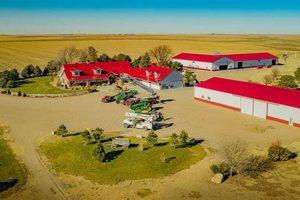
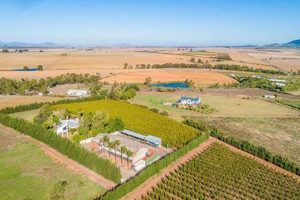
The availability of agricultural properties in Wisconsin constitutes a segment of the real estate market focused on land suitable for cultivation and livestock rearing. These properties range in size, soil composition, water access, and existing infrastructure, influencing their suitability for various agricultural endeavors such as dairy farming, crop production, or specialty agriculture.
Acquiring arable acreage in Wisconsin offers several potential advantages, including the opportunity to engage in agricultural production, benefit from potential land appreciation, and contribute to the state’s agricultural economy. Historically, agriculture has been a cornerstone of Wisconsin’s economy and culture, fostering a tradition of land stewardship and rural community development. Investment in these properties, therefore, can represent both an economic and a social commitment.
The following sections will address key aspects of acquiring and evaluating agricultural properties in Wisconsin, including factors influencing land value, resources for identifying available parcels, and due diligence considerations crucial for making informed investment decisions.
Successful acquisition of agricultural properties in Wisconsin requires careful planning and thorough research. The following tips provide guidance for prospective buyers navigating this complex market.
Tip 1: Define Agricultural Objectives. Clearly articulate the intended use of the property, whether for dairy, crop farming, or other agricultural pursuits. This will inform the selection process and ensure the land is suitable for specific needs.
Tip 2: Conduct Thorough Soil Testing. Prior to purchase, engage a qualified soil scientist to assess soil composition, fertility, and drainage. This analysis is crucial for determining the land’s productivity potential and identifying any potential remediation needs.
Tip 3: Evaluate Water Resources. Access to adequate water resources is essential for successful farming operations. Investigate the availability of groundwater, surface water rights, and existing irrigation systems. Confirm that water rights are transferable and sufficient for long-term needs.
Tip 4: Assess Existing Infrastructure. Evaluate the condition of existing buildings, fencing, and utilities. Determine the cost of any necessary repairs or upgrades. This assessment should also include an examination of access roads and transportation infrastructure.
Tip 5: Research Local Zoning Regulations. Understand local zoning ordinances and any restrictions that may affect agricultural activities. This includes regulations related to livestock, building permits, and environmental compliance.
Tip 6: Engage a Real Estate Professional. Partner with a real estate agent experienced in agricultural land transactions. Their expertise can provide valuable insights into market trends, negotiation strategies, and legal considerations.
Tip 7: Secure Financing Options. Explore various financing options, including agricultural loans and government-backed programs. Obtain pre-approval to understand purchasing power and streamline the acquisition process.
Following these guidelines will help prospective buyers make informed decisions and maximize the potential of agricultural investments in Wisconsin.
The subsequent sections will address legal and financial considerations crucial for finalizing land acquisition.
1. Soil Quality

Soil quality is a primary determinant of agricultural productivity and, consequently, the value of arable land in Wisconsin. The suitability of a parcel for specific crops or livestock grazing is directly linked to its soil composition, nutrient content, and drainage characteristics.
- Nutrient Content and Fertility
The presence and availability of essential plant nutrients such as nitrogen, phosphorus, and potassium directly affect crop yields. Soil testing reveals nutrient deficiencies and informs fertilization strategies. Properties with naturally fertile soils or those that have been well-maintained through sustainable farming practices command higher values due to their inherent productivity.
- Soil Structure and Drainage
Soil structure impacts water infiltration, aeration, and root development. Well-drained soils prevent waterlogging and promote healthy root growth, while compacted soils can hinder these processes. Land prone to flooding or with poor drainage typically has lower agricultural potential and thus, reduced value.
- Organic Matter Content
Organic matter improves soil structure, water retention, and nutrient availability. Soils rich in organic matter are more resilient to erosion and contribute to higher crop yields. Farmers often seek land with high organic matter content, making it a valuable asset.
- pH Level
The pH level of the soil affects the availability of nutrients to plants. Different crops have different pH requirements. Soils with pH levels that are not conducive to desired crops may require costly amendments, impacting the overall value and attractiveness of the property.
In summary, soil quality is a critical factor when evaluating agricultural properties in Wisconsin. Properties with favorable soil characteristics represent a sound investment, offering increased productivity potential and long-term value appreciation. Conversely, parcels with poor soil quality may require significant remediation efforts, impacting their economic viability.
2. Water Rights
Water rights represent a crucial aspect of agricultural land value and operational viability in Wisconsin. The legal framework governing water usage directly impacts a farm’s ability to irrigate crops, water livestock, and conduct other essential activities. Acquisition of agricultural properties without secured and sufficient water rights introduces significant risk, potentially impacting productivity and long-term sustainability.
Wisconsin follows a riparian water rights system, generally allowing landowners adjacent to a water body to utilize the water reasonably. However, this system can be complex, especially in regions with high agricultural demand or during periods of drought. The quantity and priority of water rights associated with a particular parcel of land directly influence its market value. For instance, a farm equipped with a permitted high-capacity well for irrigation typically commands a premium compared to similar properties relying solely on rainfall or limited water sources. Disputes over water access and usage are not uncommon, underscoring the importance of thorough due diligence prior to purchase.
In conclusion, water rights are an integral component of evaluating agricultural land in Wisconsin. Understanding the applicable water laws, the history of water usage on the property, and the potential for future restrictions is paramount. Failure to adequately assess water rights can lead to significant financial and operational challenges, highlighting the necessity of consulting with legal and water resource professionals during the land acquisition process.
3. Zoning Regulations

Zoning regulations exert a substantial influence on the use and development of agricultural land in Wisconsin. These regulations, established by local governments, dictate permissible land uses, building restrictions, and environmental safeguards, directly impacting the value and operational potential of farms and related properties.
- Permitted Uses and Agricultural Activities
Zoning ordinances specify which agricultural activities are allowed within designated areas. This may encompass crop cultivation, livestock raising, dairy farming, and ancillary operations such as farm stands or agri-tourism ventures. Regulations may restrict or prohibit certain intensive agricultural practices or livestock densities, influencing the suitability of a property for specific farming endeavors. For example, a zoning district might allow general farming but restrict large-scale concentrated animal feeding operations (CAFOs), significantly altering the property’s potential use and market appeal.
- Building and Setback Requirements
Zoning regulations impose restrictions on the size, location, and type of buildings permitted on agricultural land. Setback requirements, which define the minimum distance between structures and property lines, roads, or water bodies, can limit building placement and expansion. These regulations impact the design and development of farm structures, including barns, sheds, and residences. Compliance with building codes and permitting processes is essential, adding to the overall cost and complexity of land acquisition.
- Environmental Protection and Conservation
Zoning regulations often incorporate environmental protection measures to safeguard natural resources and mitigate the impact of agricultural activities on the environment. These may include restrictions on pesticide use, fertilizer application, and manure management to protect water quality and prevent soil erosion. Regulations may also require the preservation of wetlands, woodlands, and other sensitive areas, limiting the developable portion of the land and impacting its economic value.
- Minimum Lot Size and Land Division
Zoning ordinances typically establish minimum lot size requirements for agricultural land, preventing fragmentation and preserving agricultural viability. Regulations may also restrict the division of farmland into smaller parcels, limiting development potential and maintaining agricultural land use. These restrictions aim to protect the agricultural land base and prevent sprawl, influencing the long-term sustainability of farming operations.
Understanding and navigating zoning regulations is a critical step in acquiring agricultural land in Wisconsin. Prospective buyers must conduct thorough due diligence to ensure compliance with local ordinances and assess the potential impact on their farming operations and long-term investment goals. Failure to comply with zoning regulations can result in costly fines, legal challenges, and restrictions on land use, highlighting the importance of careful planning and professional guidance.
4. Market Value
Market value of agricultural properties in Wisconsin represents a complex interplay of factors, directly influencing the availability and desirability of such land. The value is not solely determined by acreage; instead, it reflects a confluence of soil quality, water access, location, infrastructure, and prevailing economic conditions. For example, prime farmland in Dane County, known for its fertile soils and proximity to markets, commands a significantly higher price per acre than comparable land in more remote northern counties with less productive soils. Understanding these underlying drivers is paramount for both prospective buyers and sellers.
Fluctuations in commodity prices, interest rates, and government agricultural policies exert considerable pressure on land values. Periods of high crop prices often lead to increased demand for agricultural land, driving up prices. Conversely, economic downturns or changes in agricultural subsidies can dampen demand and potentially lower values. Recent years have witnessed increased interest in organic farming and sustainable agriculture, which can further enhance the value of properties suitable for these practices. The presence of existing infrastructure, such as barns, irrigation systems, and established drainage, also contributes to market value, reducing the initial investment required for agricultural operations. A case study might involve comparing two similarly sized properties; one equipped with modern irrigation and storage facilities, and the other lacking such infrastructure. The former will demonstrably command a higher market price, reflecting its operational readiness.
Ultimately, market value serves as the primary determinant in facilitating transactions involving agricultural properties in Wisconsin. A realistic understanding of value empowers buyers to make informed investment decisions and enables sellers to price their properties competitively. Accurate assessment of market value requires a comprehensive evaluation of the land’s inherent characteristics, prevailing economic conditions, and regulatory factors. Engaging qualified appraisers and real estate professionals with expertise in agricultural land is essential for navigating this complex landscape and ensuring equitable transactions.
5. Infrastructure

The presence and condition of infrastructure are integral determinants in the valuation and operational feasibility of agricultural properties available for purchase in Wisconsin. Infrastructure deficiencies can impede productivity, increase operating costs, and ultimately reduce the land’s market appeal. Conversely, well-maintained or modernized infrastructure enhances efficiency, facilitates access to markets, and contributes to higher property values. The impact of infrastructure extends across various facets of agricultural operations, from transportation and storage to water management and energy supply.
A rural parcel lacking adequate road access, for example, will present significant challenges for transporting crops, livestock, and equipment. This deficiency can translate into higher transportation costs, limited market access, and reduced profitability. Similarly, the absence of reliable utilities, such as electricity and natural gas, can restrict the implementation of modern farming technologies and increase reliance on more expensive and less efficient alternatives. Consider a dairy farm without a properly functioning milking parlor or adequate waste management systems; its operational capacity and environmental compliance would be severely compromised. Furthermore, storage facilities for grain, hay, and other agricultural products are essential for preserving quality and preventing spoilage. Insufficient or outdated storage infrastructure can lead to significant losses, diminishing the overall value of the property. Government programs may exist to assist with infrastructure improvements, but these require navigating bureaucratic processes and meeting specific eligibility criteria.
Therefore, prospective buyers must meticulously assess the existing infrastructure on agricultural properties in Wisconsin, considering its condition, capacity, and suitability for their intended operations. Evaluating infrastructure extends beyond physical structures to encompass factors such as internet connectivity, which is increasingly important for precision agriculture and farm management. Addressing infrastructure deficiencies often requires substantial capital investment, impacting the overall return on investment. Recognizing the crucial role of infrastructure in agricultural productivity and profitability is essential for making informed purchasing decisions and ensuring the long-term success of farming enterprises in Wisconsin.
6. Location Specifics

The value and viability of agricultural properties in Wisconsin are inextricably linked to their specific geographic location. Location dictates not only access to markets, infrastructure, and resources but also influences climate, soil type, and the prevailing agricultural landscape. For instance, farmland in close proximity to urban centers often commands a premium due to potential development opportunities or direct-to-consumer sales avenues. Conversely, land situated in remote areas may offer lower initial costs but face challenges related to transportation, labor availability, and access to essential services. The suitability of a location for specific agricultural pursuits, such as dairy farming, cranberry cultivation, or organic vegetable production, is heavily dependent on its environmental characteristics and proximity to processing facilities or distribution networks. A property located in the Driftless Area may be ideal for grazing due to its topography, whereas land in the Central Sands region may be better suited for irrigated crop production.
Furthermore, local regulations and community dynamics significantly impact the agricultural landscape. Zoning ordinances, land use restrictions, and environmental regulations vary considerably across different Wisconsin counties and townships, affecting the permissible uses and development potential of farmland. Community support for agriculture, the presence of agricultural cooperatives, and the availability of skilled labor can also influence the success of farming operations. For example, a community with a strong tradition of dairy farming may offer established networks for milk processing and marketing, providing a competitive advantage to dairy farmers in that region. Understanding the nuances of the local community and regulatory environment is crucial for making informed investment decisions and ensuring the long-term viability of agricultural enterprises. The impact of weather patterns, dictated by location, also deserves specific note: areas with more predictable rainfall and growing seasons command higher premiums.
In conclusion, location is a paramount consideration when evaluating agricultural properties in Wisconsin. A comprehensive assessment of location specifics, encompassing market access, environmental suitability, regulatory compliance, and community dynamics, is essential for maximizing investment returns and achieving sustainable agricultural practices. The interplay between these factors creates a complex and dynamic agricultural landscape, demanding careful analysis and informed decision-making.
7. Environmental Factors

Environmental considerations represent a critical dimension in assessing the suitability and valuation of agricultural properties in Wisconsin. The ecological context of a parcel directly influences its productivity, regulatory compliance, and long-term sustainability, necessitating careful evaluation by prospective buyers.
- Soil Contamination
Prior land use can significantly impact soil quality, introducing contaminants that render the land unsuitable for certain agricultural practices. Industrial activities, past pesticide applications, or improper waste disposal can leave behind residues that pose risks to crops, livestock, and human health. Remediation efforts can be costly and time-consuming, influencing the property’s overall value. Comprehensive soil testing is essential to identify and quantify potential contaminants before acquisition. Examples include lead contamination from old orchards or pesticide residues from historical row crop farming.
- Water Quality and Watershed Management
Agricultural activities can impact water quality through nutrient runoff, sedimentation, and pesticide contamination. Properties located within sensitive watersheds or near impaired water bodies may be subject to stricter regulations regarding land management practices. Compliance with these regulations can impose additional costs on farming operations and restrict land use options. Evaluating the property’s proximity to water resources and its role within the broader watershed is crucial. An example includes properties near the Great Lakes, which are subject to stringent environmental regulations.
- Wetland and Habitat Preservation
Wisconsin’s landscape features diverse wetlands and wildlife habitats, which are protected under federal and state laws. Development or agricultural activities that impact these areas may require permits and mitigation measures, limiting the developable portion of the land and increasing project costs. Identifying and delineating wetlands on the property is essential before acquisition. The presence of endangered species habitat may also impose restrictions on land use. An example is the presence of Karner Blue Butterfly habitat, which can limit forestry practices.
- Climate Change and Extreme Weather Events
Changing climate patterns and increased frequency of extreme weather events, such as droughts, floods, and severe storms, pose significant risks to agricultural production in Wisconsin. Properties located in areas prone to these events may face reduced yields, increased infrastructure damage, and higher insurance costs. Assessing the property’s vulnerability to climate change and implementing adaptation strategies is crucial for long-term sustainability. Examples include properties in floodplains or areas susceptible to prolonged droughts.
In summary, environmental factors represent a critical consideration when evaluating agricultural properties in Wisconsin. A thorough assessment of these factors, including soil contamination, water quality, wetland preservation, and climate change vulnerability, is essential for making informed investment decisions and ensuring the long-term sustainability of farming operations. Ignoring these environmental dimensions can lead to costly remediation efforts, regulatory challenges, and reduced productivity, impacting the property’s overall value and viability.
Frequently Asked Questions
The following addresses common inquiries regarding the acquisition and management of arable land in Wisconsin. These responses aim to provide clarity on key considerations for prospective buyers and current landowners.
Question 1: What factors primarily influence the price per acre?
Soil quality, water access, proximity to markets, infrastructure (buildings, irrigation), zoning regulations, and overall parcel size are the primary determinants of agricultural land value. Market demand and prevailing economic conditions also play a significant role.
Question 2: How are water rights determined and transferred in Wisconsin?
Wisconsin adheres to the riparian doctrine, which generally grants water rights to landowners adjacent to a water body. Transfer of these rights is often tied to the land itself, but specific regulations apply and should be verified through legal counsel and the Department of Natural Resources.
Question 3: What zoning regulations commonly affect agricultural land use?
Minimum lot sizes, building setbacks, permitted agricultural activities (livestock restrictions, crop types), and environmental protection measures (wetland regulations, erosion control) are common zoning concerns. Consult local zoning ordinances for detailed information.
Question 4: What due diligence steps are crucial before purchasing agricultural land?
Soil testing (nutrient levels, contamination), water rights verification, zoning ordinance review, environmental assessment (wetland delineation, historical land use), infrastructure inspection (buildings, wells, septic systems), and survey verification are essential due diligence steps.
Question 5: What financial assistance programs are available for agricultural land buyers?
The Farm Service Agency (FSA) offers various loan programs for land acquisition, operating expenses, and conservation initiatives. The Wisconsin Department of Agriculture, Trade and Consumer Protection (DATCP) provides grant programs for agricultural development and farmland preservation. Private lenders also offer agricultural loans.
Question 6: How can the long-term agricultural productivity of land be maintained?
Sustainable farming practices, including soil conservation techniques (cover cropping, no-till farming), nutrient management planning, integrated pest management, and water conservation strategies, are crucial for maintaining long-term agricultural productivity.
In summary, acquiring and managing agricultural properties in Wisconsin requires careful planning, thorough research, and a comprehensive understanding of legal, environmental, and economic considerations. Engaging qualified professionals, such as real estate agents, soil scientists, and legal counsel, is highly recommended.
The following provides resources and contacts for further assistance in navigating the Wisconsin agricultural land market.
Conclusion
The preceding analysis has explored the multifaceted aspects of agricultural properties available in Wisconsin. Critical factors such as soil quality, water rights, zoning regulations, market value, existing infrastructure, location specifics, and environmental considerations have been addressed to provide a comprehensive understanding of this sector of the real estate market. A thorough evaluation of these elements is paramount for informed decision-making.
Prospective buyers are strongly encouraged to conduct thorough due diligence and seek expert advice from qualified professionals to ensure the long-term viability and sustainability of their investment. The availability of agricultural properties represents an opportunity to contribute to Wisconsin’s agricultural heritage and economic vitality.