A young child’s vocabulary often includes simplified or altered names for animals, particularly those encountered on a farm. These terms are typically easier to pronounce and remember than the standard animal names. For instance, a toddler might refer to a cow as “moo-moo” or a pig as “oink-oink,” directly associating the animal with its characteristic sound. This simplification is a natural part of language acquisition during early childhood.
The use of these simplified terms aids in early communication and cognitive development. It allows toddlers to participate in conversations about their environment, express needs related to animals (such as wanting to see or interact with them), and categorize different types of creatures. Historically, the adoption of such terms highlights the close relationship between young children and the agricultural setting, where farm animals frequently feature in their everyday lives and early learning experiences. This early exposure fosters a sense of connection to nature and the animal kingdom.
The subsequent discussion will delve into specific examples of these terms, their origins, and their role in a child’s language development. Furthermore, the influence of educational materials, such as books and toys, on the propagation of these simplified animal names will be explored. The article will then examine how these terms evolve as children’s language skills mature and they learn standard animal nomenclature.
Guidance on Understanding a Young Child’s Animal Terminology
Navigating a toddler’s unique vocabulary for farm animals requires patience and awareness. The following tips offer strategies for decoding and fostering communication related to animals within a child’s developmental stage.
Tip 1: Listen Attentively: Focus on the context in which the term is used. Observe the child’s gestures, facial expressions, and the direction of their gaze. These non-verbal cues provide essential clues to the intended animal.
Tip 2: Offer Gentle Corrections: Instead of directly correcting the toddler (“That’s not a ‘moo-moo,’ it’s a cow”), gently introduce the correct term: “Yes, that’s a ‘moo-moo,’ and it’s also called a cow.” Reinforce the proper name without dismissing the child’s term.
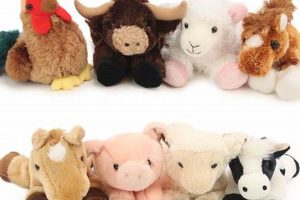
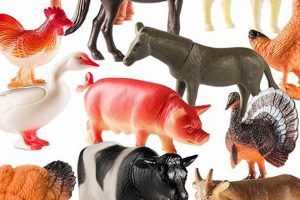
Tip 3: Utilize Visual Aids: Employ picture books, toys, or real-life animal encounters to associate both the toddler’s term and the standard name with the corresponding animal. Visual reinforcement enhances understanding.
Tip 4: Encourage Sound Imitation: Many toddler terms are derived from animal sounds. Promote imitation of animal noises and link these sounds to the visual representation of the animal. This strengthens the connection between sound and animal identification.
Tip 5: Expand Vocabulary Gradually: Introduce new animal names slowly, focusing on one or two animals at a time. Overwhelming the child with too many new terms can hinder learning.
Tip 6: Celebrate Progress: Acknowledge and praise the child’s efforts in learning and using both the toddler’s term and the standard animal name. Positive reinforcement motivates continued learning.
Tip 7: Be Patient and Consistent: Language acquisition takes time. Maintain consistency in using both terms, and avoid frustration when the child reverts to their preferred term. Patience is essential for successful language development.
Implementing these tips allows for effective communication and encourages a toddler’s developing understanding of animal nomenclature. The integration of these strategies fosters language growth and positive associations with the animal kingdom.
The subsequent discussion will explore the educational implications of these simplified terms and how caregivers can effectively leverage them to enhance a child’s learning experience.
1. Phonetic Simplification

Phonetic simplification plays a critical role in the formation of a young child’s vocabulary, especially regarding names for farm animals. The process involves reducing complex sounds and syllable structures to more manageable forms for early articulation.
- Syllable Reduction
Toddlers often shorten multi-syllable words to single or double syllables. For example, “chicken” might become “chick” or “chicky.” This reduction simplifies the motor skills required for speech, making the words easier to pronounce and remember. Such phonetic adaptations represent a natural stage in language development.
- Sound Substitution
Sounds difficult for toddlers to produce are often replaced with simpler alternatives. The “r” sound, frequently challenging for young children, might be omitted or replaced with “w.” Thus, “horse” could be rendered as “hoss” or “woss.” This substitution allows children to participate in communication without mastering complex phonetic elements.
- Assimilation
Assimilation involves modifying sounds to become more similar to neighboring sounds. This process streamlines pronunciation. For instance, the “pig” might become “bik” when influenced by the preceding consonant in a phrase, creating ease of articulation through phonetic blending.
- Reduplication
Reduplication is the repetition of syllables, creating words like “moo-moo” for cow or “baa-baa” for sheep. This repetitive structure is phonetically simple and provides a rhythmic quality that aids memorization. It also reinforces the association between the sound and the animal through a clear, repetitive phonetic pattern.
These simplifications are fundamental to a toddler’s early communication about farm animals. Phonetic adjustments reduce the cognitive load and physical effort required for speech, enabling children to express their understanding and interact with their environment using a simplified, yet effective, animal nomenclature. As language skills advance, these terms gradually transition to standard vocabulary, reflecting the natural progression of phonetic mastery.
2. Sound Association

Sound association forms a foundational element in how toddlers develop terms for farm animals. The auditory characteristics of the animalits vocalizations and the sounds it makes while interacting with its environmentbecome directly linked to the animal’s identity in the child’s developing lexicon. This association provides a memorable and easily accessible identifier before the toddler masters the standard nomenclature.
- Onomatopoeic Representation
Toddlers frequently utilize onomatopoeia, creating words that mimic the sounds made by animals. Examples include “moo” for cows, “oink” for pigs, and “baa” for sheep. These representations are simple to pronounce and directly correlate to the auditory input the child receives when exposed to the animal. This direct connection aids memory and recall, establishing a clear link between the animal and its sound.
- Auditory Differentiation
Farm animals produce distinct and easily distinguishable sounds. These auditory cues facilitate differentiation between various species. A toddler, even before visually identifying a specific animal, can associate the “cluck” with chickens, the “neigh” with horses, or the “gobble” with turkeys. This auditory distinction supports early categorization and understanding of the animal kingdom.
- Reinforcement Through Interaction
Interactive experiences, such as visits to farms or exposure to animal sounds in books and videos, reinforce the association between sound and animal. When a toddler hears the “quack” of a duck and simultaneously sees the duck, the auditory-visual connection solidifies. Repetitive exposure strengthens the link, making the sound a reliable identifier.
- Emotional Engagement
Animal sounds can evoke emotional responses in toddlers, ranging from amusement to curiosity. These emotions further enhance the memorability of the sound-animal association. A toddler might giggle upon hearing a pig’s “oink,” creating a positive association that aids in retention. This emotional component adds another layer to the learning process, making it more engaging and effective.
Sound association provides an intuitive and effective method for toddlers to identify and categorize farm animals. The reliance on auditory cues simplifies the learning process, allowing children to build a foundational understanding of the animal kingdom using readily available sensory input. As language skills develop, these sound-based terms serve as a bridge to more complex and accurate animal nomenclature.
3. Cognitive Accessibility

Cognitive accessibility, in the context of a toddler’s lexicon for farm animals, refers to the ease with which a young child can process, understand, and recall information related to animal names. Toddlers’ terms for farm animals are inherently shaped by the limitations and capabilities of their developing cognitive abilities. The simpler phonetic structures, reliance on sound associations, and concrete representations serve to make animal nomenclature cognitively accessible. For instance, the term “baa-baa” for sheep is easier to process due to its repetitive structure and direct association with the animal’s sound, thereby reducing the cognitive load on the child. The terms simplicity ensures that the toddler can retain and utilize it effectively.
The cognitive accessibility of these terms directly impacts a toddler’s ability to categorize and interact with the world around them. When an animal’s name is cognitively accessible, the child can more readily associate the name with the visual and auditory characteristics of the animal. This association fosters cognitive development and enables the child to communicate their understanding to others. For example, a toddler who uses the term “oink-oink” for pig demonstrates an understanding of the connection between the sound, the animal, and its corresponding label. These accessible terms also facilitate early literacy as the child begins to connect spoken words with written representations.
Ultimately, the cognitive accessibility of a toddler’s animal terminology is crucial for fostering early language development and cognitive growth. While standard animal nomenclature is eventually learned, the initial use of simplified, cognitively accessible terms provides a vital foundation. Recognizing the significance of cognitive accessibility enables caregivers and educators to effectively support a child’s language development by using terms and strategies that align with their cognitive capabilities. The challenge lies in gradually transitioning from these simpler terms to the standard lexicon without overwhelming the child, thereby ensuring continued cognitive accessibility throughout the learning process.
4. Early Categorization
Early categorization, a fundamental cognitive process in infancy and toddlerhood, plays a significant role in how young children develop their own terms for farm animals. This process involves organizing perceived information into meaningful groups or classes, allowing children to make sense of their environment and facilitate language acquisition. These simplified terms often reflect the salient characteristics of the animal, aiding in its categorization within the childs mental schema.
- Perceptual Feature Grouping
Children initially categorize animals based on easily observable perceptual features such as size, color, or shape. A large, black-and-white animal may be grouped together and labeled with a simplified term, like “big moo,” highlighting its size and characteristic sound. This perceptual grouping forms the basis for early categorization and allows children to differentiate animals based on visually prominent attributes.
- Sound-Based Differentiation
Animal sounds are potent cues for categorization. Toddlers often associate distinct vocalizations with specific animals, leading to terms like “oink-oink” for pigs or “baa-baa” for sheep. This sound-based categorization allows children to group animals based on auditory input, creating a clear and easily accessible category in their developing minds. The use of onomatopoeia simplifies language acquisition and reinforces the association between the animal and its characteristic sound.
- Behavioral Trait Association
Observable animal behaviors contribute to early categorization. For instance, animals that lay eggs might be grouped together and labeled with a term related to this activity, such as “egg-layer.” This association of behavioral traits with animal categories enhances understanding and allows children to differentiate animals based on functional characteristics. Such categorizations might not always align with scientific classifications but reflect the child’s cognitive organization.
- Functional Use Categorization
Farm animals are often categorized based on their functional use, such as providing milk or meat. A child might group cows and goats together because both provide milk, labeling them with a simplified term like “milk animal.” This functional categorization emphasizes the practical roles of animals and reflects the childs understanding of their utility. Such categorizations demonstrate the child’s ability to organize information based on real-world applications.
These facets of early categorization underscore the cognitive strategies used by toddlers to develop their own terms for farm animals. Perceptual feature grouping, sound-based differentiation, behavioral trait association, and functional use categorization all contribute to the formation of simplified animal nomenclature. These terms, while not always scientifically accurate, reflect the childs growing understanding of the animal kingdom and their ability to organize information into meaningful categories. As language skills develop, these early categorizations provide a foundation for learning more complex and accurate animal classifications.
5. Emotional Connection
The emotional connection formed between toddlers and farm animals significantly influences the terms they develop for these creatures. This bond, characterized by affection, curiosity, and empathy, fosters a sense of personal relevance that imprints on their linguistic choices. For instance, a toddler who frequently interacts with a gentle sheep may develop a term that reflects this positive experience, deviating from a mere onomatopoeic representation to include an element of endearment. The emotional resonance creates a stronger associative link, making the child more likely to use and remember the term. Such attachments can transform the animal into more than just a visual stimulus; it becomes an object of affection and familiarity, influencing the child’s language.
The emotional component manifests in various ways. A child who associates chickens with a comforting experience, such as collecting eggs with a grandparent, may adopt a term that reflects this positive memory. The act of naming then becomes imbued with personal meaning, far exceeding simple linguistic designation. Educational materials that emphasize the emotional lives of animals can further amplify this effect. Books depicting animals as friendly and relatable characters encourage children to form stronger emotional connections, influencing their vocabulary choices and fostering an attitude of care and respect. Therefore, the emotional dimension elevates the naming process from mere imitation to active participation, imbuing the selected term with a layer of affective significance that resonates profoundly with the child.
Understanding the pivotal role of emotional connection offers practical implications for educators and caregivers. Recognizing the influence of positive experiences in shaping a child’s animal nomenclature can inform teaching strategies. By fostering positive interactions with animals, adults can facilitate both language development and the cultivation of empathy. This comprehension challenges the assumption that toddler language is solely based on simplified phonetics or onomatopoeia; instead, it reveals a complex interplay between cognitive and emotional processes. The awareness can guide efforts to promote both linguistic growth and emotional well-being, fostering a deeper, more meaningful connection between the child and the animal kingdom.
Frequently Asked Questions
This section addresses common inquiries regarding toddlers’ simplified language for farm animals, offering insights into the linguistic and cognitive factors at play.
Question 1: Why do toddlers use different terms for farm animals than adults?
Toddlers’ simplified terms arise from phonetic limitations, cognitive accessibility, and sound association. Their developing motor skills and cognitive processing abilities necessitate simpler sounds and direct connections between animal sounds and names.
Question 2: Are these simplified terms detrimental to a child’s language development?
These terms are not detrimental; they represent a natural stage in language acquisition. They serve as a bridge to standard nomenclature, allowing children to participate in communication before mastering complex phonetic structures.
Question 3: How can caregivers effectively correct a toddler’s mispronunciation or use of a simplified term?
Gentle correction, coupled with positive reinforcement of the standard term, is recommended. Caregivers should avoid direct negation and instead subtly introduce the correct name while validating the child’s existing term.
Question 4: Do educational materials, such as books and toys, influence a toddler’s terminology for farm animals?
Educational materials significantly influence terminology. Books and toys often reinforce simplified terms or introduce standard animal names in an engaging and accessible manner, shaping a child’s vocabulary.
Question 5: At what age should a child transition from simplified terms to standard animal nomenclature?
The transition is gradual and varies among children. As language skills mature, typically around age three to four, children naturally adopt standard terms. Caregivers should support this transition without imposing strict timelines.
Question 6: Is there a cultural component to the simplified terms toddlers use for farm animals?
Cultural variations exist. Different cultures may have distinct simplified terms for the same animal, reflecting linguistic nuances and local pronunciations. Exposure to diverse cultural influences can broaden a child’s vocabulary.
In summary, toddlers’ terms for farm animals are a normal and adaptive part of language development. Understanding the underlying factors and employing supportive communication strategies can facilitate a child’s linguistic growth.
The following section will explore the resources available to parents and educators to further support a child’s learning about farm animals.
Conclusion
The preceding examination of a “toddlers term for a farm animal” reveals a complex interplay of phonetic simplification, sound association, cognitive accessibility, early categorization, and emotional connection. These terms are not merely mispronunciations; rather, they represent a critical stage in language acquisition, reflecting the cognitive and emotional processing of young children as they engage with their environment. The simplified terms facilitate early communication, categorization, and understanding of the animal kingdom.
Recognizing the significance of these terms enables caregivers and educators to effectively support a child’s linguistic and cognitive development. Continued research into the developmental linguistics of early childhood will further refine the understanding of how children learn and interact with the world around them. Understanding a toddlers term for a farm animal encourages thoughtful engagement with the complexities of early childhood language.