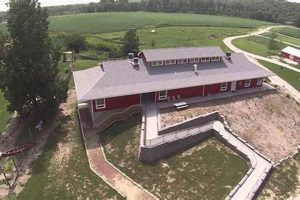
This location is a living history museum operated by the Monmouth County Park System. It offers visitors a glimpse into 19th-century rural life in New Jersey. The site recreates a working farm from the 1890s, providing demonstrations and educational programs that showcase agricultural practices and domestic activities of the era. Visitors can observe traditional farming techniques, interact with farm animals, and learn about the daily routines of a typical farming family during that time.
The preservation of this historical site provides significant educational and cultural benefits. It offers a tangible connection to the past, allowing individuals to understand the agricultural heritage of the region and appreciate the skills and labor required for sustenance in a pre-industrial setting. This understanding fosters a greater appreciation for the evolution of farming practices and their impact on society. Moreover, it serves as an important resource for historical research and provides a valuable community space for educational programs and cultural events.
The following discussion will elaborate on the specific aspects of the farm’s historical interpretation, the educational programs offered, and the visitor experience available at the location. Further details regarding seasonal events, farming practices demonstrated, and preservation efforts undertaken at the site will also be presented.
Tips for Visiting Longstreet Farm, Holmdel, NJ
Planning a visit to this historical site requires consideration of several factors to maximize the experience. Understanding these points can enhance the educational and recreational aspects of a visit.
Tip 1: Check the Schedule. Before visiting, consult the Monmouth County Park System’s official website for the farm’s hours of operation, special events, and scheduled demonstrations. This will ensure attendance at desired activities and prevent disappointment due to closures or event conflicts.
Tip 2: Dress Appropriately. Given the farm’s outdoor environment, wearing comfortable and weather-appropriate clothing and footwear is advisable. The terrain can be uneven, and exposure to the elements is common, particularly during seasonal events.
Tip 3: Engage with Demonstrations. Actively participate in the demonstrations and discussions offered by the staff. These interactions provide valuable insights into 19th-century farming practices and domestic life, enriching the learning experience.
Tip 4: Observe Farm Animals Respectfully. When interacting with the farm animals, maintain a respectful distance and adhere to any posted guidelines. This ensures the safety of both visitors and the animals, preserving the integrity of the farm environment.
Tip 5: Pack a Picnic. Consider bringing a picnic lunch to enjoy at designated areas on the farm grounds. This allows for a more leisurely visit and the opportunity to appreciate the rural setting.
Tip 6: Be Mindful of Photography. While photography is typically permitted, be mindful of other visitors and avoid obstructing pathways or demonstrations. Flash photography may be restricted in certain areas to protect artifacts and animals.
Tip 7: Review Educational Resources. Take advantage of the educational resources available at the farm, such as brochures, exhibits, and interpretive displays. These materials provide valuable context and enhance understanding of the site’s historical significance.
By following these tips, visitors can ensure a more rewarding and informative experience. Careful planning and active engagement contribute to a deeper appreciation of agricultural heritage.
The subsequent sections of this document will provide further insights into the historical context, educational opportunities, and community impact of this preserved historical location.
1. 1890s Living Farm

The designation “1890s Living Farm” accurately describes the core function of the historical site. It is not merely a static display, but rather an active recreation of agricultural life during that specific era. This designation directly informs the visitor experience and shapes the educational focus.
- Agricultural Practices
The farm actively demonstrates farming techniques common in the 1890s, including crop rotation, animal husbandry, and the use of period-appropriate tools and machinery. Examples include plowing fields with draft animals, cultivating crops using hand tools, and harvesting grains with traditional methods. These practices illustrate the labor-intensive nature of farming at that time, contrasting sharply with modern agricultural technologies.
- Domestic Life
The site also portrays domestic life, showing activities such as cooking with wood-burning stoves, preserving food, spinning yarn, and sewing clothes. Demonstrations illustrate the skills and resourcefulness required for self-sufficiency in a rural household during the late 19th century. The reconstructed farmhouse and outbuildings provide a setting for these activities, enhancing the historical authenticity.
- Social Context
The “1890s Living Farm” concept extends beyond agricultural and domestic tasks to encompass the social context of the time. This includes portraying the interactions between farm families, the role of the community, and the challenges and opportunities facing rural residents during a period of significant social and economic change. The farm interprets aspects of rural life, such as leisure activities, community gatherings, and the impact of industrialization on agriculture.
- Historical Accuracy
Recreating the 1890s requires careful attention to historical accuracy. The farm relies on historical records, photographs, and artifacts to ensure that the practices, tools, and buildings accurately reflect the period. This commitment to authenticity enhances the educational value of the site, providing visitors with a credible and immersive experience.
The multifaceted approach to recreating an “1890s Living Farm” at this location creates a valuable educational resource. It allows visitors to engage with history in a tangible way, gaining a deeper understanding of agricultural practices, domestic life, and the social context of rural communities during the late 19th century. The integration of historical accuracy, interactive demonstrations, and a focus on community engagement significantly contributes to the site’s overall impact.
2. Agricultural Heritage Preservation

The operational mandate of this location is inherently linked to agricultural heritage preservation. The farm functions as a tangible representation of 19th-century agricultural practices, serving as a living repository of knowledge and skills that were integral to the region’s historical identity. The preservation efforts undertaken here are not merely symbolic; they directly impact the understanding and appreciation of the agricultural past. The recreation of farming techniques, the maintenance of heritage breeds of livestock, and the cultivation of historically relevant crops all contribute to a comprehensive preservation of agricultural heritage. The absence of such efforts would result in the erosion of vital knowledge about past farming methods, potentially leading to a disconnect between current generations and their agricultural roots.
A critical component of agricultural heritage preservation is the educational programming provided at this historical site. By demonstrating traditional farming techniques to visitors, the farm actively transmits knowledge about agricultural practices that are often overlooked in modern society. For instance, the process of cultivating heirloom varieties of crops, which are adapted to local conditions and possess unique genetic traits, serves as a valuable lesson in biodiversity and sustainable agriculture. The practical application of these preservation efforts extends beyond historical reenactment. The information gleaned from studying past agricultural methods can inform contemporary farming practices, potentially leading to more resilient and sustainable food systems.
In summary, the commitment to agricultural heritage preservation directly informs the purpose and activities of the farm. It provides a vital link to the past, fostering an understanding of agricultural history. It also offers practical insights that can be applied to contemporary challenges in agriculture. The ongoing preservation efforts are essential for maintaining the integrity of agricultural heritage and ensuring that it remains a relevant and valuable resource for future generations.
3. Educational Programs & Demonstrations
Educational programs and demonstrations are integral to the mission of this historical site. They serve as the primary means of conveying information about 19th-century agricultural practices, domestic life, and the broader social context of the period. These programs are designed to engage visitors of all ages and backgrounds, fostering a deeper understanding and appreciation of the region’s agricultural heritage.
- Living History Interpretations
Living history interpretations are a core element of the educational programming. Costumed interpreters portray individuals who would have lived and worked on a farm during the 1890s. These interpreters engage in daily tasks, such as plowing fields, tending livestock, cooking meals, and performing household chores. Their interactions with visitors provide a dynamic and immersive learning experience, allowing individuals to witness and participate in historical activities.
- Agricultural Demonstrations
Agricultural demonstrations focus on specific farming techniques and practices prevalent during the 1890s. These demonstrations may include plowing with draft animals, planting and harvesting crops, and operating vintage farm equipment. The demonstrations provide insights into the labor-intensive nature of agriculture at that time, highlighting the skills and knowledge required for successful farming. The use of period-appropriate tools and equipment enhances the authenticity of the demonstrations.
- Domestic Skills Workshops
Domestic skills workshops offer visitors the opportunity to learn about traditional household crafts and techniques. These workshops may cover topics such as cooking on a wood-burning stove, preserving food, spinning yarn, weaving fabric, and making candles. Participants gain hands-on experience in these skills, developing a better understanding of the self-sufficiency required for rural households during the late 19th century. The workshops often emphasize the resourcefulness and ingenuity of women in managing household affairs.
- Seasonal Events and Festivals
Seasonal events and festivals are incorporated into the educational calendar. These events celebrate specific periods of the agricultural cycle, such as planting season, harvest time, and holidays. They often feature special demonstrations, activities, and performances related to the theme of the event. Examples include corn mazes, pumpkin carving, and historical reenactments of harvest festivals. These events provide opportunities for community engagement and offer a festive and educational experience for visitors of all ages.
The comprehensive range of educational programs and demonstrations offered at this preserved area are designed to provide visitors with a rich and immersive understanding of 19th-century agricultural life. The combination of living history interpretations, agricultural demonstrations, domestic skills workshops, and seasonal events creates a dynamic and engaging learning environment. This approach ensures that the site remains a valuable resource for education and cultural preservation.
4. Historical Interpretation Focus

The historical interpretation focus at Longstreet Farm, Holmdel, NJ, is central to its function as a living history museum. It shapes the visitor experience by providing context and meaning to the recreated 1890s farming environment. This focus ensures that the farm is not merely a collection of historical artifacts, but a dynamic and engaging educational resource.
- Authenticity and Accuracy
A primary facet of the interpretation focus is the commitment to authenticity and accuracy in portraying life on a 19th-century farm. This involves meticulous research into agricultural practices, domestic routines, and social customs of the period. For example, the farm uses historically accurate tools and techniques for planting and harvesting crops. Similarly, the interpreters adhere to historically appropriate dress and speech patterns. The emphasis on authenticity enhances the credibility of the historical representation and allows visitors to immerse themselves in the past.
- Narrative Development
The interpretation focus guides the development of narratives that connect historical events to the daily lives of individuals who would have lived and worked on the farm. Interpreters may tell stories about the challenges and opportunities faced by farmers during the late 19th century, such as the impact of industrialization on agricultural markets or the struggles of rural communities in the face of economic hardship. The narratives provide a human dimension to historical events, making them more relatable and engaging for visitors.
- Visitor Engagement
The interpretation focus emphasizes visitor engagement as a key element of the learning experience. Interpreters encourage visitors to ask questions, participate in demonstrations, and explore the farm at their own pace. This interactive approach fosters a deeper understanding and appreciation of the historical context. The farm may offer hands-on activities, such as churning butter or planting seeds, to enhance visitor involvement. This active participation reinforces the learning process and creates a more memorable experience.
- Contextualization
Historical interpretation at Longstreet Farm extends beyond the immediate environment to contextualize the farm within the broader social, economic, and political landscape of the 1890s. Interpreters may discuss the impact of immigration, urbanization, and technological advancements on rural communities. They may also address issues such as class inequality and the role of women in agriculture. This contextualization provides a more nuanced understanding of the historical period and allows visitors to connect the farm to larger historical trends.
The integration of authenticity, narrative development, visitor engagement, and contextualization ensures that Longstreet Farm, Holmdel, NJ, effectively communicates its historical message. By prioritizing historical interpretation, the farm cultivates an understanding of the past, promoting cultural preservation, and educational enrichment.
5. Community Engagement Activities

Community engagement activities are a critical component of the mission executed at the historical farm in Holmdel, New Jersey. These activities aim to foster a connection between the site and the local community, promoting educational opportunities and cultural enrichment. They ensure that the farm remains a relevant and valuable resource for residents of all ages.
- Educational Workshops and Programs
The farm conducts a range of educational workshops and programs designed to engage community members in hands-on learning experiences. These programs may focus on topics such as traditional farming techniques, historical cooking methods, and heritage crafts. By providing opportunities for active participation, the farm promotes a deeper understanding of agricultural history and fosters appreciation for the skills and knowledge of past generations. Local schools and community organizations frequently collaborate with the farm to deliver these programs, ensuring their accessibility and relevance to diverse audiences.
- Seasonal Festivals and Events
Seasonal festivals and events are integral to community engagement at the farm. These events, which celebrate aspects of agricultural life, such as harvest time, provide opportunities for community members to gather, celebrate, and learn about local history. Examples include autumn harvest festivals, which feature hayrides, pumpkin picking, and corn mazes, and spring planting days, which involve planting demonstrations and opportunities for visitors to participate in gardening activities. These events attract large crowds and generate community spirit.
- Volunteer Opportunities
The farm offers a range of volunteer opportunities for individuals interested in contributing to its mission. Volunteers may assist with tasks such as gardening, animal care, and historical interpretation. By providing opportunities for community members to actively participate in the farm’s operations, the site fosters a sense of ownership and investment in its success. Volunteer programs also provide valuable work experience and educational opportunities for students and adults.
- Partnerships with Local Organizations
The farm actively cultivates partnerships with local organizations to broaden its reach and enhance its impact. These partnerships may involve collaborations with schools, libraries, historical societies, and community groups. For example, the farm may host workshops for local school children or participate in community events. These partnerships help the farm to integrate itself into the fabric of the local community and ensure that it remains a valuable resource for area residents.
The community engagement activities directly support the historical site’s mission of preserving and interpreting agricultural heritage. These activities enhance its relevance to the community. They create a welcoming environment for learning and cultural enrichment, fostering a sense of shared history and community identity. The ongoing commitment to community engagement ensures that the farm will remain a vital asset for generations to come.
6. Monmouth County Park System
The Monmouth County Park System serves as the administrative and operational entity responsible for Longstreet Farm, Holmdel, NJ. This governance provides the framework for the farm’s preservation, operation, and accessibility to the public. The Park System’s involvement is fundamental; without its resources and expertise, the farm would not be able to function effectively as a living history museum. For example, the Park System funds the maintenance of the farm’s historic buildings, the care of its livestock, and the salaries of its interpreters and staff. The Park System’s established organizational structure allows for efficient management of the farm’s resources, ensuring its long-term viability. The Park System establishes operating hours, approves budgets, and implements policies to ensure the farm operates smoothly and efficiently.
The Park System also plays a crucial role in the educational programming at the farm. It develops and implements curriculum-based programs for local schools, organizes community events, and provides interpretive materials for visitors. The expertise of the Park System’s staff enhances the educational value of the farm and ensures that it meets the needs of the community. For instance, the Park System’s environmental educators conduct programs on topics such as sustainable agriculture and the importance of preserving biodiversity. The Park System also leverages its marketing and outreach capabilities to promote the farm and its programs to a wider audience.
In summary, the Monmouth County Park System provides the essential framework for the proper operation of Longstreet Farm. Its role encompasses financial support, resource management, educational programming, and community outreach. Understanding this connection is crucial for appreciating the sustained viability and effective functioning of the preserved historical site. Without the Park System’s dedication, Longstreet Farm could not operate and contribute to the preservation of local agricultural history.
Frequently Asked Questions about Longstreet Farm, Holmdel, NJ
This section addresses common inquiries regarding this historical location, offering clarity on its operational aspects and visitor experience.
Question 1: What are the standard operating hours?
Operating hours fluctuate depending on the season. It is advisable to consult the Monmouth County Park System website for the most accurate and up-to-date schedule prior to planning a visit. Seasonal changes and special events often affect accessibility.
Question 2: Is there an admission fee?
Entry is generally free. However, some special events or programs may require a fee for participation. Information about specific event costs is typically available on the Park System’s website.
Question 3: Are pets permitted on the premises?
Pets are generally restricted from entering the farm. Service animals are an exception, adhering to applicable regulations. Verification of service animal status may be required.
Question 4: What types of demonstrations are typically offered?
Demonstrations can vary, but they generally include agricultural practices such as plowing, planting, and harvesting. Domestic skills, such as cooking and spinning, are also frequently demonstrated. A current demonstration schedule should be reviewed prior to arrival.
Question 5: Is photography allowed?
Photography is permitted for personal use. However, commercial photography or videography typically requires prior authorization from the Monmouth County Park System. Respect for other visitors and farm operations is expected during any photographic activities.
Question 6: Is the site accessible for individuals with disabilities?
Efforts are made to provide accessibility. Specific areas may present challenges. Inquiries regarding accessibility accommodations should be directed to the Park System prior to visiting.
This information clarifies frequent points of inquiry regarding this preserved site. This knowledge contributes to a more informed and enjoyable visit.
The following segment will offer details regarding volunteer opportunities and supporting this community resource.
Longstreet Farm, Holmdel, NJ
This analysis has explored the multifaceted nature of Longstreet Farm, Holmdel, NJ, underscoring its significance as a living history museum operated by the Monmouth County Park System. Key aspects highlighted include its accurate recreation of an 1890s farming environment, its vital role in agricultural heritage preservation, its dedication to comprehensive educational programming, its commitment to historical interpretation, its focus on community engagement, and the crucial administrative support provided by the Park System.
The ongoing operation of Longstreet Farm remains essential for providing educational opportunities, preserving local history, and fostering a connection to the region’s agricultural past. Continued support through visitation, volunteerism, and financial contributions will ensure the farm’s legacy endures for future generations, safeguarding a tangible link to a vital aspect of New Jersey’s heritage.

![Visit Veldheer Tulip Farm: [Location] Blooms & Dutch Charm | The Conscious Farmer | Sustainable Agriculture for a Healthier Planet](https://livingedgefarm.com/wp-content/uploads/2025/08/th-5170-300x200.jpg "Visit Veldheer Tulip Farm: [Location] Blooms & Dutch Charm The Conscious Farmer | Sustainable Agriculture for a Healthier Planet")