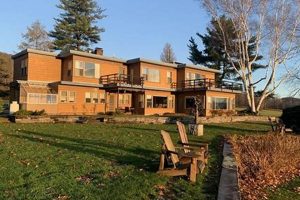
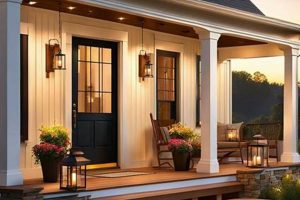
This residential building style typically combines agrarian architectural elements with an extended, roofed platform at the front, side, or wrapping around the structure. Such constructions are often situated on agricultural land or in rural environments, integrating the dwelling with its natural surroundings. A common example includes a two-story building with clapboard siding, a gabled roof, and an expansive area for seating and relaxation.
The incorporation of this architectural feature serves several purposes. Historically, it provided shade and protection from the elements, acting as a transitional space between the interior and exterior. It also fostered a sense of community, offering a place for socializing and observation of the surrounding landscape. Furthermore, the design contributes to the aesthetic appeal and market value of the property, evoking a sense of nostalgia and connection to rural traditions.
Considerations for material selection, structural integrity, and regional variations are paramount when designing or renovating this type of home. Modern adaptations often prioritize energy efficiency and accessibility while maintaining the character and charm associated with the classic design. Further exploration will delve into specific design elements, construction techniques, and regional examples of this enduring architectural form.
Design and Maintenance Considerations
The following recommendations address essential aspects of planning, constructing, and maintaining a residence of this style to ensure longevity, functionality, and aesthetic harmony with the surrounding environment.
Tip 1: Site Selection and Orientation: Prioritize optimal solar orientation to maximize passive heating and cooling potential. Southern exposure of the primary facade, including the extended platform, is generally advantageous in temperate climates. Careful assessment of wind patterns and prevailing weather conditions is crucial for mitigating exposure and ensuring comfort.
Tip 2: Material Selection for Durability: Opt for durable, weather-resistant materials suitable for the local climate. Consider options such as pressure-treated lumber, composite decking, or sustainably harvested hardwoods for the platform construction. Durable siding materials, such as fiber cement or brick, are recommended for the main structure to minimize maintenance requirements.
Tip 3: Structural Integrity and Support: Ensure adequate structural support for the extended platform to withstand anticipated loads, including occupancy, furniture, and potential snow accumulation. Proper footings and foundation design are critical for long-term stability and preventing settling or shifting.
Tip 4: Roof Design and Water Management: Implement effective water management strategies to prevent water damage and extend the lifespan of the structure. This includes properly sloped roofing with adequate overhangs, functional gutters and downspouts, and effective drainage systems to divert water away from the foundation.
Tip 5: Integrating Landscaping and Accessibility: Incorporate landscaping elements that complement the architectural style and enhance the overall aesthetic appeal. Consider accessibility features, such as ramps or gradual slopes, to ensure the platform is easily accessible to individuals with mobility limitations.
Tip 6: Regular Maintenance and Inspection: Establish a routine maintenance schedule that includes regular inspections of the platform structure, roofing, and drainage systems. Promptly address any signs of damage, such as rot, decay, or leaks, to prevent further deterioration and costly repairs.
Tip 7: Consider Local Building Codes and Regulations: Prior to commencing any construction or renovation, thoroughly research and adhere to all applicable local building codes and regulations. This ensures compliance with safety standards and avoids potential legal complications.
Adherence to these guidelines will contribute to the creation and preservation of a structurally sound, aesthetically pleasing, and functional dwelling that harmonizes with its environment. These considerations are crucial for long-term value and enjoyment.
The following section will address common challenges and potential solutions in maintaining the aesthetic appeal and structural integrity of such dwellings in varying climates and environmental conditions.
1. Agrarian Architectural Style

Agrarian architectural style, integral to the essence of a farm house with a porch, represents a functional and aesthetic connection to rural landscapes and agricultural lifestyles. Its core principles emphasize utility, simplicity, and harmony with the natural environment, influencing the design and construction of dwellings tailored to agricultural needs.
- Functional Design
Agrarian architecture prioritizes practicality and efficiency. Floor plans are typically straightforward, maximizing space for daily activities and minimizing ornamentation. For example, a farmhouse might include a mudroom for transitioning between outdoor work and indoor living, or a large kitchen for food preservation and preparation. The presence of a porch extends the living space outdoors, providing a shaded area for work, relaxation, and observation of the surrounding farm. This practicality ensures the structure serves the functional needs of a working farm.
- Material Selection
The selection of materials in agrarian architecture often reflects local availability and cost-effectiveness. Historically, materials such as wood, stone, and brick were commonly used, sourced directly from the land or nearby. These materials not only contribute to the durability and longevity of the structure but also blend seamlessly with the rural setting. The use of natural materials imparts a sense of authenticity and reflects a connection to the land, grounding the dwelling within its environment.
- Connection to the Landscape
Agrarian buildings are designed to integrate with the surrounding landscape. Site placement considers factors such as sunlight exposure, wind patterns, and proximity to water sources. The layout often maximizes views of agricultural fields and natural features. This integration promotes a sense of connection to the land and reinforces the relationship between the occupants and their environment. A porch, in this context, serves as a transitional space that blurs the line between the interior and exterior, facilitating a continuous engagement with the natural world.
- Simplicity and Minimal Ornamentation
Agrarian architecture typically eschews elaborate ornamentation in favor of clean lines and unadorned surfaces. This emphasis on simplicity reflects a pragmatic approach to construction and a rejection of excessive ornamentation. While aesthetic details may be present, they are usually understated and functional, such as decorative brackets supporting the porch roof or simple window trim. This restrained aesthetic contributes to the timeless quality of agrarian structures and allows the functional elements to take precedence.
These facets, when viewed collectively, highlight the integral role agrarian architectural style plays in shaping the design and character of a farm house with a porch. From prioritizing functional layouts to embracing natural materials and fostering a deep connection to the landscape, agrarian principles create dwellings that are both practical and aesthetically harmonious within their rural settings.
2. Relaxation and Socializing

The architectural design frequently features a porch, integral to the structure, facilitates relaxation and social interaction, serving as a transitional zone between interior comfort and the external environment. This space encourages leisure activities and community engagement.
- Extended Living Space
The porch functions as an extension of the interior living area, particularly during temperate seasons. It provides additional space for seating, dining, and other leisure activities, effectively increasing the livable square footage of the residence. This expanded space encourages occupants and guests to spend time outdoors, fostering a connection with nature and promoting relaxation in a less formal setting. The architectural layout supports both individual relaxation and social gatherings.
- Informal Gathering Place
The porch often becomes a focal point for informal gatherings with family, friends, and neighbors. Its open and accessible nature invites spontaneous interactions and provides a comfortable space for conversations and shared activities. The porch facilitates a sense of community and strengthens social bonds by offering a welcoming environment for casual interactions. For example, evening chats and morning coffee sessions often occur on the porch.
- Transition Zone
The porch acts as a transitional zone between the private interior of the house and the public exterior environment. It allows occupants to gradually acclimatize to outdoor conditions and provides a buffer against the elements. This transition zone minimizes the abruptness of moving between indoor and outdoor spaces, contributing to a sense of comfort and ease. The visual connection to the surrounding landscape further enhances the sense of relaxation and connection to nature.
- Observation and Reflection
The porch offers an ideal vantage point for observing the surrounding landscape and engaging in quiet reflection. Its elevated position provides a clear view of the surrounding fields, gardens, or natural scenery. This vantage point encourages contemplation and appreciation of the natural environment, promoting a sense of peace and tranquility. The porch can function as a personal retreat where occupants can escape the stresses of daily life and reconnect with their surroundings.
The integration of the porch within the design effectively supports both relaxation and socialization. Its function as an extended living space, an informal gathering place, a transitional zone, and an observation point underscores its importance in fostering a sense of community and well-being, thereby increasing the dwelling’s functional and aesthetic value.
3. Material Durability
Material durability is a critical factor in the longevity and structural integrity of a farm house with a porch. The dwelling is often situated in environments characterized by fluctuating weather conditions, including intense sunlight, heavy precipitation, and extreme temperatures. Selection of materials resistant to these elements is essential for minimizing maintenance costs and ensuring the safety and comfort of the occupants. Failure to prioritize durable materials can result in premature deterioration, compromising the structural stability and aesthetic appeal of the building. For instance, using untreated wood for the porch decking in a region with high humidity levels will inevitably lead to rot and decay, necessitating costly repairs or replacement within a relatively short timeframe.
The impact of material choice extends beyond the immediate structure to encompass its environmental footprint. Opting for locally sourced, sustainable materials not only reduces transportation costs and carbon emissions but also supports local economies. Furthermore, the use of durable materials minimizes the need for frequent replacements, thereby reducing waste generation and conserving natural resources. Consider the example of a farmhouse constructed with reclaimed timber and stone from nearby quarries; such a structure exhibits exceptional durability and seamlessly integrates with the surrounding landscape, minimizing its environmental impact while maximizing its longevity and aesthetic value.
In conclusion, the selection of durable materials is paramount to the long-term performance and sustainability of a farm house with a porch. The consequences of neglecting this aspect can range from increased maintenance expenses and structural damage to negative environmental impacts. Prioritizing durable, locally sourced materials ensures that the structure will withstand the test of time, providing a safe, comfortable, and aesthetically pleasing living environment for generations to come. Furthermore, adherence to sustainable building practices minimizes environmental harm and promotes responsible resource management.
4. Weather Protection
Effective weather protection is an intrinsic element of the design and functionality of a farm house with a porch. The porch, as a structural component, directly contributes to sheltering the main building from various climatic elements, including rain, snow, and direct sunlight. The overhang provided by the porch roof minimizes the exposure of exterior walls and windows, reducing the risk of water damage, fading, and thermal stress. In regions with heavy rainfall, a well-designed porch can significantly decrease the amount of water seeping into the building’s foundation, thus mitigating potential structural issues like rot and mold growth. This is exemplified in older farmhouses, where the absence of a substantial porch often correlates with increased weathering and deterioration of the facade.
The strategic orientation of the farm house with its porch is also crucial for weather protection. Properly aligning the structure to account for prevailing winds and sun angles can optimize energy efficiency and occupant comfort. A south-facing porch, for instance, can provide shade during the hottest part of the day, reducing the need for air conditioning and minimizing solar heat gain. In colder climates, the porch can act as a buffer zone, preventing drafts from directly impacting the interior living spaces. Furthermore, the use of weather-resistant materials in porch construction, such as pressure-treated lumber or composite decking, enhances the durability and longevity of the structure, further contributing to its capacity to withstand harsh environmental conditions. A farmhouse with a collapsing, weather-beaten porch demonstrates the consequence of neglecting material durability and strategic orientation.
In summary, weather protection is not merely an ancillary benefit but rather an integral function of a farm house with a porch. The porch serves as a primary defense against environmental stressors, safeguarding the building’s structural integrity and enhancing the comfort and well-being of its occupants. Proper design considerations, including orientation, material selection, and roof overhang, are essential for maximizing the effectiveness of the porch in mitigating weather-related damage. Consequently, investing in robust weather protection is a practical and economically sound strategy for preserving the value and longevity of the dwelling while promoting a sustainable and comfortable living environment. Challenges include balancing weather protection with aesthetic considerations, particularly in historical preservation projects.
5. Rural Integration

Rural integration, in the context of a farm house with a porch, signifies the seamless blending of the structure with its surrounding natural environment and the local community. This integration is not merely aesthetic but deeply functional, influencing aspects from architectural design and material selection to the residents’ lifestyle. The presence of a porch facilitates this integration, acting as a transitional space between the dwelling and the wider landscape, and promoting interaction with the rural setting. For example, the orientation of the porch may be strategically aligned to capture prevailing breezes and scenic views, thereby enhancing the connection between the interior and exterior. The integration extends to economic activity, with some farmhouses serving as hubs for local produce sales or agritourism initiatives, thereby supporting the rural economy.
Furthermore, rural integration dictates consideration of environmental sustainability. Farm houses designed with sensitivity to their surroundings often incorporate renewable energy sources, such as solar panels or geothermal systems, and employ water conservation techniques, such as rainwater harvesting. Building materials may be locally sourced and sustainably harvested, minimizing the environmental footprint of construction and reducing transportation costs. An example includes a farmhouse utilizing timber from sustainably managed forests in the region and incorporating passive solar design principles to minimize energy consumption. These practices not only contribute to the preservation of the rural environment but also enhance the long-term viability of the farmhouse as a dwelling.
In summary, rural integration is a crucial element in the design and function of a farm house with a porch, encompassing aesthetic harmony, environmental sustainability, and community engagement. The porch serves as a vital link between the home and the landscape, fostering a sense of connection to the rural environment. Challenges to achieving optimal rural integration include balancing modern amenities with traditional design principles and mitigating potential conflicts between agricultural activities and residential living. However, a commitment to integrating the farmhouse with its rural context ensures its long-term value and relevance. The connection necessitates a deep understanding of place, community, and environmental stewardship.
Frequently Asked Questions
The following section addresses common inquiries regarding the design, construction, maintenance, and value of residences incorporating agrarian architectural styles and prominent outdoor areas.
Question 1: What are the defining architectural characteristics?
Typical features include simple, functional layouts, often with gabled roofs, natural materials (such as wood or stone), and an emphasis on connecting with the surrounding landscape. The outdoor area is a prominent element, often spanning the length of the facade.
Question 2: What are the typical maintenance requirements?
Maintenance typically involves regular inspections and upkeep of the platform structure, roofing, siding, and any exposed wooden elements. Prevention of water damage is crucial, and prompt repairs are essential to prevent further deterioration.
Question 3: How does geographic location influence the design?
Geographic location significantly impacts design considerations, including material selection, orientation, and structural adaptations to local climate conditions. Regions with heavy snowfall require robust roof structures, while coastal areas necessitate materials resistant to salt air and humidity.
Question 4: What are the primary benefits of having one?
Benefits include extended outdoor living space, enhanced connection with nature, increased property value, improved thermal regulation (through shading), and a dedicated area for socializing and relaxation.
Question 5: How can one enhance the energy efficiency?
Energy efficiency can be improved through strategic orientation, proper insulation, efficient windows and doors, passive solar design principles, and the incorporation of renewable energy sources. The use of light-colored roofing materials can also reduce heat absorption.
Question 6: What factors influence property value?
Factors influencing property value include location, size, condition, architectural features, landscaping, and the overall demand for properties with rural character. A well-maintained enhances curb appeal and perceived value.
In summary, understanding these key aspects enables informed decision-making regarding the design, construction, and maintenance, ensuring long-term value and enjoyment.
The following section will discuss potential design variations and modifications.
Conclusion
The preceding exploration has elucidated fundamental elements of the farm house with porch archetype. Focus has been directed toward design considerations, material selection, rural integration, weather protection, and the architectural style’s contribution to both functional living and aesthetic harmony. The structure extends beyond mere shelter, acting as a conduit to the surrounding environment and a facilitator of community interaction.
The ongoing appeal of the farm house with porch rests in its blend of practicality, historical resonance, and adaptability to evolving lifestyle preferences. Further inquiry into sustainable construction methods and regional architectural nuances will continue to shape the future development and preservation of this enduring residential form. Continued responsible stewardship and informed decision-making will ensure the longevity and value of these properties for future generations.