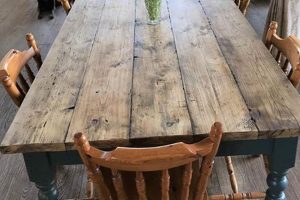
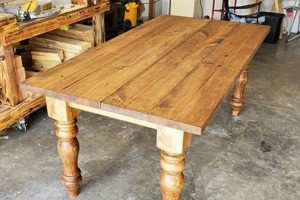
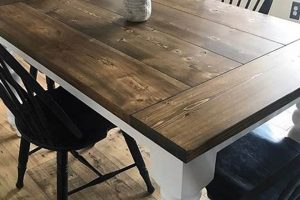
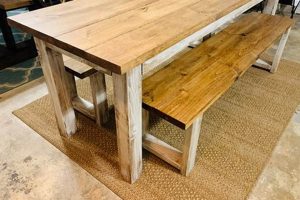
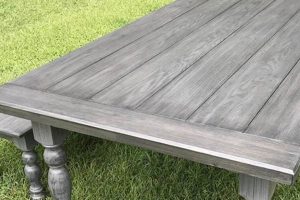
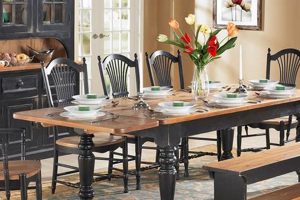
A dining surface that aligns with the standard height of kitchen counters and islands, typically around 36 inches, combines rustic aesthetics with enhanced functionality. This elevated surface provides a comfortable height for standing or using bar stools, facilitating casual dining and food preparation. For instance, a reclaimed wood surface positioned at this elevated level serves as both a dining and workspace.
The increased height promotes ergonomic comfort, reducing strain during prolonged standing tasks. Its prevalence is rooted in a desire for versatile furniture that seamlessly integrates into modern open-concept living spaces. Historically, farmhouse-style tables were lower; the updated dimension reflects evolving lifestyle preferences for multi-functional furniture.
Understanding the specific dimensions and potential applications is essential when selecting appropriate seating and designing a cohesive interior space. Considerations regarding material choices, leg styles, and overall aesthetic should be carefully addressed to achieve the desired ambiance. Subsequent discussion will focus on design considerations and practical applications within various home settings.
Essential Considerations for Selecting a Farm Table Counter Height
The selection of a dining surface at an elevated dimension requires careful planning. Consider these recommendations to ensure the furniture complements the intended space and usage.
Tip 1: Space Assessment: Measure the available area meticulously. Consider both the footprint of the surface and the surrounding circulation space to guarantee comfortable movement. A smaller room may benefit from a narrower design.
Tip 2: Seating Compatibility: Select stools that are appropriately scaled to the height of the surface, typically around 24-26 inches from seat to floor. Adjustable-height stools offer increased flexibility.
Tip 3: Material Selection: Opt for durable, easy-to-clean materials. Reclaimed wood offers a rustic aesthetic, while solid wood provides longevity. Consider the maintenance requirements of each material.
Tip 4: Leg Style and Stability: Ensure the legs are robust and evenly distributed to prevent wobbling. A trestle base or sturdy corner legs provide optimal stability, particularly for larger surfaces.
Tip 5: Surface Finish: Choose a finish that is resistant to scratches, stains, and water damage. A sealant or varnish will protect the surface from everyday wear and tear.
Tip 6: Consider the Overhang: An appropriate overhang allows for comfortable seating and legroom. A standard overhang of 10-12 inches is generally sufficient.
Tip 7: Multi-Functionality: Assess the intended use of the surface. If it will primarily serve as a dining area, ensure ample space for place settings. If it will also be used for food preparation, consider the surfaces resistance to heat and moisture.
By adhering to these guidelines, the selection process becomes more streamlined, resulting in a functional and aesthetically pleasing addition to the home. Subsequent sections will address various design styles and applications.
1. Ergonomic Comfort

The standardized dimension of approximately 36 inches directly contributes to ergonomic comfort. This increased height, compared to traditional dining surfaces, facilitates a more natural posture for individuals engaged in standing tasks or seated on appropriately sized stools. The reduced need to bend or stoop minimizes strain on the back and neck, promoting well-being during prolonged use. For example, individuals who frequently engage in food preparation find that this elevated surface alleviates discomfort associated with prolonged standing.
The selection of a surface at this height provides significant advantages in the creation of accessible spaces. It can be beneficial for those with mobility challenges, offering a more comfortable and easily reachable surface. Furthermore, the utilization of appropriately sized bar stools or counter-height chairs ensures optimal legroom and back support. In residential settings, this elevation encourages informal dining and social interaction, fostering a more relaxed atmosphere. In a commercial context, a coffee shop might utilize this height for customer interaction and order placement.
Understanding the relationship between dimensions and ergonomic considerations is crucial in the selection process. Failing to account for this factor can result in discomfort and potential physical strain. By prioritizing the aspect of the body, a better user experience can be provided to increase general satisfaction. It is essential to evaluate individual needs and preferences when determining the suitability of this style of furniture, acknowledging that its benefits extend beyond mere aesthetic appeal.
2. Spatial Compatibility

The correlation between spatial compatibility and a dining surface that is elevated to approximately 36 inches is a critical determinant of its functionality and aesthetic integration within a room. Spatial compatibility encompasses the ability of a physical object to exist harmoniously within a defined area, considering both dimensions and the flow of movement. When a table, with a height typically associated with kitchen counters, is introduced into a space, it necessitates careful consideration of room size, traffic patterns, and existing furniture arrangement. Inadequate spatial planning can result in obstructions, limited maneuverability, and an overall sense of imbalance. Conversely, a well-considered placement enhances both the utility and visual appeal of the area. For instance, in a compact kitchen, a narrow version positioned against a wall maximizes usable space, whereas a larger open-concept living area can accommodate a wider version, serving as a central focal point.
Real-world examples underscore the practical significance of understanding this relationship. A dining surface that is elevated at a higher height, when placed in a small dining room, can overwhelm the space, making seating uncomfortable and hindering navigation. Conversely, in a loft-style apartment, this elevated dimension might visually anchor the dining area, creating a distinct zone without compromising the open feel of the room. Moreover, the choice of seating plays a pivotal role in spatial dynamics. Bar stools require additional clearance to allow for comfortable entry and exit, impacting the overall footprint required. Careful assessment of these considerations ensures that the surface effectively integrates into the existing environment.
In summary, spatial compatibility is not merely an aesthetic concern; it is a fundamental element in the successful implementation of this elevated surface within a living space. Overlooking this aspect can lead to practical challenges and a diminished overall experience. Accurately evaluating room dimensions, traffic patterns, and seating arrangements is essential for achieving a harmonious balance between form and function. Subsequent design choices, such as material selection and leg style, should complement the established spatial arrangement to create a cohesive and inviting environment.
3. Material Durability

Material durability is a paramount consideration in the context of a surface designed to be at 36 inches, as it directly impacts the furniture’s longevity and resistance to wear and tear. The elevated height often positions the surface as a multi-functional area, susceptible to spills, impacts, and frequent use. Therefore, the selection of robust materials is not merely an aesthetic choice but a critical factor determining the pieces long-term utility. For instance, a table constructed from soft wood will exhibit scratches and dents more readily than one crafted from hardwood, potentially compromising its appearance and structural integrity over time. The causal relationship is clear: substandard materials result in accelerated degradation, requiring more frequent repairs or replacements.
Consider the practical implications in various settings. In a busy family kitchen, a surface made from a highly durable material such as solid hardwood, butcher block, or a high-pressure laminate is essential to withstand the rigors of daily use. The constant exposure to food, liquids, and utensils necessitates a material resistant to staining, scratching, and moisture damage. Conversely, a surface constructed from a less durable material, such as softwood or particleboard, might be suitable for a low-traffic area with minimal exposure to potential hazards. The choice of finish further contributes to material durability. A polyurethane coating, for example, provides a protective barrier against moisture and abrasion, extending the lifespan of the surface.
In summary, material durability is an indispensable attribute in the design and selection of a table at 36 inches. The selection process must prioritize materials that offer inherent strength and resistance to wear, commensurate with the intended use and environment. The direct correlation between material quality and long-term performance necessitates careful consideration of factors such as wood species, finish types, and potential exposure to environmental stressors. Neglecting the importance of material durability undermines the investment and diminishes the functional lifespan of the furniture.
4. Style Integration
Style integration, concerning furniture at 36 inches, involves harmonizing design elements with the existing aesthetic of a space. This process extends beyond mere visual appeal, encompassing the seamless fusion of form, function, and the established design vocabulary. Careful consideration of architectural details, color palettes, and material consistency is paramount to achieving a cohesive and aesthetically pleasing environment. Failure to integrate the selected furniture can result in visual discord and a compromised overall design.
- Architectural Harmony
Architectural harmony necessitates that the tables design aligns with the prevailing architectural style of the room. For instance, a rustic wood table, often used to achieve the desired height, might complement a farmhouse-style kitchen, while a sleek, minimalist design better suits a contemporary space. Real-life implications include a seamless blend of the table with existing structural elements such as exposed beams or modern cabinetry, reinforcing the room’s overall design theme.
- Material Consistency
Material consistency pertains to the selection of materials that complement existing finishes and textures within the space. A table constructed from reclaimed wood might harmonize well with a room featuring exposed brick or natural stone elements. Conversely, a metal-legged version might be more appropriate for an industrial-chic setting. An example would be incorporating a surface with similar wood tones to existing cabinetry to create a unified and cohesive appearance, avoiding jarring contrasts that disrupt the visual flow.
- Color Palette Coordination
Color palette coordination requires aligning the table’s color with the room’s existing color scheme. This involves considering the undertones, shades, and overall balance of colors to create a visually harmonious environment. For example, a neutral-toned version can blend seamlessly into a room with a muted color palette, while a brightly colored version can serve as a focal point in a more neutral space. Mismatched colors may create a sense of visual dissonance, detracting from the overall design integrity.
- Functional Symmetry
Functional symmetry acknowledges that a surface designed to be a height of 36 inches serves not only an aesthetic purpose but also a functional one. Style integration, therefore, must consider how well the table fulfills its intended function while maintaining aesthetic coherence. In a kitchen intended for both cooking and dining, the table should be both visually appealing and practically suited for food preparation and consumption. A counter top that is not durable enough for heavy use may undermine the design, regardless of its aesthetic appeal.
In conclusion, style integration is an integral aspect of incorporating furniture at 36 inches into any space. The successful integration of architectural harmony, material consistency, color palette coordination, and functional symmetry ensures that the surface not only fulfills its practical purpose but also enhances the overall aesthetic appeal of the environment. Neglecting these facets can lead to visual discord and a diminished design impact.
5. Seating Appropriateness

Seating appropriateness is a crucial design element when incorporating a surface at the elevated dimension commonly associated with kitchen counters into a space. The height disparity between a standard dining surface and this elevated design necessitates careful selection of seating to ensure both comfort and ergonomic functionality.
- Counter Stool Height
Counter stools, typically ranging from 24 to 29 inches in seat height, are specifically designed to complement surfaces within the 36-inch range. The stool’s height must allow sufficient legroom and facilitate comfortable access to the surface. Inadequate legroom leads to discomfort, while excessive height makes reaching the surface awkward. In practice, a 26-inch stool is often considered optimal for this surface, although individual preferences may vary.
- Back Support and Posture
Seating options may include those with or without back support. Backless stools promote active sitting and require core engagement, while those with backrests offer increased support and relaxation. The choice depends on the intended duration of use and individual ergonomic needs. For prolonged seating, a stool with lumbar support is recommended to minimize back strain.
- Footrests
Footrests are integral to ergonomic seating at elevated dimensions. These provide a place for feet to rest, preventing dangling and promoting better posture. The absence of a footrest leads to discomfort and can compromise blood circulation. The ideal footrest position should allow for a 90-degree angle at the knees and ankles, promoting a neutral and supported posture.
- Material and Style Consistency
The materials and style of seating must harmonize with the overall design aesthetic of the elevated surface and the surrounding space. Reclaimed wood stools may complement a rustic table, while metal or upholstered options suit more contemporary settings. The selection process should consider factors such as durability, ease of cleaning, and visual consistency with the furniture.
The integration of appropriately sized and styled seating enhances the functionality and comfort of a table at the higher level. Disregard for seating appropriateness undermines the ergonomic benefits and compromises the overall design. Careful evaluation of stool height, back support, footrest inclusion, and stylistic coherence is paramount to creating a harmonious and functional dining or workspace.
6. Functional Versatility
The connection between functional versatility and farm tables at the higher height stems from a need for adaptability in modern living spaces. The elevated dimension allows the table to serve multiple purposes beyond traditional dining. This adaptability directly results from the standardized height aligning with other counter surfaces within a home, thereby facilitating seamless transitions between different tasks. Functional versatility becomes a key component of such a piece because the elevated height alone, without practical applications, would not justify its prevalence. The table’s adaptability becomes a defining characteristic, enhancing its value in contemporary lifestyles.
Practical applications include using the surface for meal preparation, casual dining, and as a workspace. Consider a small apartment where space is at a premium. This type of table functions as a kitchen island for chopping vegetables and preparing ingredients, then quickly converts into a dining area, then transforms again to a workstation. The elevated dimension allows for comfortable standing during food preparation. The importance of functional versatility lies in maximizing the utility of a single piece of furniture to address the needs of various activities.
Understanding this connection is vital for homeowners and designers seeking to optimize space and enhance functionality. The challenges lie in selecting a product that truly offers diverse capabilities without compromising structural integrity or aesthetic appeal. In summary, the farm table at the higher height epitomizes the concept of functional versatility, demonstrating how a single piece of furniture can adapt to a multitude of needs within a modern living environment, increasing user satisfaction and utility.
7. Structural Stability
Structural stability is an indispensable element in the design and construction of farm tables featuring elevated surfaces. The increased height, typically around 36 inches, necessitates a robust structural framework to ensure safety and prevent instability. A table that is structurally unsound poses a risk of collapse or tipping, rendering it both dangerous and unusable. The causal relationship is clear: inadequate structural design leads to instability, while a well-engineered structure provides lasting support. This stability depends upon several factors, including the selection of appropriate materials, the design of the leg system, and the method of joinery.
In practical terms, a farm table at the elevated height requires legs that are sufficiently thick and securely attached to the tabletop. A trestle base, for instance, distributes weight evenly and enhances stability, while thin, poorly attached legs are prone to wobbling or breakage. Material selection also plays a crucial role; hardwoods such as oak or maple offer greater strength and resistance to bending than softer woods like pine. Joinery techniques, such as mortise-and-tenon or dovetail joints, provide superior strength compared to simple screws or nails. Consider, for example, a large, solid wood elevated surface utilized in a busy kitchen; a structurally deficient table would quickly succumb to the stresses of everyday use, while a well-built table would maintain its integrity for many years.
In summary, structural stability is not merely an aesthetic detail but a fundamental requirement for a safe and functional farm table at an elevated height. The selection of durable materials, the implementation of robust joinery techniques, and the design of a stable leg system are all crucial elements in ensuring the longevity and usability of the furniture. Overlooking structural stability compromises the piece’s safety and utility, diminishing its overall value. Subsequent design choices, such as aesthetic details, should complement, rather than compromise, the structural integrity of the piece.
Frequently Asked Questions
The following section addresses common inquiries regarding the selection, implementation, and maintenance of farm tables designed at counter height.
Question 1: What is the standard height for a surface referred to as farm table counter height?
The standard height is typically 36 inches (91.4 centimeters). This dimension aligns with conventional kitchen countertops and islands, facilitating comfortable use with counter stools.
Question 2: What type of seating is suitable for a farm table with a height around 36 inches?
Counter stools are the appropriate seating choice. These stools generally range from 24 to 29 inches in seat height, providing adequate legroom and access to the surface.
Question 3: What are the primary benefits of opting for a farm table that measures around 36 inches?
Benefits include increased ergonomic comfort, enhanced space utilization, and the creation of a versatile surface suitable for both dining and food preparation.
Question 4: What materials are recommended for this type of furniture?
Durable materials such as solid hardwood (oak, maple), reclaimed wood, or butcher block are recommended due to their strength, resistance to wear, and aesthetic appeal.
Question 5: How can one ensure the structural stability of a surface with the height of a counter?
Structural stability can be ensured through the selection of robust materials, the implementation of sturdy joinery techniques (mortise-and-tenon, dovetail), and the design of a stable leg system (trestle base, thick corner legs).
Question 6: How can one integrate a surface with the height of a counter seamlessly into a room’s existing design?
Integration can be achieved by considering architectural harmony, material consistency, color palette coordination, and functional symmetry. Aligning the table’s design with the room’s existing aesthetic elements is crucial.
Understanding these key aspects will assist in the informed selection and effective utilization of farm tables designed at counter height.
Subsequent discussion will focus on the selection process.
In Summary
The preceding exploration has delineated essential considerations regarding surfaces that elevate rustic design to approximately 36 inches. Discussions encompassed ergonomic advantages, spatial integration, material robustness, stylistic coherence, appropriate seating, functional versatility, and structural integrity. Each element contributes to the successful implementation of these pieces within diverse settings.
Careful evaluation of these factors facilitates informed decision-making, ensuring that selections yield not only aesthetic satisfaction but also enduring functionality and utility. Further research into specific design nuances and evolving trends remains essential for optimizing the integration of surfaces with such dimensions in contemporary spaces. Diligence in this pursuit is vital for achieving long-term value and fulfilling the intended purpose.