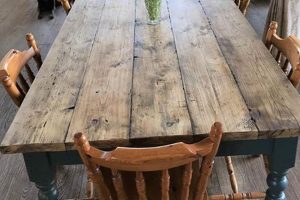
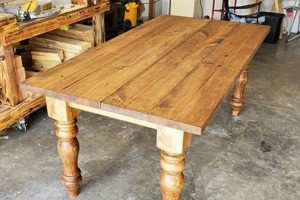
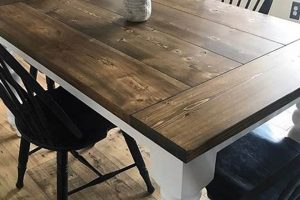
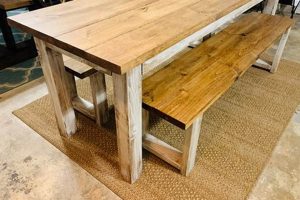
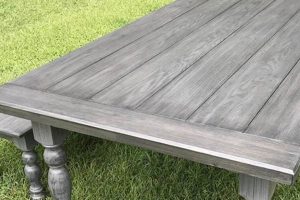
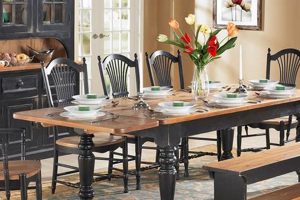
This specific type of furniture piece, typically constructed from solid wood, is characterized by its robust build and rectangular shape. Historically central to farmhouse kitchens, it served as a multifunctional surface for food preparation, dining, and gathering. Examples include tables crafted from reclaimed lumber, featuring trestle or pedestal bases, often displaying natural imperfections like knots and grain variations.
The appeal of this furniture stems from its durability and inherent warmth, lending a sense of rustic authenticity to interiors. Its substantial construction ensures longevity, making it a sustainable choice. Furthermore, the natural variations in the wood grain contribute to its unique aesthetic character, creating a focal point that complements diverse design styles. From a historical perspective, this furniture represents a connection to simpler times and agricultural heritage.
The following discussion will elaborate on the various design considerations, material options, and maintenance techniques associated with this enduring furniture type. It will also delve into its adaptability in contemporary settings and explore its continued relevance in modern interior design.
Considerations for Selecting a Wooden Farm Table
This section outlines key considerations for selecting and maintaining a durable and aesthetically pleasing example of this furniture.
Tip 1: Material Selection: The choice of wood significantly impacts durability and aesthetics. Hardwoods, such as maple, oak, or walnut, offer superior resistance to wear and tear compared to softwoods like pine. Consider the grain pattern and color of the wood to complement the intended interior design.
Tip 2: Size and Dimensions: Accurately measure the available space before purchasing. Ensure that the selected dimensions allow for comfortable seating and circulation around the perimeter. A table that is disproportionately large or small will disrupt the visual harmony of the room.
Tip 3: Base Style: Trestle, pedestal, and leg-based designs offer varying levels of stability and visual appeal. Trestle bases generally provide ample legroom but may limit seating arrangements. Pedestal bases offer a clean, unobstructed aesthetic, while leg-based tables provide traditional stability.
Tip 4: Finish and Protection: Apply a durable sealant or finish to protect the wood from moisture, stains, and scratches. Consider options such as polyurethane, varnish, or oil-based finishes. A matte finish preserves the natural appearance of the wood, while a gloss finish offers enhanced protection.
Tip 5: Maintenance Practices: Regular cleaning with a damp cloth and mild soap helps prevent the buildup of dirt and grime. Avoid using harsh chemicals or abrasive cleaners, as these can damage the finish. Periodic application of furniture polish or oil can help maintain the wood’s luster.
Tip 6: Edge Profile: The edge of the tabletop is often overlooked but plays a role in its overall appeal and functionality. Rounded or beveled edges provide a softer look and prevent sharp corners. Square edges offer a more modern, streamlined aesthetic.
Tip 7: Consider Reclaimed Wood: Tables constructed from reclaimed wood offer unique character and sustainability. Reclaimed lumber often features distinctive markings and imperfections that add to its rustic charm. Prior to purchase, carefully inspect reclaimed wood for structural integrity.
By considering these factors, purchasers can make informed decisions that result in the selection of an appropriate and long-lasting furniture piece. Thoughtful selection and consistent maintenance ensure both longevity and aesthetic appeal.
The subsequent section will provide a more in-depth analysis of the history and evolving designs within the category of wooden tables.
1. Material Durability

Material durability is a primary determinant of the lifespan and functionality of the furniture. In the context of the specified furniture, the selected wood species and construction methods dictate its resistance to physical damage, moisture, and general wear and tear. This consideration is paramount, given the intended purpose of such furniture, which often involves heavy use and exposure to various environmental factors.
- Hardwood Density and Impact Resistance
Hardwoods, such as oak, maple, and walnut, possess a high density that translates to greater resistance to impacts, scratches, and dents compared to softwoods like pine or fir. A table constructed from a dense hardwood is better equipped to withstand the rigors of daily use, including heavy dishes, accidental bumps, and the general wear associated with a busy household.
- Moisture Resistance and Wood Stability
Certain wood species exhibit inherent resistance to moisture absorption, which is critical in preventing warping, cracking, and rot. Furthermore, proper kiln-drying techniques enhance wood stability, reducing its susceptibility to dimensional changes due to fluctuations in humidity. Selecting wood with these properties ensures the furniture retains its structural integrity over time, even in environments with varying humidity levels.
- Finish Application and Protection
The type of finish applied to the surface significantly impacts its resistance to scratches, stains, and moisture penetration. Durable finishes, such as polyurethane or varnish, form a protective barrier that shields the wood from everyday hazards. Proper application and maintenance of the finish are essential to preserving the furniture’s appearance and prolonging its lifespan.
- Joinery Techniques and Structural Integrity
The joinery methods used to assemble the components directly influence the structural stability of the furniture. Strong joinery techniques, such as mortise and tenon joints, dovetail joints, or well-executed screw and glue connections, ensure that the table remains sturdy and capable of withstanding significant weight and stress. Poorly constructed joinery can lead to wobbly legs, loose connections, and premature failure.
These facets of material durability are interconnected and collectively determine the overall longevity and performance of a wooden piece. A judicious selection of materials, combined with skilled craftsmanship, ensures that such furniture can serve as a durable and functional centerpiece for generations.
2. Surface Finish

The surface finish applied to a piece of this style is paramount to its long-term durability, aesthetic appeal, and functionality. It serves as a protective barrier against environmental factors and physical wear, while also influencing the overall visual character of the piece.
- Protection Against Moisture and Stains
Surface finishes, such as polyurethane or varnish, create a barrier that prevents moisture from penetrating the wood. This is crucial, as water absorption can lead to warping, swelling, or even rot. Furthermore, a well-applied finish resists staining from food, beverages, or other common household substances, preserving the wood’s appearance and facilitating easy cleaning. For example, a polyurethane finish effectively protects against spills during meals, a common occurrence on a heavily used piece of this nature.
- Enhancement of Aesthetic Qualities
The type of finish chosen can significantly alter the visual character of the piece. Matte finishes preserve the natural appearance of the wood grain, emphasizing its rustic charm and highlighting imperfections. Glossy finishes, on the other hand, create a sleek, reflective surface that enhances the wood’s color and depth. The choice depends on the desired aesthetic and the overall design of the space where the furniture is situated; the use of oil finishes on reclaimed wood might accentuate natural patina and wear patterns.
- Resistance to Scratches and Abrasions
A durable surface finish provides a degree of protection against scratches and abrasions, which are inevitable with regular use. Hard finishes, such as conversion varnish, offer superior resistance compared to softer finishes like wax or oil. This is particularly important for tables used in high-traffic areas or those subjected to heavy use, as a robust finish minimizes the appearance of wear and tear over time. Consider catalyzed varnish, often used in commercial settings, for enhanced scratch resistance.
- Ease of Maintenance and Cleaning
The type of surface finish affects the ease with which the table can be cleaned and maintained. Smooth, non-porous finishes, such as polyurethane, are easily wiped clean with a damp cloth, preventing the buildup of dirt and grime. More porous finishes, like oil or wax, may require periodic reapplication to maintain their protective qualities. Therefore, the choice of finish should align with the user’s maintenance preferences and lifestyle. For instance, a family with young children might prioritize a low-maintenance, easily cleanable finish.
These various facets illustrate that the surface finish is not merely an aesthetic consideration but an integral component of its overall functionality and longevity. Proper selection and application of the finish are crucial for preserving its value and ensuring its continued use for years to come. Consideration of the original purpose of farmhouse kitchen implements needs to be carefully considered when selecting the appropriate protective coats.
3. Base Construction
Base construction directly influences the stability, weight distribution, and overall aesthetic of this specific style of furniture. The design of the base, whether a trestle, pedestal, or traditional four-legged configuration, dictates the table’s ability to support weight, resist wobbling, and integrate with the surrounding environment. A robust base ensures longevity and usability, while a poorly designed one can compromise the entire structure. For instance, a trestle base constructed from thick, solid wood provides exceptional stability and a rustic visual appeal, whereas a slender metal base might offer a more modern aesthetic but potentially less load-bearing capacity. Understanding the relationship between base construction and overall performance is critical for selecting an appropriate and durable table.
Different base designs cater to varying needs and preferences. A pedestal base, characterized by a single central support, allows for maximum legroom and seating flexibility around the table’s perimeter. This design is particularly well-suited for smaller spaces or for individuals who prioritize unobstructed access. In contrast, a traditional four-legged base provides a classic and stable platform, suitable for larger tables intended to accommodate more people. The choice of leg style, whether straight, tapered, or turned, also contributes to the overall aesthetic and functional characteristics of the table. Reclaimed wood table bases can exhibit unique joinery features from previous uses of the timber.
Ultimately, the selection of base construction for this type of table involves a careful consideration of structural integrity, aesthetic preferences, and practical requirements. A well-executed base not only provides essential support but also enhances the table’s visual appeal and contributes to its overall character. Ignoring the nuances of base construction can result in a table that is unstable, unattractive, or ill-suited to its intended purpose. The interplay between material selection, joinery techniques, and design elements within the base is crucial for creating a durable and aesthetically pleasing centerpiece.
4. Tabletop Shape

The form of the tabletop is a defining characteristic, influencing both its aesthetic and functional properties. This consideration, especially concerning rustic furniture such as the keyword subject, dictates the seating capacity, dining experience, and overall integration within a room’s design.
- Rectangular Dimensions and Seating Capacity
The classic rectangular shape maximizes seating and work surface area, making it suitable for communal dining or food preparation. A longer rectangle accommodates more individuals along its sides, while the width influences the reach across the table. Historically, this shape facilitated efficient use of space in farmhouses. This shape is frequently associated with the specified furniture, embodying functionality and tradition.
- Round and Oval Forms and Social Interaction
Circular or oval tabletops promote inclusivity by eliminating corners, enabling easier conversation and visual contact among diners. The absence of hierarchical seating positions fosters a sense of equality. Although less common in traditional iterations, these shapes are viable options, lending a contemporary touch to the farmhouse aesthetic.
- Edge Profile and User Comfort
The edge profilesquare, rounded, beveled, or live-edgeimpacts both the appearance and tactile experience. Rounded edges enhance comfort by reducing sharp corners, while live-edge designs preserve the natural contour of the wood, imparting uniqueness. A well-considered edge profile augments the rustic charm of the furniture while enhancing user safety and comfort.
- Thickness and Visual Weight
The tabletop’s thickness influences its perceived solidity and robustness. Thicker tops convey a sense of substance and durability, while thinner tops project a lighter, more refined aesthetic. Selecting an appropriate thickness ensures visual harmony with the base and overall design, enhancing the furniture’s aesthetic impact. Historically, thicker tops signified quality and longevity in rural furniture.
The interplay of shape, dimensions, edge profile, and thickness determines the aesthetic and functional attributes, creating a piece that reflects both practicality and visual appeal. Thoughtful design integration ensures its cohesion with the surrounding environment. These considerations underscore the enduring relevance of the furniture form in both historical and contemporary settings.
5. Rustic Aesthetic
The integration of a rustic aesthetic within the design of this furniture is not merely decorative, but a deliberate evocation of historical context and functional design principles. This aesthetic lends a sense of authenticity and timelessness, transforming the furniture into a focal point with historical and cultural significance.
- Natural Materials and Textures
The use of natural materials, such as reclaimed wood, contributes to the rustic aesthetic by showcasing imperfections like knots, grain variations, and weathering marks. These elements are not concealed but celebrated, creating a tactile surface that resonates with the inherent character of the wood. For instance, a tabletop constructed from salvaged barn beams might display saw marks and nail holes, evidence of its previous life, which add depth and historical narrative to the piece.
- Distressed Finishes and Patina
Distressed finishes, intentionally applied to simulate age and wear, further enhance the rustic aesthetic. Techniques such as sanding, scraping, and staining create a patina that emulates the gradual effects of time and use. A milk paint finish, slightly chipped or worn along the edges, suggests years of service in a farmhouse kitchen, enhancing the feeling of authenticity.
- Simple, Functional Design
The rustic aesthetic emphasizes simplicity and functionality over elaborate ornamentation. The focus is on clean lines, robust construction, and utilitarian design, reflecting the practical needs of a rural lifestyle. For example, a trestle base constructed from solid, unadorned timbers showcases the inherent strength and stability of the materials, aligning with the core values of rustic design.
- Earthy Color Palettes
Earthy color palettes, inspired by natural elements such as soil, stone, and foliage, complement the rustic aesthetic. Warm tones like browns, grays, and muted greens create a sense of warmth and tranquility, evoking a connection to the outdoors. A stain that accentuates the natural color variations of the wood, without masking its texture, enhances its inherent beauty and contributes to the overall rustic ambiance.
In summary, the rustic aesthetic, when applied to such furniture, is a confluence of materials, finishes, and design principles intended to evoke a sense of history, authenticity, and functional simplicity. The integration of these elements transforms the furniture into a piece that transcends mere utility, becoming a statement of cultural heritage and enduring design value.
6. Functional Versatility
The characteristic adaptability of such furniture is fundamental to its enduring appeal. Its design, rooted in practicality, allows for diverse applications within the domestic sphere. Its utility extends beyond mere dining, accommodating various activities.
- Food Preparation and Processing
The expansive surface area facilitates food preparation tasks, such as chopping, kneading, and assembly. Historically, these tables served as central workstations for processing harvested crops and preparing meals for large families. The robust construction withstands the rigors of demanding culinary activities. The furniture could also serve as butchering tables, or bread making.
- Social Gathering and Entertainment
Beyond dining, it provides a gathering point for social interactions, games, and crafting activities. Its substantial size accommodates multiple individuals, fostering a sense of community. This attribute enhances its value in both residential and commercial settings as family and friends are all welcome to sit together and share in quality time.
- Workspace and Task Completion
The flat, stable surface serves as a suitable workspace for tasks such as homework, paperwork, or creative projects. Its durability withstands the wear and tear associated with prolonged use. The size and shape of the furniture also enables others to work together on collaborative initiatives.
- Display and Storage Solution
In addition to its primary functions, it can serve as a display area for decorative items or a temporary storage space for household goods. The surface accommodates various objects, contributing to the overall organization and aesthetics of the space. Baskets, bowls, and potted plants may adorn the space. It also could store books, games, and office supplies.
The versatility of such furniture underscores its adaptability to diverse needs and lifestyles. Its enduring presence in both traditional and contemporary settings is a testament to its functional design and enduring appeal. The tables also evolve through time to meet society’s needs, by becoming smaller, larger, lower, or taller.
7. Historical Significance

The prevalence of the “wooden farm table” is deeply intertwined with agricultural history and communal living. This furniture piece served as a focal point in rural households, its existence directly linked to the cycles of farming and family life. It was not merely a surface for dining but a multifunctional platform for food preparation, harvest processing, and communal gatherings. The tables dimensions often reflected the size of the family and the scale of agricultural activities, indicating its crucial role in sustaining the household. For example, in 18th and 19th-century agrarian communities, large, sturdy tables were essential for tasks such as sorting crops, preparing meals for farmhands, and mending equipment, thereby illustrating its practical significance within the rural economy. Without the presence of such a table, the organization of daily activities and social interactions within the farmhouse would have been significantly hampered.
The design and construction of these tables often reflected locally available materials and woodworking techniques, further embedding them within regional histories. The use of specific wood types, joinery methods, and finishes served as indicators of cultural traditions and resource availability. For instance, tables constructed in New England might feature maple or pine, reflecting the abundance of these woods in the region, whereas tables from the Southern United States might utilize cypress or oak. These distinctions underscore how the production and usage of wooden tables were integrated into local economies and cultural practices, making them tangible representations of regional histories. The survival and preservation of antique farm tables provide invaluable insights into past lifestyles, woodworking techniques, and material culture.
Understanding the historical significance of the “wooden farm table” provides a deeper appreciation for its enduring design and cultural value. By recognizing its role in shaping rural life and agricultural practices, contemporary users can connect with the past and acknowledge the craftsmanship and resourcefulness of previous generations. Preserving and restoring these tables is essential for maintaining a tangible link to history, allowing future generations to understand and appreciate the cultural heritage embedded within these functional art forms. Challenges remain in preserving authentic examples and interpreting their historical context accurately. However, the knowledge gained from studying these tables continues to inform design and inspire a renewed appreciation for sustainable and locally-sourced materials.
Frequently Asked Questions about Wooden Farm Tables
This section addresses common inquiries regarding this furniture style, providing concise and authoritative answers.
Question 1: What wood species are best suited for constructing this style of furniture?
Hardwoods, such as oak, maple, walnut, and cherry, are generally preferred due to their superior strength, durability, and resistance to wear. Softwoods, like pine, can be used but require more careful handling and maintenance.
Question 2: How can potential buyers determine the authenticity of an antique edition of this style of furniture?
Authenticity can be assessed by examining construction techniques, hardware, wood species, and finish. Consultation with an experienced antiques appraiser is recommended for a definitive evaluation.
Question 3: What are the optimal cleaning and maintenance procedures for preserving the integrity of a wooden one?
Regular dusting with a soft cloth and occasional cleaning with a mild soap and water solution are recommended. Avoid harsh chemicals and abrasive cleaners. Periodic application of furniture polish or oil can help maintain the wood’s luster.
Question 4: What are the common base construction methods associated with this furniture style?
Common base construction methods include trestle bases, pedestal bases, and traditional four-legged designs. Trestle bases offer stability and a rustic aesthetic, while pedestal bases provide ample legroom. Four-legged designs provide a classic and stable platform.
Question 5: How does the tabletop shape affect the functionality and aesthetic of this furniture style?
Rectangular tops maximize seating and surface area, while round or oval tops promote social interaction. Edge profiles, such as rounded or live-edge, influence both comfort and visual appeal.
Question 6: What are the key characteristics of a rustic aesthetic in this type of furniture?
Key characteristics include the use of natural materials, distressed finishes, simple designs, and earthy color palettes. These elements contribute to a sense of authenticity and historical significance.
These answers provide a foundation for understanding and appreciating the unique qualities of this furniture. Careful consideration of these factors ensures informed selection and long-term enjoyment.
The subsequent section will delve into the integration of these tables into contemporary interior design.
Wooden Farm Table
This exploration has illuminated the defining characteristics, functional versatility, and historical significance of the wooden farm table. From its inherent material durability and surface finish options to the various base construction methods and tabletop shapes, each element contributes to its enduring appeal. The rustic aesthetic further enhances its perceived authenticity and historical context.
The wooden farm table transcends mere utility, serving as a tangible link to agricultural heritage and communal living. Its continued relevance in contemporary design underscores its adaptability and enduring value. Further research and preservation efforts are warranted to ensure that its historical and cultural significance is maintained for future generations, prompting a deeper appreciation for functional design and sustainable materials.