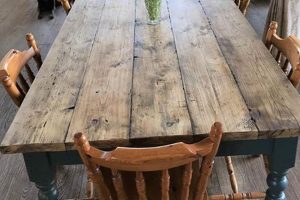
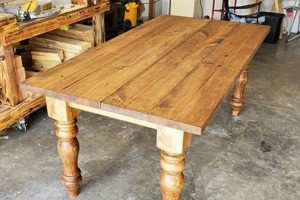
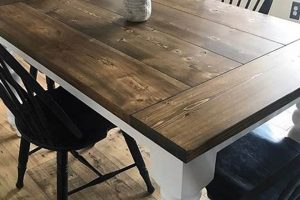
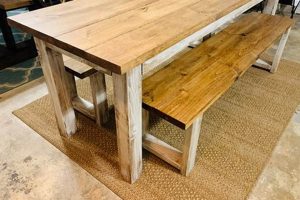
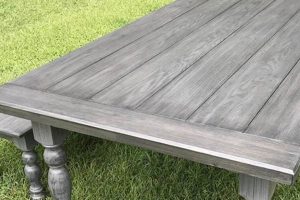
These substantial pieces of furniture, originally designed for food preparation and communal dining in rural settings, represent a tangible link to agricultural history. Characterized by robust construction, often featuring thick wooden tops and sturdy legs, they bear the marks of time, including wear patterns and patinas that contribute to their unique character. Examples include tables crafted from reclaimed wood with visible saw marks, or those displaying remnants of original paint or stain.
The enduring appeal of these items stems from their functional design, inherent durability, and the sense of history they embody. They serve not only as functional surfaces but also as focal points, adding warmth and character to contemporary interiors. Their historical context provides a connection to past generations and a simpler way of life, contributing to their value as both practical furnishings and treasured artifacts.
The following sections will delve into aspects such as identifying characteristics, restoration considerations, and integrating these pieces into modern living spaces, offering guidance on selecting and maintaining these enduring symbols of rustic charm.
Guidance on Appreciating Heirloom Tables
The acquisition and care of these venerable furnishings require a discerning eye and a commitment to preserving their historical integrity. The subsequent guidelines offer practical advice for both prospective buyers and current owners.
Tip 1: Assess Authenticity: Examination of construction methods is paramount. Dovetail joints, mortise-and-tenon joinery, and the presence of square nails are indicative of age. Uniform, machine-made elements suggest a more recent construction.
Tip 2: Evaluate Wood Type: The wood used in construction frequently reflects the region of origin and the era of creation. Pine, oak, maple, and walnut are common choices. Wood species identification can assist in determining age and origin.
Tip 3: Examine Wear Patterns: Genuine wear patterns, developed over decades of use, are uneven and natural. Simulated distressing often appears artificial and uniform. Observe areas around drawers, edges, and work surfaces for signs of authentic wear.
Tip 4: Research Provenance: Whenever possible, investigate the piece’s history. Information regarding previous owners, place of origin, or documented use can significantly increase its value and historical significance.
Tip 5: Consider Restoration Carefully: While minor repairs may be necessary, excessive restoration can diminish value. Prioritize preservation over complete renovation. Consult with a qualified antique furniture restorer before undertaking any significant work.
Tip 6: Preserve the Patina: The accumulated surface finish, or patina, is a crucial element of its character. Avoid harsh cleaning products that can strip away this valuable layer. Gentle cleaning with mild soap and water is typically sufficient.
Tip 7: Control Environmental Factors: Maintaining stable temperature and humidity levels is essential to prevent wood warping and cracking. Avoid placing the furniture in direct sunlight or near sources of heat or moisture.
By carefully considering these points, one can better appreciate and preserve the historical and aesthetic qualities. Proper evaluation, mindful restoration, and consistent care will ensure its longevity as a cherished heirloom.
The following section will delve into the art of integrating these statement pieces into contemporary design.
1. Material authenticity
Material authenticity is a critical component in establishing the value and historical significance of these furnishings. The type of wood used in its construction, the hardware employed, and the finishing techniques applied serve as indicators of its origin, age, and craftsmanship. For example, the presence of old-growth pine, a material commonly used in early American furniture, suggests a construction date prior to widespread deforestation. Conversely, the use of composite materials or modern fasteners would immediately raise concerns about its authenticity. Identifying the original materials is, therefore, a crucial step in determining whether a piece is truly from the era it purports to be.
The impact of material choice extends beyond mere identification; it also affects its structural integrity and aesthetic appeal. Tables crafted from durable hardwoods like oak or maple, known for their resistance to wear and tear, demonstrate a commitment to longevity typical of early furniture makers. The presence of original hardware, such as hand-forged nails or iron hinges, further supports the claim of authenticity. These materials often possess unique characteristics, like variations in grain or subtle imperfections, that cannot be replicated in modern reproductions. Recognizing these details requires a discerning eye and a thorough understanding of historical woodworking practices.
In summary, material authenticity serves as a cornerstone in assessing the true value and historical importance of these pieces. The identification of original materials, coupled with an understanding of their properties and characteristics, provides crucial evidence of its age, origin, and craftsmanship. The challenge lies in acquiring the knowledge and expertise necessary to distinguish authentic materials from modern imitations, thereby safeguarding against misrepresentation and ensuring that these valuable pieces are properly valued and preserved.
2. Construction Techniques

Examination of construction techniques provides critical insights into the age, origin, and authenticity of these items. Traditional methods employed in their creation are distinct from modern manufacturing processes, offering valuable clues for identification and assessment.
- Joinery Methods
The type of joinery used, such as mortise-and-tenon, dovetail, or pegged construction, is a significant indicator of age. Mortise-and-tenon joints, particularly those secured with wooden pegs, were commonly used in early tables. Hand-cut dovetails also suggest an older construction, as opposed to machine-cut dovetails found in later pieces. The precision and style of the joinery can further pinpoint the era and region of origin. For instance, a table with a through-tenon joint, where the tenon extends completely through the mortise and is visible on the opposite side, might indicate a specific regional style.
- Fastener Types
The fasteners used in construction offer another clue to age. Early tables typically employed hand-forged nails, characterized by irregular shapes and visible hammer marks. Later, machine-made nails with uniform dimensions became prevalent. The absence of screws, or the presence of early screw types with hand-cut threads, can suggest an older table. The type of metal used for nails and screws, such as iron or brass, can also provide dating information. For example, the use of rosehead nails, a type of hand-forged nail with a distinctive rose-like head, is indicative of construction prior to the mid-19th century.
- Woodworking Tools
Evidence of the tools used in construction is often visible on the wood surfaces. Hand-planed surfaces exhibit subtle irregularities and variations, while machine-planed surfaces are typically smooth and uniform. Saw marks, particularly those left by pit saws or frame saws, suggest a pre-industrial construction. The presence of adze marks, indicating the use of a hand tool for shaping wood, is another sign of age. Close examination of the wood can reveal the type of tools used and the level of craftsmanship involved in its creation. For example, the presence of tear-out, where wood fibers are lifted or chipped during planing, is more common in hand-planed surfaces due to the limitations of early tools.
- Frame and Leg Construction
The design and construction of the table’s frame and legs provide insights into its structural integrity and intended use. Sturdy legs, often tapered or turned, are characteristic of older tables designed for heavy use. The method of attaching the legs to the frame, whether through mortise-and-tenon joints or other techniques, is a key consideration. The presence of stretchers, horizontal supports connecting the legs, adds stability and is common in many antique tables. The design of the legs and frame can also reflect regional styles and woodworking traditions. For instance, a table with cabriole legs, a type of curved leg common in Queen Anne furniture, would suggest a construction date in the 18th century.
These construction techniques collectively serve as a roadmap for understanding a table’s history and authenticity. By carefully examining joinery, fasteners, tool marks, and frame construction, it is possible to gain valuable insights into its age, origin, and craftsmanship. This knowledge is essential for collectors, restorers, and anyone interested in appreciating the history embodied within these pieces.
3. Wear Indications
Wear indications on these tables serve as a historical record, documenting past usage and offering authentication evidence. These markings, accumulated over decades or centuries, reveal the table’s history and provide insights into its original function and environment.
- Surface Patina
The surface patina, a layer of accumulated dirt, wax, and oils, is a primary wear indication. A genuine patina exhibits subtle variations in color and texture, reflecting the uneven distribution of use over time. For example, a table used primarily for kneading dough might display a smoother, more polished patina in the center of the top. Conversely, simulated patina applied during reproduction often appears uniform and lacks depth. Disruption of the patina via aggressive cleaning or refinishing diminishes the table’s historical value.
- Edge Rounding and Softening
Over time, the sharp edges of tables naturally round and soften due to repeated contact. This rounding is most evident on edges frequently touched or bumped. The degree of rounding is proportional to the table’s age and intensity of use. Sharp, crisp edges on a table purporting to be antique are cause for suspicion. Similarly, excessive sanding to create artificial rounding eliminates the nuances of genuine wear.
- Stain and Liquid Marks
Stains and liquid marks, often resulting from food preparation or spills, provide clues about the table’s past. Concentric rings from cups or bowls, or discoloration from spilled liquids, are common. The nature of the stain can indicate the types of food or beverages prepared on the table. For instance, dark stains near a cutting board might suggest frequent use for chopping vegetables or meat. The absence of any stains on a table claimed to have been used extensively is inconsistent with its purported history.
- Structural Wear
Structural wear includes signs of stress and repair to the table’s frame and legs. Wobbly legs, cracks, or repairs to joints are indicators of age and use. The type of repair can also provide information about the table’s history. For example, a leg reinforced with a hand-carved brace suggests a repair performed during the table’s working life, while a modern metal bracket indicates a more recent intervention. The presence of insect damage, while potentially problematic, can also be an indicator of age, provided it is not recent and active infestation.
These distinct wear patterns on these furnishings are essential for authenticating their age and understanding their historical use. By carefully examining the surface patina, edge rounding, stain marks, and structural wear, it becomes possible to appreciate the history that is embedded within these tangible artifacts.
4. Origin traceability

Establishing the origin of heirloom tables is paramount in determining its authenticity, historical significance, and monetary value. The ability to trace a table back to its place of creation provides critical context, allowing for a deeper understanding of its construction, materials, and intended use.
- Regional Woodworking Traditions
Different regions developed unique woodworking styles and techniques. Identifying the origin can reveal adherence to specific regional practices. For instance, tables from New England often exhibit distinctive joinery methods and utilize locally sourced timber, like pine or maple, reflecting the region’s resources and craftsmanship.
- Historical Context
Origin traceability allows for the placement of the table within a specific historical period. Knowing the period in which it was made provides insights into the socioeconomic conditions, design influences, and technological capabilities of the time. A table originating from the mid-19th century, for example, might reflect the impact of industrialization on furniture production.
- Maker Identification
In some instances, origin traceability can lead to the identification of the maker. Furniture makers often employed unique construction techniques or markings, allowing scholars and collectors to attribute pieces to specific workshops or individuals. Such attribution significantly increases the table’s historical and cultural value.
- Material Sourcing
Tracing a table’s origin can reveal the source of its materials. Understanding where the wood was harvested and the hardware was manufactured offers valuable insights into trade routes, resource availability, and economic networks of the past. The use of imported hardwoods, for example, might suggest a connection to international trade and a higher level of craftsmanship.
These facets underscore the importance of origin traceability in understanding these pieces. Through careful analysis and historical research, these furnishings can offer a tangible connection to the past, providing insights into regional craftsmanship, historical events, and the lives of those who created and used them.
5. Restoration ethics
The restoration of heirloom tables necessitates adherence to a strict ethical framework to preserve their historical integrity and authenticity. Unethical restoration practices can irreversibly damage or erase the historical record embedded within these pieces, diminishing their value and cultural significance. The primary cause of unethical restoration often stems from a desire to make the table appear “new” or to increase its perceived market value, disregarding the inherent worth of its original condition. For example, completely stripping away the original patina, a surface layer accumulated over decades or centuries, destroys evidence of past use and the environment in which the table existed. This action, although intended to improve aesthetics, fundamentally alters the table’s character and historical narrative.
The importance of restoration ethics becomes evident when considering the practical impact of various interventions. A minimal approach, focusing on stabilizing existing structures and preserving original finishes, ensures that the table retains its historical narrative. Conversely, aggressive methods like complete disassembly, replacement of original components with modern replicas, or the application of incompatible finishes can transform the table into a simulacrum of its former self. A table with original, albeit worn, hardware provides valuable information about manufacturing techniques and materials. Replacing this hardware with modern reproductions eradicates this data. Similarly, attempting to conceal wear marks or stains through excessive sanding or filling obscures the table’s history of use, rendering it less informative and historically valuable.
In conclusion, ethical restoration is not merely a matter of aesthetic preference but a commitment to preserving tangible links to the past. The challenge lies in finding a balance between stabilizing the table for continued use and maintaining its historical integrity. A responsible approach prioritizes conservation over renovation, acknowledging that the imperfections and wear marks acquired over time are integral to the table’s story. By adhering to ethical restoration principles, it ensures that future generations can appreciate and learn from these invaluable artifacts.
6. Patina preservation
Patina on surfaces of antique farm tables represents more than mere accumulated dirt or wear; it embodies historical context and functional history. The surface layer, composed of waxes, oils, and environmental deposits, is a direct result of the table’s use and surroundings over extended periods. Removal of this patina, frequently stemming from overzealous cleaning or refinishing, erases significant evidence of the table’s past. For instance, a farm table displaying a darkened patina around a specific area might indicate its primary use for kneading dough, the oils from the dough contributing to the darkened hue over time. Preserving the patina, therefore, safeguards a tangible record of the table’s practical function and historical environment.
The benefits of patina preservation extend beyond mere historical accuracy; it directly impacts the aesthetic and economic value of the piece. Authentic patina contributes to the table’s unique character, providing a visual depth and warmth that cannot be replicated artificially. The market generally assigns a higher value to antique farm tables with undisturbed patinas compared to those that have been heavily restored or refinished. As an example, a table with a well-preserved, naturally aged finish is likely to command a higher price than a similar table that has been stripped and re-stained to appear new. Furthermore, aggressive cleaning processes can damage the underlying wood, reducing its structural integrity and overall lifespan.
In conclusion, patina preservation is a critical aspect of maintaining the historical integrity, aesthetic value, and economic worth of antique farm tables. The practice of preserving the existing patina provides a tangible record of time and historical use. The challenge lies in educating owners and restorers on the importance of conservation over renovation, recognizing that the imperfections and wear inherent in an undisturbed patina contribute significantly to the table’s unique character and value. The understanding and application of appropriate cleaning and preservation methods ensures continued appreciation.
Frequently Asked Questions
The following questions address common inquiries and misconceptions regarding antique farm tables, offering guidance for both collectors and enthusiasts.
Question 1: What distinguishes a genuine antique farm table from a reproduction?
Genuine antique farm tables exhibit characteristics indicative of age, including hand-tool markings, dovetail or mortise-and-tenon joinery, and naturally aged patina. Reproductions typically display machine-made elements, uniform finishes, and a lack of authentic wear patterns.
Question 2: How can the age of an antique farm table be determined?
The age is estimated through an examination of construction techniques, wood type, hardware styles, and wear patterns. Historical records, provenance information, and maker’s marks, if present, can further refine age estimations.
Question 3: What wood types are commonly found in antique farm tables?
Common wood types include pine, oak, maple, and walnut. The specific type often reflects the table’s region of origin and the availability of timber during its construction period.
Question 4: How should an antique farm table be cleaned and maintained?
Gentle cleaning with mild soap and water is recommended. Harsh chemicals and abrasive cleaners should be avoided to prevent damage to the original finish and patina. Regular waxing can help protect the wood surface.
Question 5: What factors influence the value of an antique farm table?
Value is influenced by factors such as age, rarity, provenance, condition, wood type, and craftsmanship. Tables with documented histories and minimal restoration typically command higher prices.
Question 6: Is it advisable to refinish an antique farm table?
Refinishing is generally discouraged, as it can diminish the table’s historical value. Preservation of the original finish and patina is preferable. Consult with a qualified antique furniture restorer before undertaking any significant restoration work.
These FAQs provide a foundation for understanding the key aspects of antique farm tables. Further research and consultation with experts are recommended for informed decision-making.
The subsequent article section addresses design integration and modern adaptations.
Antique Farm Tables
The preceding sections have elucidated the multifaceted nature of antique farm tables, encompassing their historical context, construction techniques, ethical restoration, and market considerations. Understanding these elements is crucial for proper identification, preservation, and appreciation of these artifacts. The value of these pieces lies not only in their functional design but also in their embodiment of a tangible link to past generations and agricultural traditions.
As custodians of these historical objects, diligence in their care and preservation is paramount. The knowledge shared herein is intended to empower informed decisions regarding acquisition, maintenance, and responsible stewardship, ensuring that the historical significance and inherent value of antique farm tables endure for future generations.