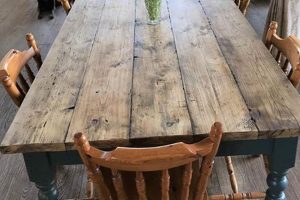
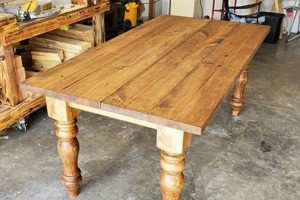
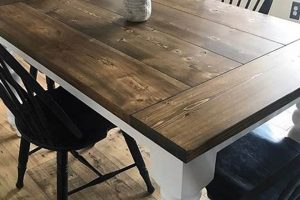
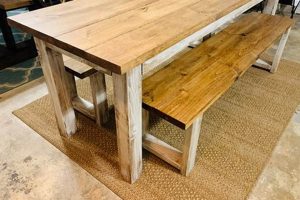
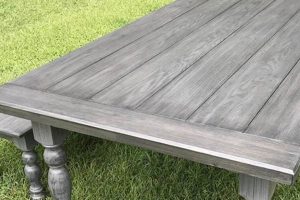
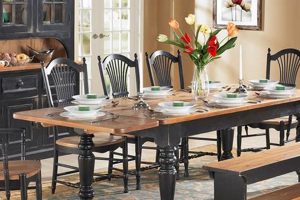
This furniture ensemble evokes a sense of pastoral charm, typically characterized by sturdy construction, natural materials like reclaimed wood, and a distressed or aged finish. The design often incorporates simple, unadorned lines, reflecting a utilitarian aesthetic rooted in rural traditions. Such pieces are frequently found as central fixtures in dining areas, offering a functional surface for meals and gatherings.
The appeal of this type of furniture lies in its durability, timelessness, and ability to create a warm, inviting atmosphere. Its robust build ensures longevity, while the inherent imperfections of the materials contribute to its unique character and visual interest. Historically, tables and chairs of this style served as practical necessities in farmhouses, but today, they are valued for their aesthetic qualities and connection to a simpler way of life. The inclusion of this style can inject character into spaces.
The following sections will delve into specific aspects of selecting, maintaining, and incorporating this type of furniture into various interior design schemes. These include considerations for wood types, construction techniques, styling options, and care requirements to ensure the longevity and visual appeal of such pieces.
Tips for Selecting and Maintaining Rustic Farm Tables and Chairs
Acquiring and preserving furniture of this style requires careful consideration. The following guidelines aim to assist in making informed decisions regarding purchase, placement, and long-term care.
Tip 1: Assess Wood Type: The species of wood significantly impacts durability and appearance. Hardwoods like oak, maple, and walnut offer superior strength and resistance to wear. Pine, while more affordable, is softer and more susceptible to dents and scratches. Inspect the wood grain and consider the intended use to determine the most suitable option.
Tip 2: Examine Construction Quality: Look for mortise-and-tenon or dovetail joinery, which indicates robust construction. Avoid pieces with visible screws or staples, as these may compromise structural integrity. Evaluate the stability of the table and chairs by testing for wobbling or looseness.
Tip 3: Consider Finish and Sealing: A durable finish is essential for protecting the wood from moisture and stains. Opt for a matte or satin finish to maintain the rustic aesthetic. Ensure the furniture is properly sealed to prevent water damage and facilitate cleaning.
Tip 4: Evaluate Size and Proportions: Measure the intended space carefully and select furniture that is appropriately sized. Allow ample room for movement around the table and chairs. Consider the height of the table in relation to the chairs to ensure comfortable seating.
Tip 5: Maintain Consistent Humidity Levels: Wood expands and contracts with changes in humidity. Maintaining a consistent humidity level in the room can prevent warping and cracking. Consider using a humidifier or dehumidifier as needed.
Tip 6: Implement Protective Measures: Utilize placemats, coasters, and table runners to protect the surface from heat, spills, and scratches. Lift, rather than drag, items across the tabletop to avoid surface damage. Regularly clean up messes promptly to prevent staining.
Tip 7: Undertake Regular Cleaning and Maintenance: Dust frequently with a soft, dry cloth. Clean spills immediately with a damp cloth and mild soap. Periodically apply a wood conditioner or polish to maintain the wood’s luster and prevent drying.
Proper selection and consistent maintenance contribute significantly to the longevity and aesthetic appeal of rustic farm tables and chairs. Adhering to these guidelines will ensure that the furniture remains a cherished and functional element within the interior space for many years.
The subsequent discussion will focus on integrating these tables and chairs into specific design styles, highlighting their versatility and adaptability across various aesthetic preferences.
1. Wood Material
The selection of wood material is fundamental to the characteristics and longevity of furniture in this style. It directly influences its structural integrity, aesthetic appeal, and resistance to wear and tear. Hardwoods, such as oak, maple, and walnut, are commonly favored for their density and durability, rendering them suitable for enduring heavy use. Softwoods, like pine, while often more affordable and readily available, are more susceptible to damage and may require additional protective finishes. Consequently, the choice of wood directly impacts the piece’s ability to withstand the demands of daily life within a farmhouse, or a modern interpretation.
Consider, for example, a table crafted from reclaimed oak. The inherent strength of oak, coupled with the character imparted by years of previous use (evident in grain patterns, knots, and minor imperfections), results in a piece that is both visually appealing and highly functional. Conversely, a table constructed from less dense pine may exhibit a more pronounced rustic appearance due to its susceptibility to dents and scratches, but it may require more diligent care to prevent excessive wear. Furthermore, the origin of the wood, whether sustainably sourced or reclaimed, adds another layer of consideration concerning environmental impact and ethical practices.
Ultimately, the type of wood used is pivotal to understanding the value and performance expectations of rustic farm tables and chairs. Careful evaluation of wood species, considering both structural properties and aesthetic qualities, is essential for making informed purchasing decisions and ensuring the long-term satisfaction with furniture. The choice reflects not only a preference for visual style but also a commitment to practicality and sustainability.
2. Distressed Finish

The distressed finish is integral to the aesthetic of rustic farm tables and chairs, deliberately imbuing them with a sense of age, history, and a connection to traditional craftsmanship. This finish is not merely a superficial application; it is a process designed to replicate the effects of time, wear, and exposure to the elements. Techniques such as sanding, scraping, staining, and the application of antiquing glazes are employed to create the impression of natural aging and use. The presence of imperfections, such as simulated scratches, dents, and worn edges, contributes to the furniture’s unique character and authenticity.
The importance of the distressed finish extends beyond aesthetics. It serves to soften the visual formality of the furniture, making it appear more approachable and inviting. Consider a newly manufactured wooden table: without a distressed finish, it may appear stark and contemporary. However, the addition of carefully applied distressing can transform the table into a focal point that exudes warmth and familiarity, seamlessly integrating it into a rustic or farmhouse-style interior. This finish enhances the tactile experience, adding texture and depth to the surface. The process can also highlight the underlying grain and natural characteristics of the wood, further emphasizing its organic origins.
In summary, the distressed finish is not merely decorative; it is a foundational element that defines the character and appeal of rustic farm tables and chairs. It is a calculated effort to imbue these pieces with a sense of history and authenticity, creating furniture that is both visually appealing and evocative of a simpler, more agrarian past. Understanding the significance of the distressed finish is crucial for appreciating the overall aesthetic and for selecting pieces that genuinely embody the rustic farmhouse style. Challenges related to achieving an authentic distressed look versus a mass-produced imitation underscore the importance of careful observation and craftsmanship in furniture selection.
3. Sturdy Construction

Sturdy construction forms the bedrock of rustic farm tables and chairs, directly influencing their longevity, functionality, and aesthetic authenticity. It transcends mere visual appeal, representing a commitment to enduring quality reminiscent of traditional craftsmanship. Several key facets contribute to this robustness.
- Material Selection
The choice of materials is paramount. Dense hardwoods, such as oak or maple, provide inherent strength and resistance to wear, essential for withstanding the rigors of daily use. Inferior materials compromise structural integrity, leading to premature failure. Tables constructed with solid wood, rather than veneers or engineered wood, exemplify this principle. The implication is a generational piece of furniture.
- Joinery Techniques
Traditional joinery methods, like mortise-and-tenon or dovetail joints, offer superior strength compared to modern alternatives like screws or staples. These interlocking connections distribute stress evenly, minimizing the risk of joint failure. A table leg connected with a mortise-and-tenon joint, for instance, is significantly more resistant to racking forces than one simply screwed into the tabletop. The lasting power of these methods is visible in antique tables.
- Structural Reinforcement
Strategic reinforcement, such as aprons connecting the tabletop to the legs or stretchers linking the legs, enhances overall stability and prevents warping or sagging. These elements distribute weight and provide resistance to movement, particularly in larger tables or chairs subjected to heavy loads. The inclusion of metal braces or corner blocks further increases rigidity. This provides a reinforced structure for many years.
- Weight Distribution
A well-designed table or chair distributes weight evenly across its structure, minimizing stress points and preventing localized failure. Leg placement, tabletop thickness, and seat construction all contribute to effective weight distribution. A table with legs positioned too close to the center, for example, may be prone to tipping under uneven loads. Uneven weight distribution results to a dangerous situation.
These facets, intrinsically linked, define the robustness characteristic of rustic farm tables and chairs. The combination of carefully selected materials, time-tested joinery techniques, strategic reinforcement, and thoughtful weight distribution ensures that these pieces not only embody a rustic aesthetic but also stand the test of time. Conversely, furniture lacking these attributes may imitate the style but will ultimately fail to deliver the enduring quality expected of a true heirloom.
4. Timeless Design

Timeless design, in the context of rustic farm tables and chairs, refers to an enduring aesthetic that transcends fleeting trends, maintaining relevance and appeal across generations. This enduring quality stems from fundamental design principles rooted in functionality, simplicity, and a connection to nature, rendering these pieces perennially desirable.
- Simplicity of Form
A hallmark of timeless design is its adherence to simple, unadorned forms. Rustic farm tables and chairs typically exhibit clean lines, minimal ornamentation, and a focus on essential functionality. The absence of excessive detailing prevents the design from becoming dated or associated with a specific era. A rectangular table with straight legs exemplifies this simplicity, its form dictated by its primary purpose rather than stylistic embellishments. The focus is always on utility.
- Authenticity of Materials
The use of natural, unrefined materials contributes significantly to timeless design. Rustic farm tables and chairs often feature solid wood construction with a visible grain pattern, showcasing the inherent beauty of the material. The avoidance of artificial finishes or synthetic materials reinforces this authenticity, ensuring that the furniture retains its character and appeal over time. Reclaimed wood, with its unique imperfections and history, further enhances the timeless quality.
- Adaptability to Various Styles
Timeless design possesses an inherent adaptability that allows it to seamlessly integrate into diverse interior styles. Rustic farm tables and chairs can complement traditional, farmhouse, cottage, or even contemporary settings, demonstrating their versatility and enduring relevance. Their neutral aesthetic provides a foundation that can be easily customized with different accessories, linens, or surrounding decor. A well-chosen table can be a focal point.
- Focus on Functionality
The emphasis on practicality and utility is a defining characteristic of timeless design. Rustic farm tables and chairs are designed to be functional and comfortable, prioritizing usability over purely aesthetic considerations. Their sturdy construction and ergonomic design ensure that they can withstand daily use and provide lasting value. Features such as ample tabletop space or comfortable seating contribute to their enduring appeal. Practicality dictates longevity.
These facets collectively contribute to the timeless design inherent in rustic farm tables and chairs. Their simplicity, authenticity, adaptability, and functionality ensure that these pieces remain relevant and desirable, transcending the constraints of passing trends and solidifying their place as enduring elements of interior design. Their enduring appeal is not merely stylistic; it is a reflection of their intrinsic quality and their ability to resonate with fundamental human values of comfort, functionality, and connection to the natural world.
5. Functional Aesthetic

The concept of “Functional Aesthetic,” as it applies to rustic farm tables and chairs, underscores the seamless integration of practical utility with visual appeal. These pieces are not merely decorative; their design is inherently driven by a purpose, and their aesthetic qualities are derived from the fulfillment of that purpose. This intersection of form and function is fundamental to their enduring appeal and relevance.
- Durable Materials and Construction
The choice of materials and construction techniques directly contributes to both the functionality and the aesthetic of rustic farm tables and chairs. Sturdy hardwoods, like oak or maple, are selected for their strength and durability, ensuring that the furniture can withstand daily use. Traditional joinery methods, such as mortise-and-tenon joints, further enhance structural integrity. This emphasis on robust construction not only guarantees longevity but also imparts a sense of authenticity and solidity that is aesthetically pleasing. A thick, solid wood tabletop, for example, visually communicates the table’s ability to withstand heavy loads, enhancing its functional appeal.
- Practical Design Features
Many design features commonly found in rustic farm tables and chairs are directly related to their functionality. Ample tabletop space, for instance, is essential for accommodating large meals or gatherings. Comfortable seating, often achieved through the use of wide seats and supportive backrests, ensures that the chairs are practical for extended use. The absence of excessive ornamentation or elaborate detailing contributes to the overall simplicity and practicality of the design, focusing attention on the essential purpose of the furniture. A table with a built-in breadboard end, originally designed to accommodate wood expansion, now contributes to the aesthetic charm.
- Adaptable Style and Versatility
The functional aesthetic of rustic farm tables and chairs also manifests in their adaptability to various interior styles. Their simple, unadorned design allows them to seamlessly integrate into diverse settings, from traditional farmhouses to modern apartments. This versatility stems from their inherent neutrality and their ability to complement a wide range of decor. A well-chosen table can serve as a focal point in a dining room, while also providing a functional surface for everyday activities. The inherent functional capacity expands its aesthetic reach.
- Honest Expression of Materials
The functional aesthetic prioritizes an honest expression of materials and construction. Rustic farm tables and chairs often showcase the natural grain patterns and imperfections of the wood, celebrating the inherent beauty of the material. The absence of artificial finishes or embellishments allows the wood to speak for itself, conveying a sense of authenticity and connection to nature. The distressed finish, commonly applied to these pieces, further emphasizes their history and functional purpose. The authenticity of material expression delivers a unique aesthetic.
In essence, the functional aesthetic of rustic farm tables and chairs is characterized by a harmonious blend of practicality, durability, versatility, and honesty. These pieces are not merely objects of visual appeal; they are designed to serve a purpose, and their aesthetic qualities are inextricably linked to their functional performance. This convergence of form and function ensures that they remain enduring elements of interior design, valued for their inherent beauty and their ability to enhance the quality of daily life.
Frequently Asked Questions
This section addresses common inquiries and clarifies misconceptions regarding rustic farm tables and chairs, providing concise and factual answers to enhance understanding and inform purchasing decisions.
Question 1: What distinguishes a true rustic farm table and chairs from mass-produced imitations?
Authenticity is determined by the use of solid wood, traditional joinery techniques, and a deliberate distressing process that replicates natural aging. Mass-produced versions often employ veneers, screws, and superficial distressing methods, lacking the durability and character of genuine pieces.
Question 2: What wood types are most suitable for enduring the rigors of daily use?
Hardwoods, such as oak, maple, and walnut, offer superior strength and resistance to wear. Pine, while more affordable, is softer and requires greater care to prevent dents and scratches. The selected wood significantly impacts the furniture’s longevity.
Question 3: How does one properly maintain a distressed finish?
Regular dusting with a soft cloth is essential. Avoid abrasive cleaners or harsh chemicals. Minor scratches or imperfections enhance the rustic aesthetic and generally do not require immediate repair. Periodically applying a wood conditioner helps maintain the finish’s luster.
Question 4: What joinery techniques indicate superior construction quality?
Mortise-and-tenon and dovetail joints are hallmarks of robust construction, providing strong, interlocking connections that distribute stress evenly. Pieces with visible screws or staples may indicate compromised structural integrity.
Question 5: How can rustic farm tables and chairs be seamlessly integrated into modern interiors?
Their inherent versatility allows for integration into diverse styles. Balancing the rustic elements with contemporary accents, such as modern lighting or minimalist decor, creates a cohesive and visually appealing aesthetic.
Question 6: What factors should be considered when determining the appropriate size and scale of a rustic farm table for a given space?
Accurate measurements of the dining area are crucial. The table should allow ample room for movement around it, and the chair height should be proportionate to the table height for comfortable seating. Consider the number of individuals typically accommodated.
In summary, selecting authentic, well-constructed rustic farm tables and chairs requires careful attention to materials, joinery, and finish. Proper maintenance and thoughtful integration into the existing decor will ensure their longevity and aesthetic appeal.
The subsequent section will explore design concepts, providing specific examples for integrating rustic farm tables and chairs with various interior styles.
Conclusion
The preceding analysis has underscored the significance of “rustic farm table and chairs” as more than mere furniture. It is a design choice imbued with historical context, practical considerations, and aesthetic implications. The selection, maintenance, and integration of these pieces require careful consideration of wood types, construction techniques, distressing methods, and stylistic adaptability. A genuine appreciation of these elements contributes to informed decision-making.
The enduring appeal of “rustic farm table and chairs” lies in its ability to evoke a sense of timelessness and authenticity. Whether incorporated into a traditional farmhouse or a contemporary urban dwelling, this furniture type serves as a focal point, reflecting a commitment to quality, craftsmanship, and a connection to simpler values. Further exploration of design concepts and material innovations will undoubtedly contribute to the continued evolution of this iconic furniture style. The onus remains on discerning consumers to prioritize quality and craftsmanship over superficial imitations, ensuring the preservation of its lasting legacy.