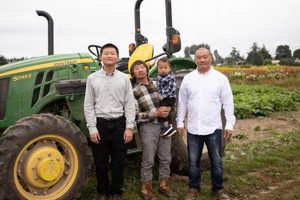
The existence of a family unit deeply entwined with the operation of an agricultural enterprise defines a specific way of life. This involves shared labor, often spanning multiple generations, focused on producing food and maintaining the land. Consider, for instance, a multigenerational household where grandparents, parents, and children all contribute to planting, harvesting, and caring for livestock.
This lifestyle fosters a strong work ethic, close familial bonds, and an intimate connection to the natural world. Historically, it represented a dominant societal structure, providing sustenance and community support. The benefits extend to instilling responsibility, resilience, and an appreciation for sustainable practices. The reliance on intergenerational knowledge transfer ensures that valuable farming techniques and traditions are passed down, safeguarding both cultural heritage and agricultural expertise.
The following sections will delve into the economic realities, social dynamics, and evolving challenges faced by those engaged in this particular familial and professional structure. Exploration of these aspects will offer a nuanced understanding of its contemporary relevance and future sustainability.
Guidance for Sustainable Agricultural Households
Practical strategies are crucial for navigating the complexities inherent in merging familial relationships with the demands of an agricultural operation. The following points offer actionable advice to foster resilience and harmony within this unique environment.
Tip 1: Define Clear Roles and Responsibilities: Implement a structured approach to task allocation. Document roles and responsibilities to avoid ambiguity and potential conflict. For example, clearly delineate responsibilities for livestock care, crop management, and financial administration.
Tip 2: Establish Open Communication Channels: Encourage transparent dialogue concerning both business and familial matters. Schedule regular meetings to discuss operational challenges, financial performance, and individual concerns. Employ active listening techniques to ensure all voices are heard.
Tip 3: Implement Formal Business Structures: Transition from informal arrangements to structured business entities, such as partnerships or limited liability companies. This formalization provides legal protection and facilitates succession planning, ensuring the farm’s longevity.
Tip 4: Prioritize Financial Planning and Risk Management: Develop a comprehensive financial plan that incorporates diversification strategies and risk mitigation measures. Secure adequate insurance coverage to protect against unforeseen events, such as crop failures or livestock diseases.
Tip 5: Invest in Continuing Education and Skill Development: Remain abreast of advancements in agricultural technology, sustainable farming practices, and business management principles. Attend workshops, conferences, and online courses to enhance operational efficiency and competitiveness.
Tip 6: Foster Work-Life Balance: Designate specific periods for leisure and family activities, distinct from farm-related tasks. Prioritize personal well-being to prevent burnout and maintain healthy relationships within the household.
Tip 7: Develop a Succession Plan: Create a detailed plan outlining the transfer of ownership and management responsibilities to the next generation. This proactive approach ensures a smooth transition and preserves the farm’s legacy.
Adopting these guidelines can lead to enhanced operational efficiency, improved familial relationships, and long-term sustainability for agricultural endeavors.
The concluding section will summarize the core themes discussed and offer a final perspective on the enduring significance of this intertwined existence.
1. Intergenerational Knowledge Transfer

The continuity of agricultural operations is intrinsically linked to the effective transfer of knowledge across generations within farm families. This process, a defining characteristic of farm family life, encompasses not only technical skills but also accumulated wisdom regarding land management, crop selection, livestock husbandry, and financial strategies. The erosion of this knowledge transfer poses a significant threat to the sustainability and resilience of family farms.
The importance of this transfer manifests in several practical ways. For example, older generations often possess detailed understanding of local climate patterns, soil conditions, and pest management techniques that are crucial for successful farming in a specific region. They may also have inherited or developed innovative farming methods uniquely suited to the farm’s particular resources. The younger generation, in turn, benefits from this experience, gaining valuable insights that complement formal agricultural education. Successful farm operations are often characterized by the seamless integration of traditional knowledge with contemporary technologies and practices. Failure to effectively transmit this expertise can result in reduced productivity, increased susceptibility to environmental challenges, and ultimately, the loss of valuable agricultural heritage.
In conclusion, intergenerational knowledge transfer is not merely a sentimental aspect of farm family life; it is a critical factor determining the economic viability and ecological sustainability of these enterprises. Encouraging and facilitating this transfer through mentorship programs, apprenticeship opportunities, and clear succession planning is essential for ensuring the long-term health of both farm families and the agricultural sector as a whole. Overcoming obstacles such as differing generational attitudes, communication barriers, and competing career aspirations requires a deliberate and multifaceted approach.

The essence of farm family life is significantly shaped by the principle of shared labor directed towards a common goal: the sustainability and prosperity of the agricultural enterprise. This cooperative dynamic permeates all aspects of the operation, influencing family relationships, resource allocation, and long-term planning. The collective effort contributes to a unique interdependence distinct from many other vocational pursuits.
- Enhanced Efficiency and Productivity
Shared labor enables the division of tasks according to skill and capacity, leading to improved overall efficiency. For instance, one family member might specialize in crop management, another in animal husbandry, and another in financial administration. This specialization, coupled with coordinated effort, enhances productivity compared to individual farming endeavors. This can result in greater yields, better resource management, and ultimately, increased profitability.
- Strengthened Family Bonds
Working together towards a common objective fosters a sense of camaraderie and mutual respect within the family unit. The shared experiences, challenges overcome, and successes celebrated strengthen familial bonds. The act of contributing to the family’s livelihood instills a sense of purpose and belonging, particularly in younger generations who learn the value of hard work and teamwork. This shared purpose can contribute to greater family cohesion and resilience in the face of adversity.
- Reduced Operational Costs
The reliance on family labor reduces the need for external employees, thereby lowering operational costs. This is particularly crucial for small- to medium-sized farms operating on tight margins. Utilizing internal resources for tasks ranging from planting and harvesting to maintenance and repairs allows the farm to reinvest savings into improvements or expansion. This cost-effectiveness enhances the long-term viability of the family farm.
- Continuity and Sustainability
The commitment to a common goal often extends beyond immediate financial gains, encompassing a desire to preserve the farm for future generations. Shared labor facilitates the transmission of knowledge and skills, ensuring the continuity of agricultural practices. This intergenerational transfer promotes sustainable farming methods and long-term planning, safeguarding the farm’s resources and legacy for the benefit of subsequent family members.
These interconnected facets underscore the critical role of shared labor and a common goal in sustaining farm family life. The collective effort not only enhances operational efficiency and reduces costs but also strengthens familial relationships and ensures the continuity of the agricultural enterprise. The commitment to working together towards a shared vision represents a cornerstone of the resilience and longevity of the family farm.
3. Resilience through adversity

The capacity to withstand and recover from challenging circumstances is a defining characteristic of farm family life. The inherent uncertainties of agriculture, coupled with economic pressures and societal shifts, demand a high degree of resilience. This section explores the key facets that contribute to this resilience within the context of the agricultural family unit.
- Diversification of Income Streams
Reliance on a single crop or livestock enterprise renders farm families vulnerable to market fluctuations, weather events, and disease outbreaks. Diversifying income streams, through value-added processing, agritourism, or off-farm employment, provides a buffer against economic hardship. For example, a dairy farm might supplement its income by producing and selling cheese or ice cream, offering farm tours, or providing bed-and-breakfast accommodations. This diversification mitigates risk and enhances financial stability.
- Strong Community Networks
Farm families often rely on mutual support networks within their local communities. Sharing resources, equipment, and labor during planting or harvesting seasons, or providing assistance during times of personal crisis, strengthens social bonds and enhances collective resilience. Agricultural cooperatives, farmers’ markets, and rural organizations provide platforms for collaboration and advocacy, enabling farm families to navigate challenges collectively. This communal support system fosters a sense of solidarity and shared purpose.
- Adaptive Management Practices
The ability to adapt to changing environmental conditions, technological advancements, and market demands is crucial for long-term survival. Implementing sustainable farming practices, such as crop rotation, conservation tillage, and integrated pest management, enhances soil health, reduces environmental impact, and improves long-term productivity. Adopting new technologies, such as precision agriculture and data analytics, enables farmers to optimize resource utilization and make informed decisions. This adaptive approach ensures the farm’s viability in a dynamic environment.
- Intergenerational Knowledge Transfer
The accumulated wisdom and experience of previous generations provide a valuable resource for navigating challenges. Senior family members often possess firsthand knowledge of past crises, successful coping strategies, and traditional farming techniques that can be adapted to contemporary circumstances. Passing down this knowledge to younger generations ensures the continuity of agricultural practices and enhances the farm’s ability to withstand future adversity. This intergenerational transfer fosters a sense of continuity and resilience.
These multifaceted elements, when integrated into the fabric of farm family life, create a resilient system capable of withstanding the inherent uncertainties of agriculture. The ability to diversify income, leverage community support, adapt to changing conditions, and draw upon intergenerational knowledge enables farm families to persevere in the face of adversity, ensuring the sustainability of their livelihoods and the preservation of their agricultural heritage.
4. Connection to natural world

Farm family life fosters an intimate and direct relationship with the natural world. This connection is not merely observational but deeply participatory, arising from the daily reliance on natural resources and the cyclical rhythms of agricultural production. The dependence on weather patterns, soil fertility, and the health of plants and animals creates a profound awareness of ecological processes. This awareness, in turn, shapes the values, practices, and perspectives of those immersed in this lifestyle. For instance, a prolonged drought can impact a family’s livelihood, leading to water conservation strategies and a deeper understanding of climate change. Similarly, observing the lifecycle of crops and livestock instills a respect for biodiversity and the interconnectedness of living systems.
The practical significance of this connection extends beyond economic considerations. It fosters a sense of stewardship, as farm families recognize their role in maintaining the health and productivity of the land for future generations. This stewardship manifests in various ways, from implementing sustainable farming practices to preserving natural habitats on their property. Consider the example of a farm family who, recognizing the decline of pollinator populations, establishes wildflower meadows to provide habitat for bees and other beneficial insects. This action not only supports ecological diversity but also enhances crop yields through improved pollination. Furthermore, children raised on farms often develop a unique appreciation for nature, fostering a lifelong commitment to environmental conservation.
However, this connection is not without its challenges. The increasing pressures of modern agriculture, coupled with economic constraints, can sometimes lead to practices that degrade natural resources. Overuse of fertilizers, intensive livestock production, and deforestation for agricultural expansion can undermine the long-term health of the land and compromise the ecological integrity of the farm. Therefore, promoting sustainable farming practices that harmonize agricultural production with environmental conservation is crucial for preserving the enduring connection between farm family life and the natural world.
5. Strong work ethic instilled

The demands inherent in agricultural operations necessitate a strong work ethic, making its instillation a defining feature of farm family life. This lifestyle inherently connects labor with tangible outcomes, providing immediate and consistent reinforcement for diligence and perseverance. Children raised within this framework observe and participate in daily tasks critical to the family’s sustenance, fostering a sense of responsibility and contribution from an early age. For example, even young children might be assigned tasks such as feeding animals or collecting eggs, learning the value of consistent effort and its direct impact on the family’s well-being. This early exposure to demanding work cultivates a work ethic that extends beyond the farm, influencing future endeavors and personal development.
The practical significance of a strong work ethic instilled through farm family life manifests in various ways. Individuals raised in this environment are often self-reliant, resourceful, and possess a strong sense of commitment. They are accustomed to overcoming challenges through hard work and dedication, traits highly valued in diverse professional settings. Furthermore, the cyclical nature of farming, with its periods of intense activity followed by periods of relative calm, teaches the importance of both sustained effort and strategic rest. Consider, for instance, a young adult raised on a farm who subsequently pursues a career in a demanding field, such as medicine or engineering. The discipline and perseverance instilled through their upbringing on the farm would likely contribute to their success in these challenging professions. Furthermore, those with an intimate knowledge of agricultural practice are more likely to become responsible, ethical and hard-working citizens who have a great awareness and appreciation for the processes, skills and commitment involved in providing food for the community.
In conclusion, the strong work ethic instilled through farm family life is not merely a byproduct of necessity, but rather a foundational element that shapes character, fosters resilience, and contributes to personal and professional success. While the challenges of modern agriculture are undeniable, the values instilled through this way of life remain relevant and valuable, equipping individuals with the skills and mindset necessary to thrive in a competitive world. The preservation and promotion of farm family life, therefore, serves as a means of cultivating not only agricultural productivity, but also a vital element of a responsible and resourceful society.
Frequently Asked Questions about Farm Family Life
This section addresses common inquiries and misconceptions surrounding the realities and complexities of the agricultural family unit. The aim is to provide clear and informative responses grounded in factual understanding.
Question 1: What are the primary challenges facing farm families today?
Farm families confront a multitude of challenges including fluctuating commodity prices, increasing operational costs, labor shortages, climate change impacts, and regulatory burdens. These factors collectively exert pressure on profitability and sustainability.
Question 2: How does farm family life differ from other types of family structures?
Farm family life is distinguished by the integration of family and business, shared labor, close connection to the natural environment, and the potential for intergenerational continuity. The family’s livelihood is directly tied to the success of the agricultural operation, creating a unique dynamic.
Question 3: What role does technology play in modern farm family life?
Technology plays an increasingly significant role, encompassing precision agriculture techniques, data analytics, automated machinery, and digital marketing strategies. These advancements enhance efficiency, improve resource management, and facilitate access to global markets.
Question 4: How can farm families effectively manage succession planning?
Effective succession planning requires open communication, early preparation, formalized agreements, and professional guidance. Addressing issues of ownership transfer, management responsibilities, and financial equity is crucial for a smooth transition.
Question 5: What are the key strategies for promoting mental health and well-being within farm families?
Strategies include prioritizing self-care, fostering strong communication channels, seeking professional support when needed, engaging in community activities, and implementing stress management techniques. Addressing the unique stressors associated with agricultural life is essential.
Question 6: How can consumers support farm families and sustainable agriculture?
Consumers can support farm families by purchasing locally sourced products, participating in community-supported agriculture (CSA) programs, visiting farmers’ markets, advocating for policies that support sustainable agriculture, and educating themselves about agricultural issues.
This FAQ section offers a concise overview of key considerations relevant to agricultural families. A comprehensive understanding of these factors is essential for informed decision-making and effective advocacy.
The subsequent section will delve into the future prospects and evolving trends impacting farm family life.
Conclusion
This examination of farm family life has traversed its multifaceted nature, addressing its economic realities, social dynamics, intergenerational knowledge transfer, the pivotal role of shared labor, and the resilience cultivated through confronting inherent adversities. The exploration emphasized the inextricable link between the family unit and the agricultural enterprise, highlighting the unique challenges and rewards inherent in this intertwined existence. Furthermore, attention has been given to the strong connection to the natural world and the values a strong work ethic that are often deeply ingrained.
Sustaining farm family life in the face of evolving societal pressures and economic uncertainties requires informed decision-making, proactive adaptation, and a continued commitment to both agricultural productivity and environmental stewardship. The future of this vital segment of society hinges on collective action, policy support, and a broader societal recognition of its enduring significance in providing sustenance and preserving agricultural heritage.