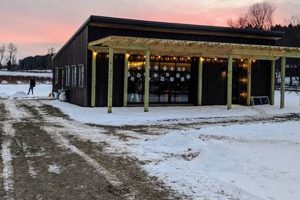
An agricultural enterprise that prioritizes holistic and sustainable practices can be understood as one that focuses on the larger context. This involves considering the interconnectedness of various elements, such as soil health, biodiversity, animal welfare, and community engagement. A dairy operation, for instance, might emphasize rotational grazing to improve soil fertility, reduce reliance on synthetic fertilizers, and enhance the overall health of the grazing animals.
Approaches emphasizing interconnectedness offer several advantages. They promote long-term ecological health, enhance resilience to climate change impacts, and foster greater economic stability for the agricultural entity. Historically, many traditional farming systems around the world operated on similar principles, integrating diverse crops and livestock to create self-sustaining ecosystems. A return to these principles is often seen as a way to enhance food security and environmental stewardship.
The following sections will delve into specific aspects of integrated farming systems, exploring techniques for soil management, strategies for promoting biodiversity, and methods for ensuring the ethical treatment of livestock within a cohesive framework. These topics highlight critical components of a responsible and sustainable agricultural model.
Guidance for Integrated Agricultural Enterprises
The following recommendations provide guidance on implementing a holistic and sustainable approach to agricultural operations. These tips emphasize the interconnectedness of various farm elements, focusing on long-term viability and ecological responsibility.
Tip 1: Prioritize Soil Health Management. Implement practices such as cover cropping, no-till farming, and composting to improve soil structure, fertility, and water retention. Healthy soil forms the foundation for robust crop yields and a resilient ecosystem.
Tip 2: Enhance Biodiversity. Encourage a diverse range of plant and animal species on the property. This can involve planting hedgerows, creating wildlife corridors, and integrating livestock into crop rotations. Biodiversity enhances ecosystem stability and reduces the reliance on external inputs.
Tip 3: Implement Rotational Grazing. Manage grazing patterns to prevent overgrazing, allowing pastureland to regenerate. This promotes soil health, improves forage quality, and enhances animal welfare.
Tip 4: Minimize Chemical Inputs. Reduce the use of synthetic fertilizers, pesticides, and herbicides by employing integrated pest management strategies and focusing on natural soil amendments. This protects water quality, reduces environmental impact, and promotes human health.
Tip 5: Emphasize Water Conservation. Implement water-efficient irrigation techniques, such as drip irrigation and rainwater harvesting. Conserving water resources is essential for long-term sustainability.
Tip 6: Integrate Livestock Management. Consider the ethical treatment of animals and implement practices that promote their well-being. This includes providing adequate space, access to pasture, and appropriate healthcare.
Tip 7: Foster Community Engagement. Build relationships with local communities through farmers’ markets, farm-to-table initiatives, and educational programs. This enhances the economic viability of the operation and promotes greater understanding of sustainable agriculture.
Adopting these strategies promotes a more sustainable and resilient agricultural operation, fostering ecological balance and long-term economic viability. Prioritizing interconnectedness and responsible practices builds a robust and ethically sound food production system.
The subsequent sections will further explore specific strategies for enhancing the sustainability and resilience of agricultural systems.
1. Interconnectedness

The principle of interconnectedness is central to an integrated agricultural enterprise, influencing all aspects of its operation. Recognizing and managing the relationships between various elements, such as soil, water, plants, animals, and the surrounding ecosystem, is crucial for achieving long-term sustainability and resilience.
- Nutrient Cycling and Soil Health
The cycling of nutrients within an agricultural system demonstrates a fundamental interconnectedness. For instance, livestock manure can be composted and applied to fields as a natural fertilizer, enriching the soil and reducing the need for synthetic inputs. Healthy soil, in turn, supports robust plant growth, providing feed for livestock and contributing to overall farm productivity. This closed-loop system minimizes waste and promotes ecological balance.
- Water Management and Conservation
Water is a critical resource that connects various farm activities. Efficient irrigation practices not only conserve water but also prevent soil erosion and nutrient runoff. The careful management of water resources can support both crop production and livestock needs, while also minimizing impacts on local watersheds. Understanding the interconnectedness of water use ensures responsible and sustainable resource management.
- Biodiversity and Pest Control
A diverse ecosystem within the agricultural setting promotes natural pest control mechanisms. Introducing beneficial insects or planting pollinator-friendly plants can reduce reliance on chemical pesticides, benefiting both the environment and human health. The interconnectedness between biodiversity and pest management highlights the importance of fostering a balanced ecosystem for long-term agricultural sustainability.
- Community and Economic Resilience
Integrated agricultural enterprises are often connected to their local communities through farmers’ markets, farm-to-table initiatives, and educational programs. These connections enhance the economic viability of the operation, providing direct market access and building customer loyalty. Furthermore, community engagement fosters greater understanding and support for sustainable agricultural practices. The farm’s success is thus intertwined with the well-being of the surrounding community.
These facets collectively illustrate how interconnectedness underpins the concept of an integrated agricultural approach. By carefully considering the relationships between various elements, farms can build resilient and sustainable systems that benefit both the environment and the community. The holistic management of these interconnections is paramount for long-term success and sustainability.
2. Sustainability

The long-term viability of any agricultural endeavor is intrinsically linked to the principles of sustainability. An integrated agricultural enterprise, recognizing the interconnectedness of its components, actively pursues practices that minimize environmental impact, conserve natural resources, and ensure economic resilience. The pursuit of sustainability is not merely an ethical consideration; it is a practical necessity for the continued operation and success of the farming enterprise.
One prominent example is the implementation of crop rotation strategies. By alternating crop types on a given field, the depletion of specific soil nutrients is mitigated. This reduces the dependence on synthetic fertilizers, which can contribute to water pollution and soil degradation. Similarly, the integration of livestock into the farming system, with manure used as a natural fertilizer, closes nutrient loops and reduces reliance on external inputs. A further illustration involves the adoption of water-efficient irrigation techniques such as drip irrigation. This method minimizes water waste and conserves valuable water resources, contributing to the long-term ecological balance of the farm and its surrounding ecosystem. Integrated pest management (IPM) techniques also offer a sustainable alternative to broad-spectrum pesticide application by introducing beneficial insects or other natural methods for reducing the presence of pests, reducing harm to nontarget organisms.
In summary, the correlation between the integrated agricultural enterprise and sustainability underscores the importance of holistic resource management and environmental stewardship. By embracing practices that prioritize soil health, water conservation, biodiversity, and reduced chemical inputs, such farms not only contribute to environmental protection but also enhance their long-term economic prospects. The challenge lies in adopting and scaling these sustainable practices to ensure food production can occur in an environmentally and ethically responsible manner. These integrated systems represent a move toward more resilient and sustainable food production systems.
3. Ecosystem Health

Ecosystem health forms a crucial pillar of an integrated agricultural enterprise. The success and sustainability of farming activities are inextricably linked to the well-being of the surrounding ecological systems. This connection extends beyond the immediate boundaries of the farm, influencing regional biodiversity, water quality, and climate resilience. An unhealthy ecosystem undermines the long-term productivity and stability of the farming operation.
The effects of agricultural practices on ecosystem health are bidirectional. Intensive farming methods that rely heavily on synthetic fertilizers and pesticides can degrade soil quality, pollute waterways, and reduce biodiversity. Conversely, agricultural systems that prioritize soil health, integrate diverse crops and livestock, and minimize chemical inputs contribute to a thriving ecosystem. For example, the implementation of riparian buffer zones along waterways can mitigate agricultural runoff, protecting aquatic habitats and improving water quality. Similarly, promoting biodiversity through the planting of hedgerows and wildflower meadows provides habitat for pollinators and beneficial insects, supporting natural pest control and enhancing overall ecosystem resilience. Practices such as no-till farming can drastically improve soil composition as well by reducing erosion.
In conclusion, ecosystem health and integrated agricultural endeavors are fundamentally intertwined. Recognizing and actively managing this relationship is essential for achieving long-term sustainability and resilience in food production. Failure to prioritize ecosystem health undermines the ecological foundations upon which agriculture depends, while proactive efforts to enhance ecosystem well-being contribute to a more sustainable and resilient food system for future generations. The practical significance of this understanding lies in the need for agricultural practices that are not only productive but also environmentally responsible, ensuring the long-term health of both the ecosystem and the agricultural enterprise.
4. Community integration

Community integration is an indispensable element of an integrated agricultural enterprise, fundamentally shaping its economic viability, social responsibility, and long-term sustainability. The strength of the connection between the farm and the surrounding community directly influences the farm’s ability to thrive. This is because community support provides a stable market for the farm’s produce, fosters a deeper understanding of sustainable agriculture, and enhances the farm’s role as a valued local asset. Farms that actively engage with their communities are better positioned to weather economic fluctuations and adapt to changing consumer preferences. A direct cause-and-effect relationship exists between community involvement and farm resilience. One example of this is seen in Community Supported Agriculture (CSA) models, where local residents purchase shares in the farm’s harvest, providing upfront capital for operations and ensuring a guaranteed market for the farm’s produce. This model fosters a sense of shared responsibility and mutual benefit.
Further exemplifying the practical applications of community integration is the establishment of farm-to-table initiatives. These programs, which partner local farms with restaurants and other food service providers, offer consumers access to fresh, locally sourced ingredients while providing farmers with a consistent sales channel. Educational programs, workshops, and farm tours also play a vital role in community integration by increasing awareness of sustainable farming practices and fostering a connection between consumers and the source of their food. These activities not only educate the public but also cultivate a sense of trust and appreciation for the farm’s role in the community. Moreover, farms that prioritize community integration often attract volunteers and interns who contribute their labor and expertise, further strengthening the connection between the farm and its local environment. This exchange of knowledge and support builds a resilient and engaged community around the agricultural enterprise.
In conclusion, community integration stands as a cornerstone of the integrated agricultural enterprise model, fostering economic stability, social responsibility, and environmental sustainability. The active engagement with the local community strengthens the farm’s market position, cultivates a deeper understanding of sustainable agriculture, and transforms the farm into a valued local asset. Despite the challenges associated with building and maintaining community relationships, the benefits of community integration far outweigh the costs, ensuring the long-term viability and resilience of the integrated agricultural enterprise. This strategy is vital for responsible and future-focused farming.
5. Animal welfare

In an integrated agricultural operation, animal welfare is not merely a humanitarian concern but a fundamental aspect of long-term sustainability and ecosystem health. The well-being of livestock directly impacts the quality of farm products, the health of the land, and the economic stability of the enterprise. Treating animals ethically and providing them with suitable living conditions is integral to responsible farming. The following facets highlight the critical link between animal welfare and holistic agricultural systems.
- Space and Freedom of Movement
Providing animals with adequate space and freedom of movement is essential for their physical and psychological well-being. Confined animal feeding operations (CAFOs), which restrict movement, often lead to stress, disease, and behavioral problems. Integrated systems, in contrast, prioritize pasture-based or free-range farming, allowing animals to engage in natural behaviors such as grazing, foraging, and socializing. This not only enhances their quality of life but also promotes healthier soil through manure distribution and reduced grazing pressure in specific areas. An example includes rotational grazing, which moves animals frequently to fresh pasture, allowing for vegetation regrowth and preventing overgrazing, while enriching soil health.
- Access to Natural Diets
Providing animals with access to natural diets appropriate for their species is crucial for their health and vitality. Integrated agricultural operations emphasize feeding animals on pasture or with locally sourced, non-GMO feed. This approach reduces reliance on processed feeds containing artificial additives and hormones, which can negatively impact animal health and product quality. For example, cattle raised on grass-fed systems tend to produce meat and milk with higher levels of beneficial fatty acids and antioxidants. Similarly, poultry allowed to forage for insects and seeds have improved immune systems and produce eggs with richer nutrients.
- Humane Handling and Veterinary Care
Implementing humane handling practices and providing prompt veterinary care are vital for minimizing stress and preventing disease in livestock. This includes gentle handling techniques during routine procedures such as vaccinations and hoof trimming, as well as access to timely veterinary attention when animals are sick or injured. Integrated agricultural operations often prioritize preventative healthcare through proper nutrition, hygiene, and stress reduction. For example, regular herd health checks and parasite control programs can help prevent outbreaks and maintain the overall health of the animal population. Reducing the likelihood of illness also cuts down the need for antibiotic treatments, mitigating concerns about antibiotic resistance.
- Integration into the Farm Ecosystem
Integrating animals into the farm ecosystem creates synergistic relationships that benefit both the animals and the environment. For example, using livestock to graze cover crops improves soil health, reduces weed pressure, and provides valuable forage for the animals. Similarly, integrating poultry into orchard systems can help control pests and fertilize the soil. By viewing animals as integral components of the farm ecosystem, integrated agricultural operations create more resilient and sustainable food production systems. Their welfare goes hand in hand with the overall wellness of the farming model.
In conclusion, animal welfare is inextricably linked to the success of an integrated agricultural operation. By prioritizing the well-being of livestock, farms not only enhance the quality of their products and the health of the land but also contribute to a more ethical and sustainable food system. Animal welfare is more than just a moral imperative; it is a cornerstone of responsible and resilient agriculture, ensuring the health, productivity, and longevity of the farming enterprise.
6. Soil Regeneration

Soil regeneration is an indispensable component of the holistic approach characteristic of an integrated agricultural enterprise. Recognizing soil as a living ecosystem, regenerative practices aim to restore degraded soils, enhance their fertility, and improve their capacity to function as a natural carbon sink. These methods directly contribute to the long-term sustainability and resilience of the agricultural system, aligning with the core principles of integrated farming.
- Cover Cropping and Soil Structure
Cover cropping involves planting specific crops to protect and improve the soil during periods when it would otherwise be bare. These crops, such as legumes or grasses, enhance soil structure by adding organic matter, improving water infiltration, and reducing erosion. In an integrated farming system, cover crops may also serve as forage for livestock, providing an additional benefit. For instance, a farmer might plant a mix of oats and peas after harvesting a cash crop, using the cover crop as grazing for sheep before planting the next season’s crop. This practice reduces the need for synthetic fertilizers, improves soil health, and supports livestock production.
- No-Till Farming and Carbon Sequestration
No-till farming minimizes soil disturbance by eliminating or significantly reducing tillage operations. This practice helps to preserve soil structure, reduce erosion, and increase carbon sequestration in the soil. Integrated agricultural operations often adopt no-till or reduced-till methods to enhance soil health and mitigate climate change. A farmer might use a no-till planter to directly seed crops into the residue of the previous harvest, reducing soil disturbance and conserving moisture. Over time, this practice improves soil organic matter content and reduces the need for herbicides and other inputs, promoting a more sustainable farming system.
- Composting and Nutrient Cycling
Composting involves the decomposition of organic matter to create a nutrient-rich soil amendment. Integrated farming systems often utilize composting to recycle farm waste, such as livestock manure, crop residues, and food scraps. The compost is then applied to fields to improve soil fertility and reduce the need for synthetic fertilizers. For example, a dairy farmer might compost manure from the herd and apply it to pastures or cropland, closing the nutrient loop and improving soil health. This practice not only reduces waste but also enhances soil structure and fertility, contributing to a more sustainable and resilient farming system.
- Rotational Grazing and Soil Health
Rotational grazing involves moving livestock between different pasture areas on a regular basis, allowing vegetation to recover and preventing overgrazing. This practice enhances soil health by improving soil structure, increasing organic matter content, and reducing erosion. Integrated farming systems often integrate rotational grazing as a key component of soil regeneration. A farmer might divide a pasture into several paddocks and move livestock between them every few days, allowing each paddock to recover before being grazed again. This practice promotes healthy plant growth, improves soil fertility, and reduces the need for herbicides and fertilizers, contributing to a more sustainable and productive farming system.
Soil regeneration is, therefore, not merely an isolated practice but an integral part of the wider framework that sustainable agriculture promotes. Through thoughtful integration of regenerative practices, integrated agricultural systems enhance the resilience of the farming operation, contribute to broader ecological health, and ensure the long-term productivity of the land.
Frequently Asked Questions Regarding Integrated Agricultural Enterprises
The following questions and answers address common inquiries and misconceptions surrounding the concept of integrated agricultural systems, also known as “big picture farm” practices. This section provides a concise overview of key aspects related to this approach.
Question 1: What distinguishes integrated agricultural enterprises from conventional farming methods?
Integrated agricultural enterprises prioritize holistic, sustainable practices that consider the interconnectedness of soil health, biodiversity, animal welfare, and community engagement. Conventional farming often focuses primarily on maximizing yield through intensive inputs and monoculture cropping, potentially overlooking environmental and social impacts.
Question 2: How does an integrated approach contribute to environmental sustainability?
By emphasizing practices such as crop rotation, cover cropping, reduced tillage, and integrated pest management, integrated agricultural enterprises minimize soil erosion, conserve water resources, reduce chemical inputs, and enhance biodiversity. These actions promote healthier ecosystems and contribute to long-term environmental stewardship.
Question 3: What are the economic benefits of adopting integrated agricultural practices?
While initial investments may be required, integrated agricultural enterprises can realize long-term economic benefits through reduced input costs, improved soil health, increased resilience to climate change impacts, and enhanced market access for sustainably produced goods. Reduced reliance on synthetic fertilizers and pesticides, for example, can significantly lower operating expenses.
Question 4: How does the integration of livestock contribute to a sustainable agricultural system?
When managed responsibly, livestock can play a vital role in nutrient cycling, soil fertility, and weed control. Rotational grazing, for instance, improves soil structure, enhances pasture productivity, and reduces the need for synthetic fertilizers. Integrating livestock also allows for the diversification of farm income streams and the creation of closed-loop systems.
Question 5: How does the emphasis on community engagement benefit an integrated agricultural enterprise?
Direct marketing through farmers’ markets, farm-to-table initiatives, and community-supported agriculture (CSA) programs enhances the farm’s economic viability by providing direct market access and building customer loyalty. Educational programs and farm tours foster greater understanding and support for sustainable agriculture within the local community.
Question 6: What are the primary challenges associated with implementing integrated agricultural practices?
Transitioning to integrated agricultural practices may require significant upfront investments, specialized knowledge, and a willingness to adapt existing management systems. Overcoming initial resistance to change, accessing technical assistance, and navigating regulatory hurdles can also pose challenges.
These frequently asked questions provide a foundational understanding of integrated agricultural enterprises. Understanding the multifaceted aspects of these systems is crucial for making informed decisions about agricultural practices.
The next section will delve into case studies of successful integrated agricultural operations.
Conclusion
The preceding exploration has illuminated various dimensions of an integrated approach to agriculture. From soil regeneration to community engagement, each facet contributes to a more sustainable and resilient farming model. This comprehensive understanding of practices promotes not only environmental stewardship but also long-term economic viability for agricultural enterprises.
The future of agriculture demands a shift toward such integrated systems. Embracing interconnectedness and responsible resource management is essential for ensuring food security while mitigating the environmental impacts of farming. The further adoption of these practices is critical for a more sustainable and equitable food production system.